
By Lujia Feng, Programme Director: MSc Human Resource Management (International Development)
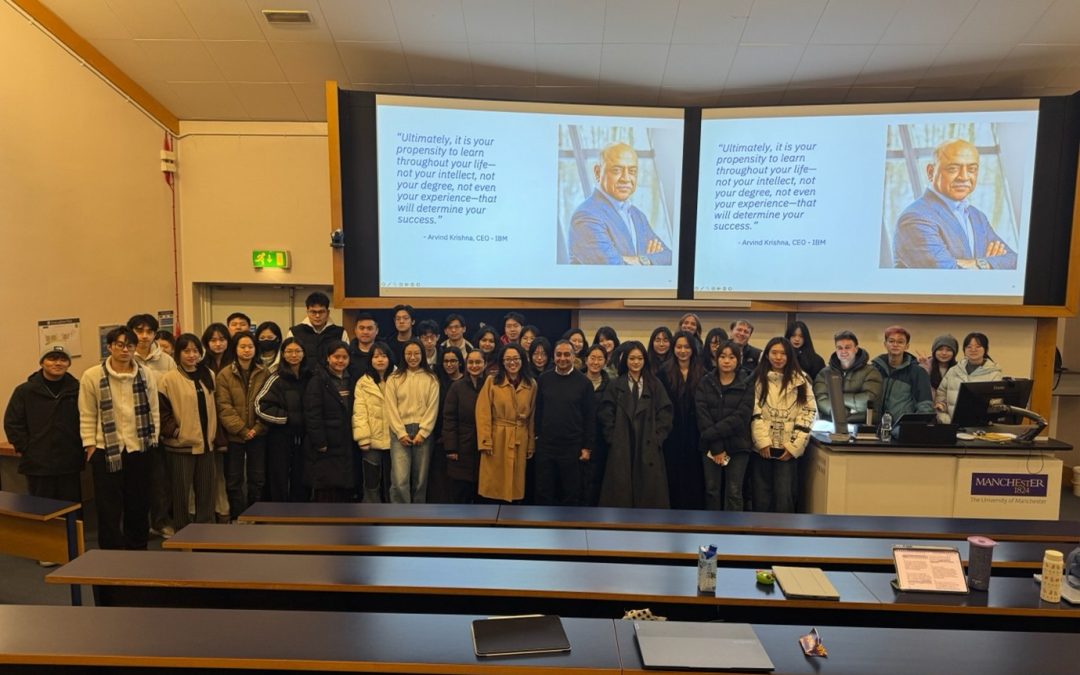
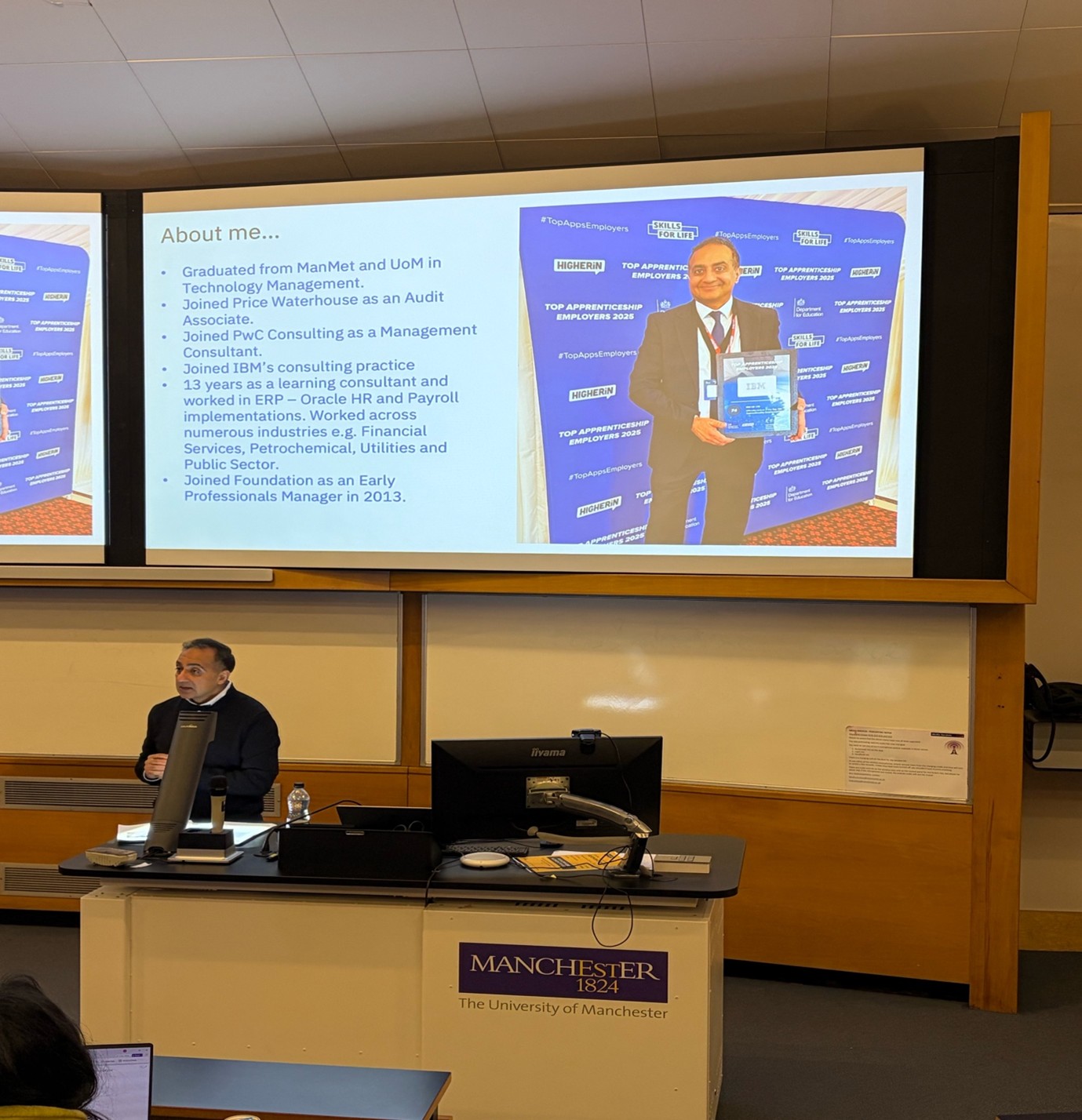
On Thursday, 12 February 2026, we were delighted to welcome Kashif Taj, Apprenticeships Leader at IBM UK, to speak with our MSc Human Resource Management (International Development) students.
What unfolded was far more than a guest talk. It was an honest and forward-looking conversation about the future of work, the digital skills gap, and how organisations and individuals rethink what talent really means in the era of AI.
The Digital Skills Gap and a Strategic Response
Kashif explained that by 2026, over 90% of global organisations are expected to face shortages in digital and IT skills. For IBM, it is a strategic challenge. Rather than waiting for the labour market to produce ready-made talent, IBM has invested in structured apprenticeship pathways as an alternative recruitment strategy. For instance, the New Collar Programme, which combines academic study with real workplace experience. Supported by the UK Apprenticeship Levy, it provides nationally recognised qualifications and opens doors to individuals from diverse educational and socio-economic backgrounds. The results are impressive: high retention rates, strong academic outcomes, and growing diversity within technical roles.
What resonated most with our students was the wider implications of this programme. One of our MSc HRM (ID) students wrote in the reflective feedback that: ‘The lecture demonstrated how ideas are translated into practice through IBM’s apprenticeship programme. It offers a nationally recognised qualification, combines on-the-job learning with academic study, and allows participants to earn while they learn. For many participants, this was more than training; it was a life-changing opportunity to forge their own career paths, gain confidence, and contribute meaningfully to the organisation.’
Why This Matters Beyond HR
Although this lecture was delivered to our MSc HRM (ID) students, it is relevant to anyone interested in education, employability, the social responsibility of organisations, and inclusive growth. The session underscored the critical role organisations play in shaping opportunity, as they are not simply consumers of talent, they are cultivators of it.
For instance, students also recognised the strategic role of HR in bridging organisational goals and human potential. As one reflection from our students highlighted that: ‘HR is central to identifying future skill requirements, designing inclusive talent pipelines, and ensuring that learning and development strategies align with organisational goals.’
In an era of AI and automation, workforce development is crucial and requires intentional design, inclusive recruitment strategies, thoughtful training pathways, and alignment between organisational strategy and human potential.
A Human-Centred Future of Work
For our students as aspiring HR professionals, the lecture was particularly powerful. It reminded them that their future roles are not just administrative, but will strategically help organisations anticipate future skills needs, design inclusive pipelines, and ensure that technological change remains human-centred. As one reflection from our MSc HRM (ID) student representative, Jiarui Wang, summarised:
‘Overall, the lecture conveyed a quiet confidence and optimism about the future of work, as a combination of skills, passion, structured support, and opportunity can often be more powerful than a traditional diploma alone.’
Looking Ahead: Supporting Student Employability
We are especially grateful to Kashif Taj for his generosity and continued engagement. He has kindly agreed to return in late May to deliver a dedicated employability workshop for our students. Drawing on decades of experience in talent recruitment and development, he will work directly with them on how to stand out in an increasingly competitive global job market.
In preparation for this, we are working closely with our MSc HRM (ID) student representatives to better understand their learning expectations and main pain points in finding a job, whether that is confidence, positioning themselves in the labour market, or navigating complex recruitment processes.
This collaborative approach reflects what the session itself emphasised: employability is not simply about qualifications, but about communication, adaptability, and support.
Final Reflections
This lecture was a reminder that the future of work is not just about technology. It is about people. And it is about ensuring that innovation and inclusion move forward together.
A sincere thank you to Kashif Taj for sharing his insight and experience, and to our students for their thoughtful and reflective engagement. We really look forward to our employability workshop in May 2026.
Note: This article gives the views of the author/academic featured and does not necessarily represent the views of the Global Development Institute as a whole.
Please feel free to use this post under the following Creative Commons license: Attribution-NonCommercial-NoDerivatives 4.0 International (CC BY-NC-ND 4.0). Full information is available here.