by Mariana C. Hernández-Montilla
Here I am, once again in Kigali, looking into education and health in Rwanda. People joke that I must be an expert in Rwanda fieldwork because this is my third time coming as a Teaching Assistant. But it is curious how quickly I forget the small things that matter.
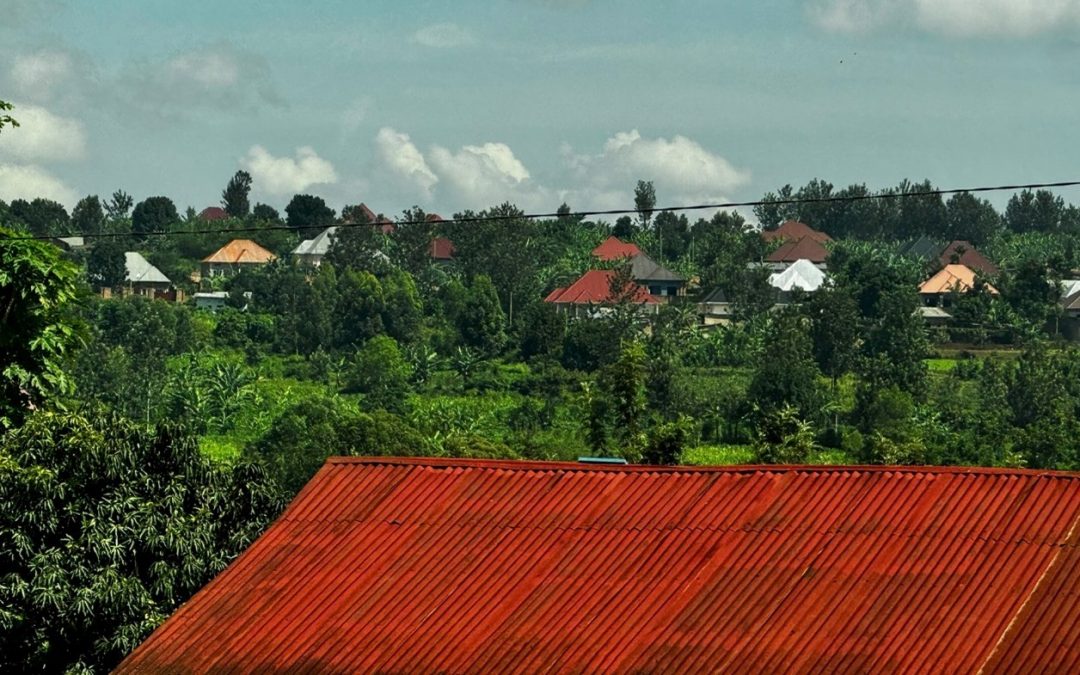
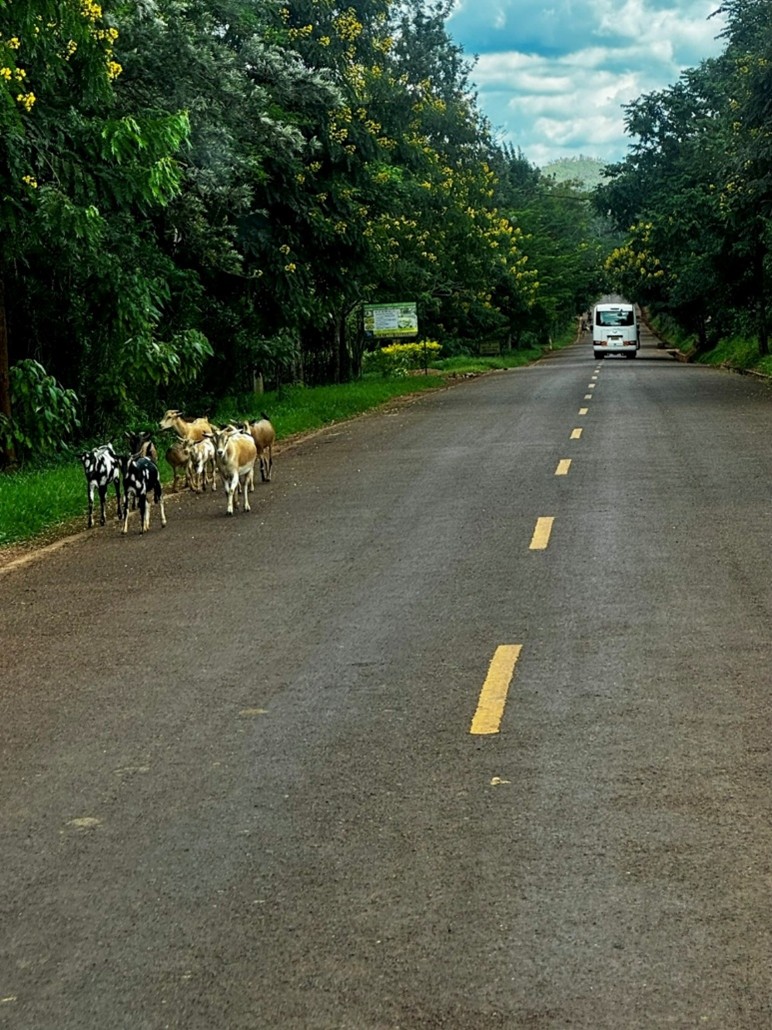
I forgot the smell of eucalyptus on the road to Kayonza. I forgot how wide the children’s smiles are when a bus passes through their village, the long walks to school along narrow, sloping roads. I forgot the angle of the morning sun, the way it hits the red rooftops and the endless green hills, making everything look like a painting. I forgot that the space between Kigali and Kayonza stretches far beyond kilometres; it’s defined by access, infrastructure, and opportunity.
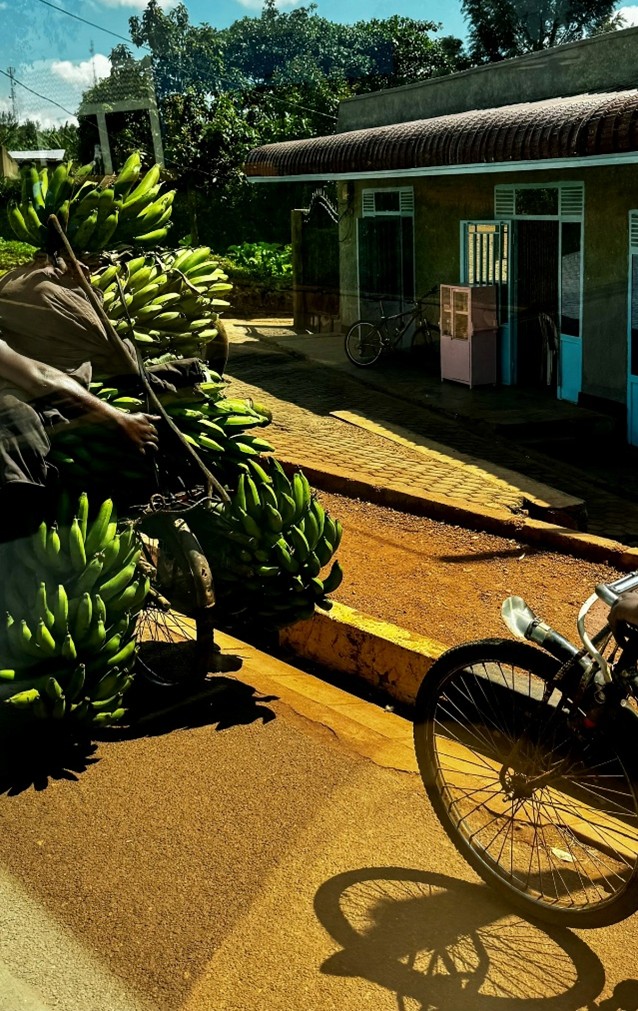
 This year I came back with 140 postgraduate students across multiple programme pathways. The visit is part of the Development Fieldwork course, where theory about Rwanda’s development model meets what we see in practice. From day one, I claimed the front passenger seat. I wanted to watch everything carefully: the road, the hills, the people navigating curves without sidewalks, the bicycles stacked high with plantains. I kept wondering where everyone was coming from, and where they were going. How far they had to walk before arriving.
For most of the students, Rwanda was entirely new. I watched them encounter what I had felt the first time: the weight of the Kigali Genocide Memorial, the structured government presentations, the country’s extraordinary story of reconstruction, and the questions that remain.
I am not writing to answer those questions. This time, I am writing from the passenger seat.
Counting as inclusion
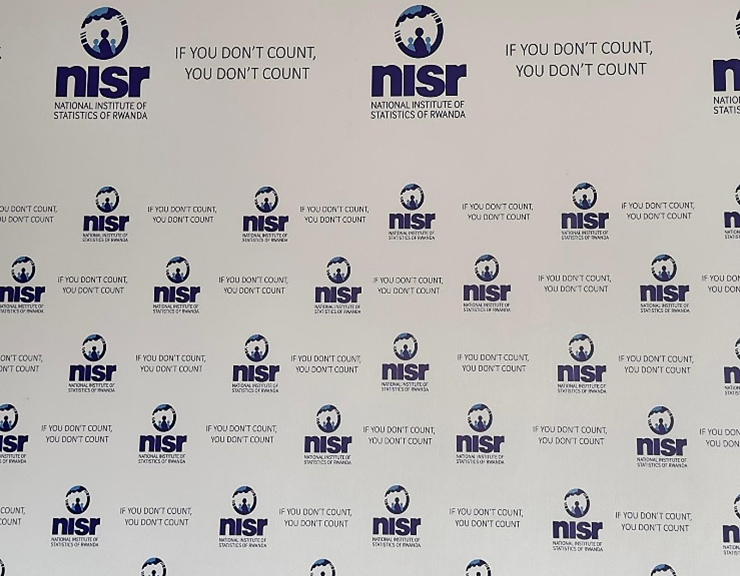
On the wall of the National Institute of Statistics of Rwanda, repeated across an entire backdrop, is the organisation’s slogan: If you don’t count, you don’t count.
It is meant as a call to inclusion: count everyone, leave no one out, make the invisible visible.
Rwanda takes this seriously. It has built an impressive statistical infrastructure: data systems, sector linkages, performance monitoring cascading from national targets down to district level and beyond. In a room full of development students, seeing this structure up close is striking.
 And yet, sitting in those government presentations and fieldwork sessions, I kept thinking about everything that does not enter the count.
The hours spent at Umuganda, Rwanda’s monthly community workday. The hours women spend in cooperatives and village councils. The hours community health workers spend knowing things about their communities that never reach a report.
The slogan stayed with me not for what it includes, but for what it leaves out.
The cost of what is not counted
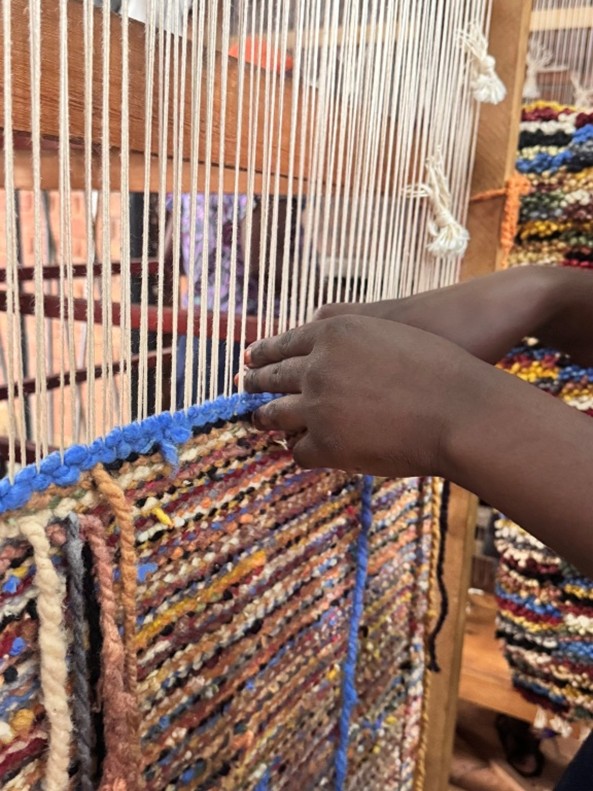 Rwanda rebuilt itself on these hours.
After 1994, when the country had almost nothing and much of the international community had withdrawn, people became the infrastructure. The homegrown solutions Rwanda is rightly proud of, such as Umuganda (a monthly mandatory community workday), Imihigo (performance contracts used to hold local officials accountable), and Gacaca (community-based courts used after the genocide), were born from that necessity.
They are genuinely ingenious. They are also, thirty years later, still drawing on the same account.
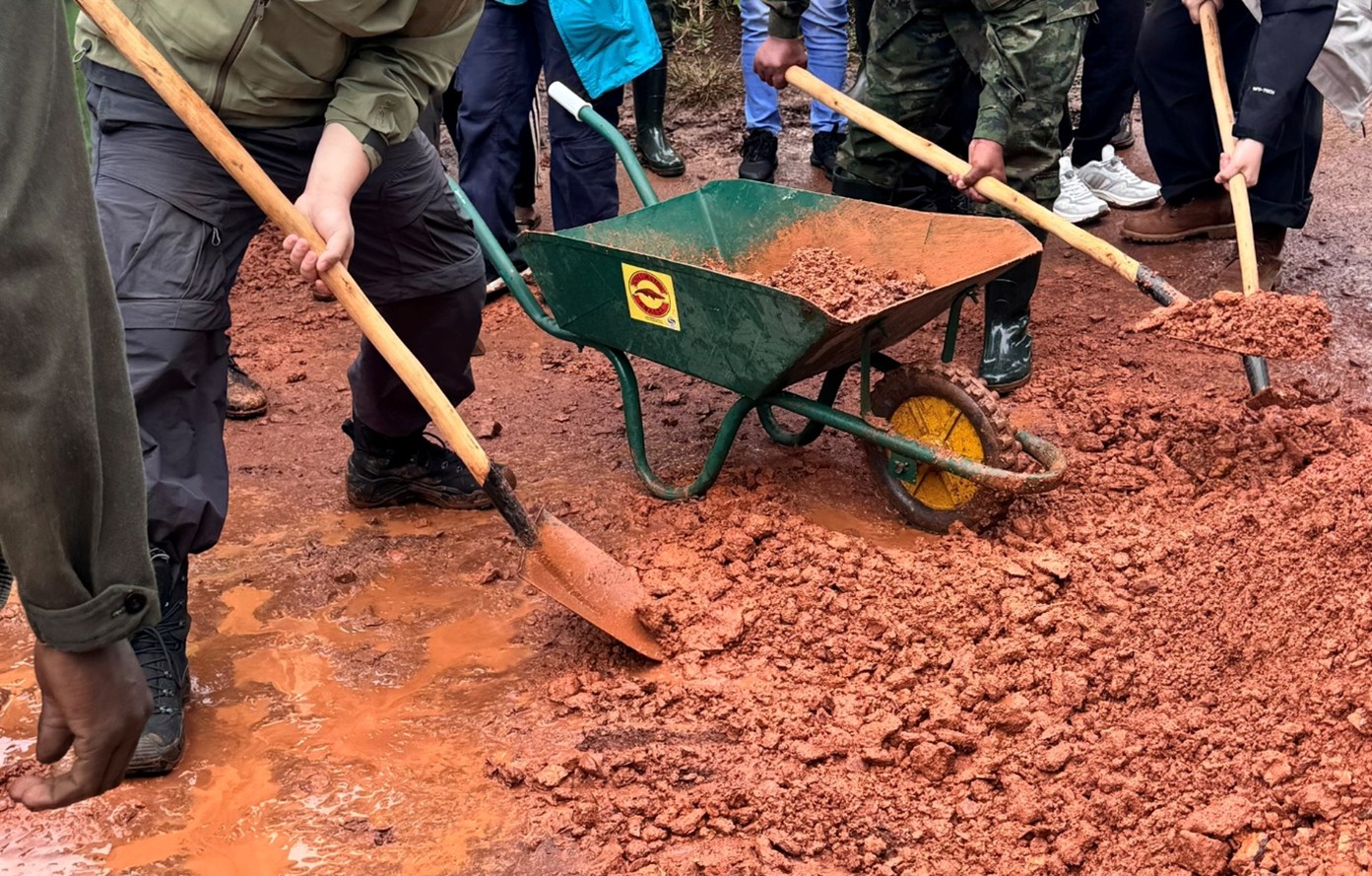
We stood in the mud during Umuganda in Kayonza on a rainy Saturday morning. There were women with babies on their backs, men in uniforms, the smell of wet earth, the sound of clapping.
For some students, it was the first time they had worked collectively like this, – physically, outdoors, in a mandatory community setting alongside residents. For others it felt familiar.
There was something moving about it. And something that made me want to ask quietly: who here had a choice about coming today, and who came because the cost of not coming is too high?
At a village council session, two sentences were repeated side by side in Kinyarwanda: Our power comes from inside us. Our president is our role model. I wrote them down and did not know what to do with them.
After three visits, for me, “homegrown solutions” in practice means discipline, hard work, unity, and also obedience. It means Rwanda. It also means that the gap between what the state commits to and what it delivers is often filled by people’s time, strength, pride, and goodwill.
That burden exists for everyone. But it is heavier for those with fewer resources, fewer alternatives, and less distance from necessity.
Rwanda’s Vision 2050 promises a high-income country, universal health and education, a transformed workforce. These are seriously pursued goals. And then you drive two hours from Kigali: English fades, sixty-six children share one classroom, pregnant girls are officially allowed to stay in school, but often leave anyway.
There is a double truth that is difficult to hold: some things are not fully accomplished, and other things, never counted, are quietly extraordinary. Like the girls’ rooms, mandatory in schools, never mentioned in any presentation, but relied on every single day.
The price of development is high. In Rwanda, it is often paid in hours that nobody counts.
What counting looks like up close
Midway through the week, a student fell ill and I accompanied him to a rural hospital in Kayonza. The facility was clean and calm. Doctors were kind and compassionate. Equipment was modern. The wait was manageable, and medication was provided on site.
I thought about the community health insurance system I had just learned about – tiered coverage designed to catch people before they reach crisis.
Then I noticed where the longest queue was; at the payment counter.
On a Monday morning, we visited Komera.
Komera means be strong, be courageous in Kinyarwanda. It is a non-profit organisation working with girls in secondary school, including teen mothers. Selection begins with a home visit, not grades. The girls most likely to need Komera are often those who have made themselves invisible.
Teen pregnancy carries enormous stigma. Many girls stay silent until it is too late, because the social cost of being known is higher than the risk of not seeking help. They disappear from the story Rwanda tells about its young women, the confident, educated generation meant to carry the country to 2050.
Komera works to bring them back into it.
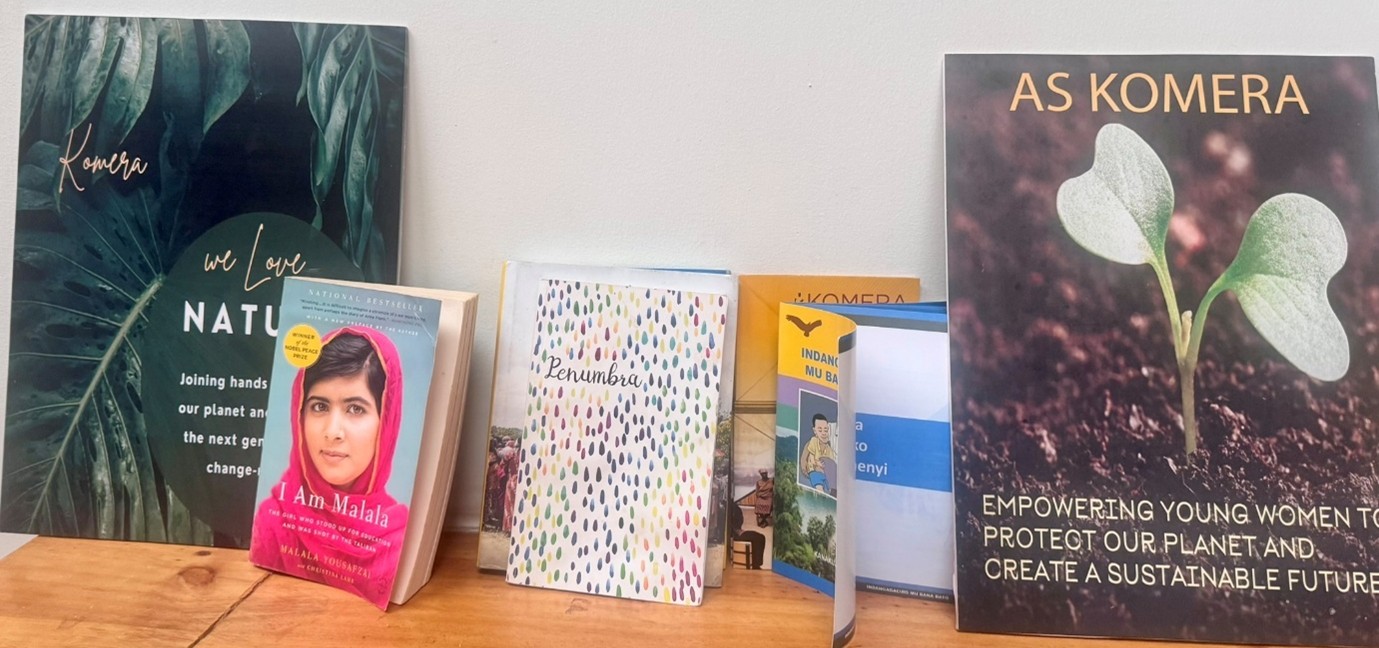
The programme offers scholarships, mentorship, health insurance for entire families, as well as reproductive health education and leadership training. It works with parents too, because a girl’s life does not change if the household she returns to remains the same.
Since 2018, forty-six out of forty-nine participants have gone on to university. Each graduate now supports six new girls entering the programme.
I sat with some of them and listened as they spoke clearly, without hesitation about their lives before and after. One described feeling isolated, ashamed, disconnected from her child. Now she feels part of a community again. Another spoke about having goals.
Before the programme, many girls changed how they dressed after giving birth, abandoning the clothes of young women for those of older ones. After Komera, they dress like themselves again.
I do not know how to put that into a policy brief.
I know it matters deeply.
Who is missing from the count?
There was something else I could not ignore.
Every conversation was about the mothers. The fathers were absent, not condemned, not mentioned, not counted.
In a country with one of the highest shares of women in parliament in the world, where gender equality is embedded in governance frameworks, the boys and men were not in the room and not in the conversation.
If you don’t count, you don’t count.
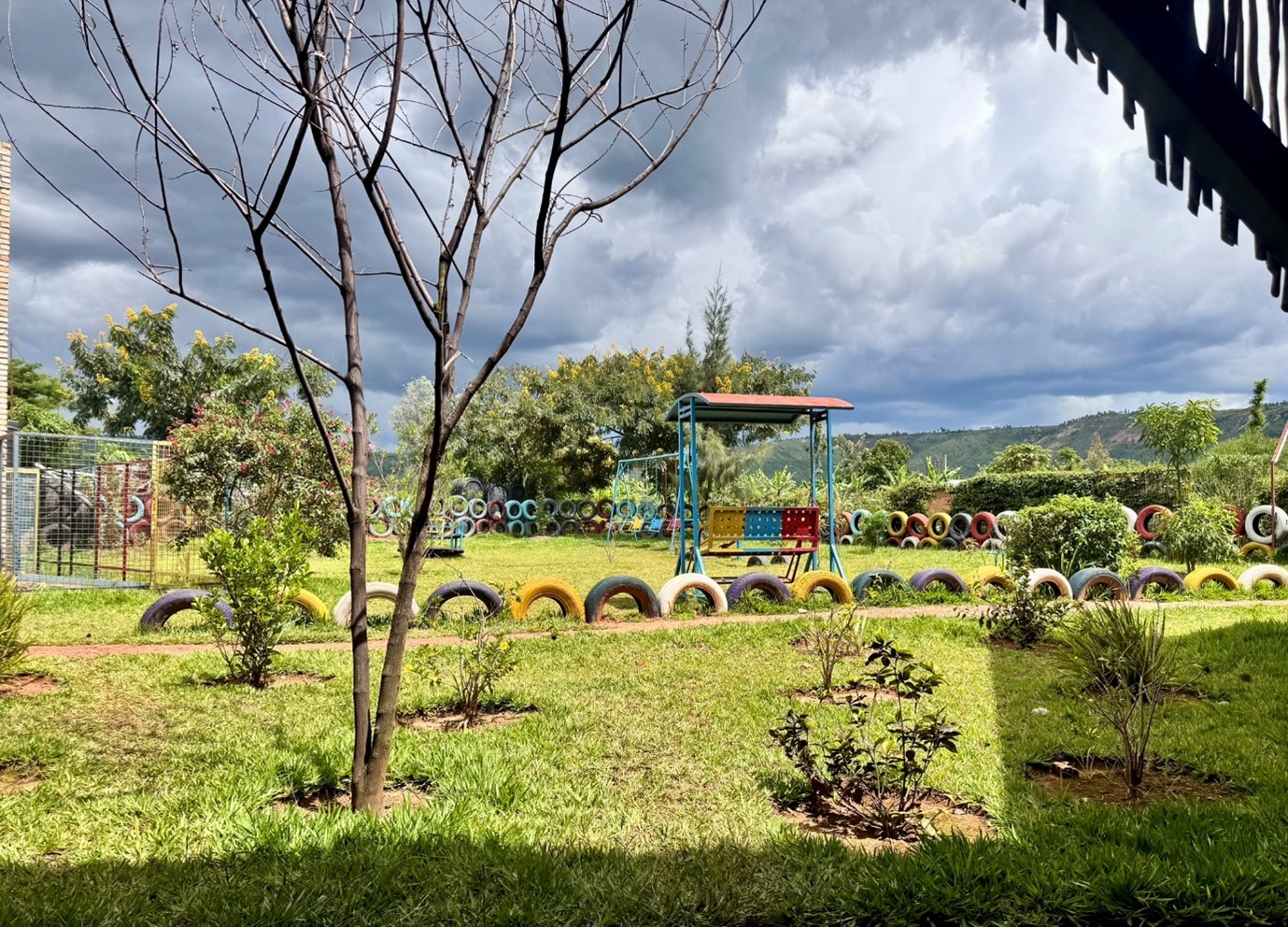
Outside, there was a playground built during Umuganda by the community, for the children. But it’s probably the mothers who use it most, allowing themselves, briefly to play again.
What one person can count
The next day we visited Hirwa, a small foundation nearby. Hirwa can be understood as “to be proud of” in Kinyarwanda.
Its founder grew up in this community, dropped out of school, and later worked as a cleaner at Akagera National Park. The park supported his return to education. He walked nearly fifteen kilometres each way, every day, until he finished secondary school.
Years later, he came back and built something for the children around him.
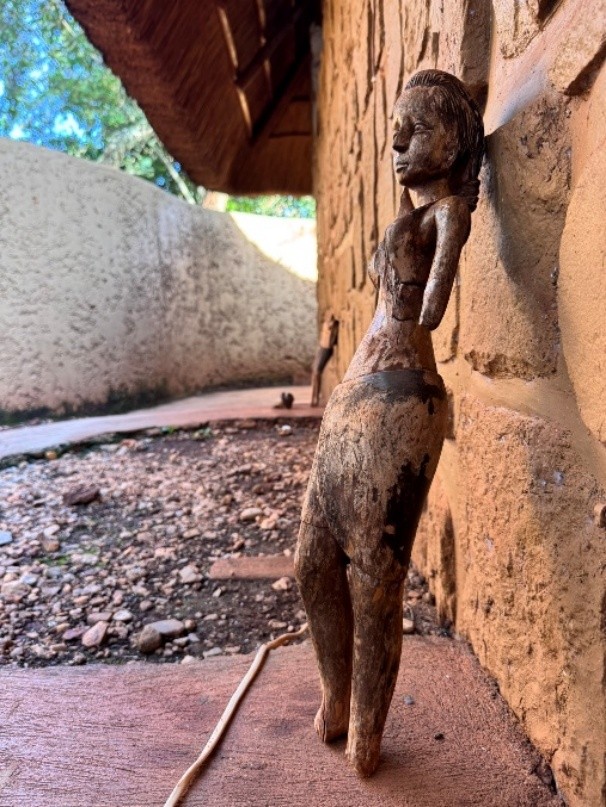 Hirwa now supports children with education, health coverage, nutrition, and menstrual hygiene support. It trains teachers and parents, many of whom never attended school themselves. It runs literacy programmes alongside children’s education.
In Rwanda, it was historically taboo for women to drum. At Hirwa, girls drum.
When I asked what children wanted to becom
e, the answers were: teachers, doctors, park rangers. One said pilot. I found myself thinking about how aspirations are shaped by what feels visible and possible. What becomes imaginable when survival is no longer the only horizon?
The foundation has no fixed donors. It raises funds through activities such as walks to Akagera, the same park where the founder once worked.
A person can make such a difference.
And I kept wondering how many others are out there, in places no field course reaches, doing something with what they have, and never entering the count.
What I brought home
Leaving Kayonza felt unexpectedly melancholic.
On the drive back, I watched the same scenes, but differently: people navigating narrow roads without sidewalks, children collecting water from wells, bicycles overloaded. For many, walking long distances and navigating risk is not a hardship worth noting. It is simply life.
I had spent two weeks learning about systems designed to reach these people, and I kept thinking about the distance, not in kilometres, but between being counted and being reached.
At one point, a girl at Komera asked why we had come. A student answered: to learn from Rwanda, to build our own countries, to learn from African lessons.
There is something generous in that. And something that should remain open. Rwanda’s solutions are rooted in a specific history of loss, and of people deciding, with very little, to stay and rebuild.
The question is not only what can be learned.
It is also: whose hours are being counted, and whose are not?
At the closing session, a student said hope lives in every Rwandan he had met.
I am taking home something slightly different.
Mud on my shoes from Kayonza. The memory of a girl who now has goals. A man who walked fifteen kilometres to school and came back to help others. Children who want to be park rangers. Social taboos like teenage pregnancy, that shape lives but have no column in official spreadsheets.
And the sense that being counted, really counted, not just tallied, sometimes depends on someone deciding that another person’s hours matter enough to go and find them.
Note: This article gives the views of the author/academic featured and does not necessarily represent the views of the Global Development Institute as a whole.
Please feel free to use this post under the following Creative Commons license: Attribution-NonCommercial-NoDerivatives 4.0 International (CC BY-NC-ND 4.0). Full information is available here.