
by Dr Helen Underhill, Research for Transformation Lab Manager
In November 2025, the Global Development Institute hosted Transformation Lab Week, a series of events and discussions marking the launch of its Research for Transformation Lab. The lab represents a pioneering effort to strengthen links between GDI’s research activities and real-world solutions within the development field. While bridging gaps between academia and impactful practice is complex, Lab Week gave us a valuable opportunity to broach the difficult discussions required to make such ambitions a reality. From the transformative impact of storytelling to unintended consequences of the research impact agenda dominating UK institutions, we covered a broad range of topics and came away with plenty of food for thought.
The final event took the form of a Q+A with Prof. Diana Mitlin, Prof. Stephanie Barrientos and Prof. Maria Rusca, and many more from across the Institute. By any measure or metric, Diana, Stephanie and Maria are all researchers who do highly impactful work, yet their experiences and approaches towards impact vary widely. One conviction they all shared when presenting their thoughts, however, was the importance of the politics of change – committing to research for transformation is personal. While there are some impacts that feel like serendipity, those moments emerge through mutual connection and the slow, gradual, intentional deepening of relationships.
Collaborations often turn into friendships through shared belief in, as Prof. Sam Hickey aptly commented, “what needs to be done”. For example, Stephanie recounted how long it took for aspects of her research into global value chains to take off, noting that she and her collaborators persisted without commitment from donors despite knowing “we might never get the funding, but [wanting] to do it if we could.” The gender lens that was initially dismissed planted seeds that have grown significantly and led to transformative change such as Cadbury’s Fairtrade certification and a recognition of trade and labour standards across the cocoa industry.
Work that focuses on power relations
Building from the initial provocation about the boldness and ambition underpinning the naming of the Research for Transformation Lab, our 90 minutes together included explorations of coalition building, relationships and power relations, and the UK’s Research Excellence Framework (REF) Impact Case Studies model, among much more. And as the specific themes shifted, we kept returning to the deeper interrogation of transformation, a word that intentionally speaks to GDI’s goal to centre research where critical thinking meets social justice.
The various sessions during Lab Week established relationships as the key to enabling research to have an impact in the world, remembering that impacts (what kind, in what ways, for whom?) are not always positive, and that impact evaluation (how, who, why, when…?) is as much a part of the contested story of knowledge production as the ‘output’ itself.
We heard accounts of how long it takes to build trust with communities and the different actors who engage with and use the research findings and data. (Listen to this podcast with Diana Mitlin). We explored the nature of research that seeks to uncover stories of lived experience, including the ethical entanglements of those stories being retold for ‘impact-generating’ activities. Underlying all the discussions, was the recognition that “if ‘critical thinking meets social justice’ means anything, it has to be about transforming power relations.” (Prof. Sam Hickey).
To shift unequal power relations that remain engrained in so much research practice, the conversations highlighted the urgency of continuing to engage with the nature of how these relationships emerge: for example, how are collaborations and coalitions formed? How do they evolve over time? To what extent have the power relations shifted in ways that hold researchers within those collaborations accountable? Conceptually, transformation requires us to be bold and ambitious in what we work on and towards and, most importantly, how because it ensures an iterative questioning of power relations. In all our work at GDI, we have many questions to consider:
- Who is included and excluded in this work?
- What histories have shaped the narratives that emerge?
- Whose voices are amplified in these stories and are these our stories to tell?
- What and whose perspective of transformation does this work lead towards?
- Who resists the transformative potential of this work and why?
Can we (should we?) plan for impact?
Knowledge Exchange and Innovation are key to current debates around research impact in UK Higher Education, and it is likely that the space afforded to impact plans and/or statements in funding/grant applications will continue. Spend a couple of hours diving into the online landscape of research impact and you’ll come across plenty of tools, toolkits, templates and frameworks that will help you to design, plan and document your ‘pathway to impact’ statement (e.g., see Reed, 2016). You might even find an app which will generate an impact plan with accompanying activities simply based on you inputting a project outline. Complete one of these and you’d be forgiven for thinking that research makes its way into the real world (changes in policy, practice, culture, economics, environment, etc) through planned activities and outputs.
While tools and templates prompt us to consider who might be engaged with, interested in, or affected by our research (‘stakeholder analysis’) and the emergent findings / data, there are more complex issues around planning for impact that take time, reflexivity, knowledge, skills and practice. We should explore possible motivations, risks and unintended consequences of different impact-generating activities and extend critical thinking to what impact-generating activities would look like and – most importantly – why. Similarly, it is increasingly being recognised that research funding bodies encourage us to attribute impact within the life-cycle of a finite research project (or at least within 12 months of its final report) when, in reality, the real impacts take much longer.
At the Lab, we’re being intentionally ambitious. This means pursuing work grounded in critical thinking and social justice, and to drive impact that leads to transformation of power relations. For us, then, a critical question in this context concerns how we put this ambition into practice: to what extent can we, or should we, plan for impact?
Planning is certainly important, but it is different from instrumentalising. Through Transformation Lab Week, we heard examples of how transformative impact emerges in those spaces between and encompasses much more than what can be generated from or squeezed into a tick-boxed template. GDI researchers have been challenging a temporally-bounded conception of impact for years. By sharing examples of their work with communities and partners from policy and practice, they showed that instrumentalising impact through specific outputs (e.g. click-throughs measured, letters of evidence collected) neglects the truly transformative nature of research: the connections we make with our collaborators and partners that lead to insights and questions we might never have considered.
Diana’s work with various community organisations across the world has shown how deepening relationships over time can build a vital support network within the research process, and lead to connections and collaborations that transform how communities see themselves. As mutual trust and understanding grows, so does the space for the knowledge emerging from research to be used in ways that enables pushback against practices that go against transformation.
What next for the Lab?
Being intentionally bold and ambitious in the pursuit of structural transformation and the shifting of power relations may go against how some people view the role of a researcher: as someone who should always retain scholarly distance. Yet in the field of global development and the context of diminishing development assistance (ODA), there is an alternative view that we should not shy away from: global development researchers are in a position whereby they can challenge structures of knowledge production (see recent piece by Borras Jr. and Franco in World Development, 2025) to be intentional and bold in the pursuit of co-creating transformation through research. Colleagues at this final session of Transformation Lab week made a clear case for just that: global development research can build transformation if it is rooted in our relationships, our connections and our commitment.
As we move into 2026, the Research for Transformation Lab will continue to pick up these themes, particularly centring on the practices and approaches of building collaborative and equitable partnerships, networks and coalitions. We will continue to engage in conversations that confront deep-rooted histories of knowledge production, and to exploring the role and practices of researchers and research partners in building deep, committed relationships that challenge the systems that maintain and even benefit from injustice and inequality.
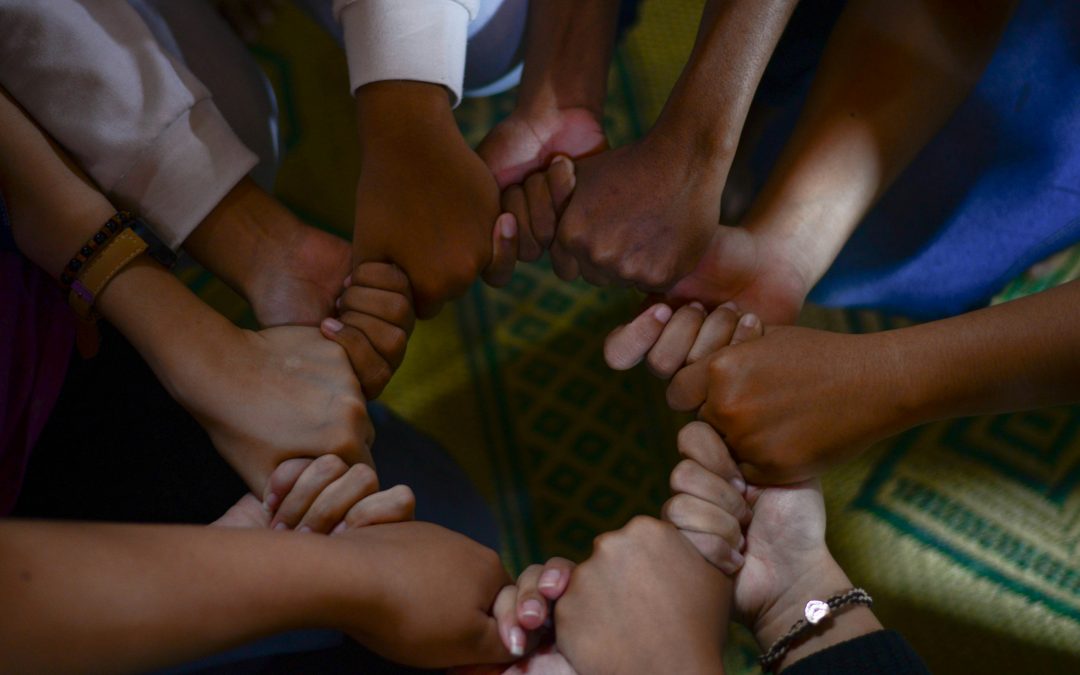
Photo in header by Wylly Suhendra on Unsplash
Note: This article gives the views of the author/academic featured and does not necessarily represent the views of the Global Development Institute as a whole
Please feel free to use this post under the following Creative Commons license: Attribution-NonCommercial-NoDerivatives 4.0 International (CC BY-NC-ND 4.0). Full information is available here.