
by Tekle Weldemichel (Lecturer in Environment and Development at GDI) and Hussein M. Sulieman (Research Fellow at GDI)
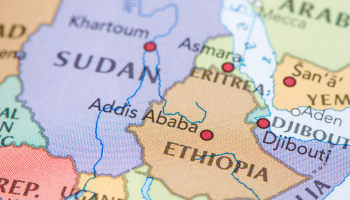
The Horn of Africa (HoA) has, in recent years, been going through one of the most acute episodes of political and humanitarian crisis in its modern history. Ethiopia and Sudan, two of the largest countries in the region, have been engulfed in devastating wars that have reshaped regional dynamics, intensified humanitarian emergencies, and transformed long-standing patterns of cross-border movement.
In Ethiopia, the war that broke out in the Tigray region in early November 2020 rapidly escalated and expanded beyond its initial theater. In Tigray alone, forces from the Ethiopian and Eritrean armies, alongside allied ethnic militias, engaged in systematic campaigns of violence, including ethnic cleansing, mass atrocities against civilians, and the imposition of one of the most protracted sieges in contemporary history. These actions resulted in the deaths of hundreds of thousands, making the Tigray war one of the deadliest of the century and produced widespread suffering among millions of residents in the region and beyond.
In Sudan, the war between the Sudanese Armed Forces (SAF) and the Rapid Support Forces (RSF) that erupted in April 2023 precipitated the near-total collapse of the state. The war, which began in Khartoum and rapidly spread across the country, has triggered one of the world’s gravest humanitarian crises. More than one third (about 13 million people) of the population have been displaced, making it the largest displacement crisis within a single country, while over half of Sudan’s population now requires humanitarian assistance. With the war now in its third year, fears of a complete systemic collapse are mounting, as state institutions, social services, and economic structures continue to disintegrate under the strain of prolonged conflict and deliberate attacks.
Both wars share several common features: the erosion of state institutions, the militarization of politics, mass civilian displacement, and humanitarian crises with regional and global implications. In both contexts, the conflicts have disrupted agricultural production and trade, intensified food insecurity, and drawn in regional actors through proxy interests. Beyond internal rivalry and animosity, geopolitical competition—along with the pursuit of mining resources and land—constitutes a major driver of both conflicts.
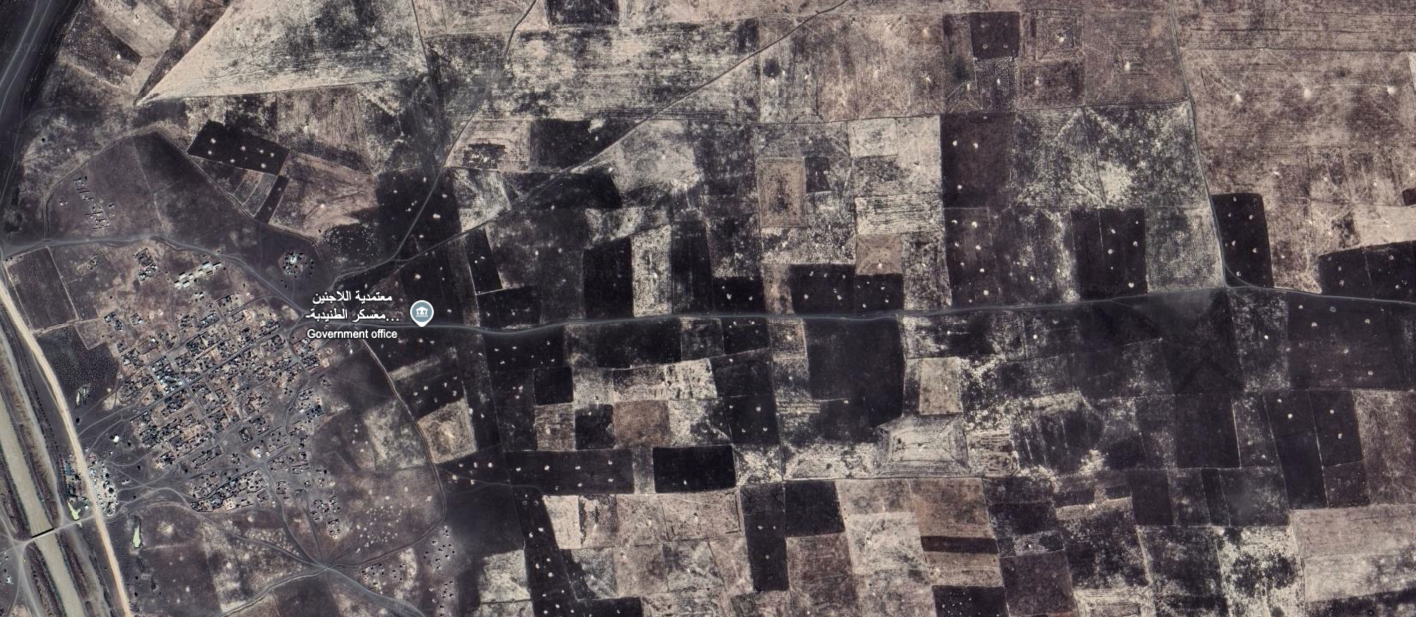
Aerial image of Tunaydba, eastern Sudan. Google Earth. 4 December 2020. This image shows the area before the arrival of Tigrayan refugees. Subsequent images show the extent to which the area has changed in recent years.
A critical dimension of these conflicts has been the large-scale forced displacement of populations. Nearly every Tigrayan has been internally displaced at least once during the last five years since the outbreak of the war. Amid widespread, systematic violence—tens of thousands of Tigrayans, predominantly from Western Tigray, crossed into eastern Sudan and sought refuge in Gadarif State. Despite the signing of a ceasefire agreement designed to halt atrocities against civilians in November 2022, the majority of these refugees remain in camps across eastern Sudan to this day under immensely difficult conditions even as Sudan itself faces state collapse, compelling millions of Sudanese to flee both internally and across borders into neighboring countries, including Ethiopia.
The scale of Sudan’s displacement crisis is particularly striking. While many have sought refuge in neighboring states, millions remain internally displaced, often compelled to move repeatedly in search of safety amid widespread violence and atrocities perpetrated by the Rapid Support Forces (RSF). Tens of thousands have crossed into Ethiopia, itself still grappling with the aftershocks of its genocidal war in Tigray and the ongoing civil war in the Amhara and Oromia regions.
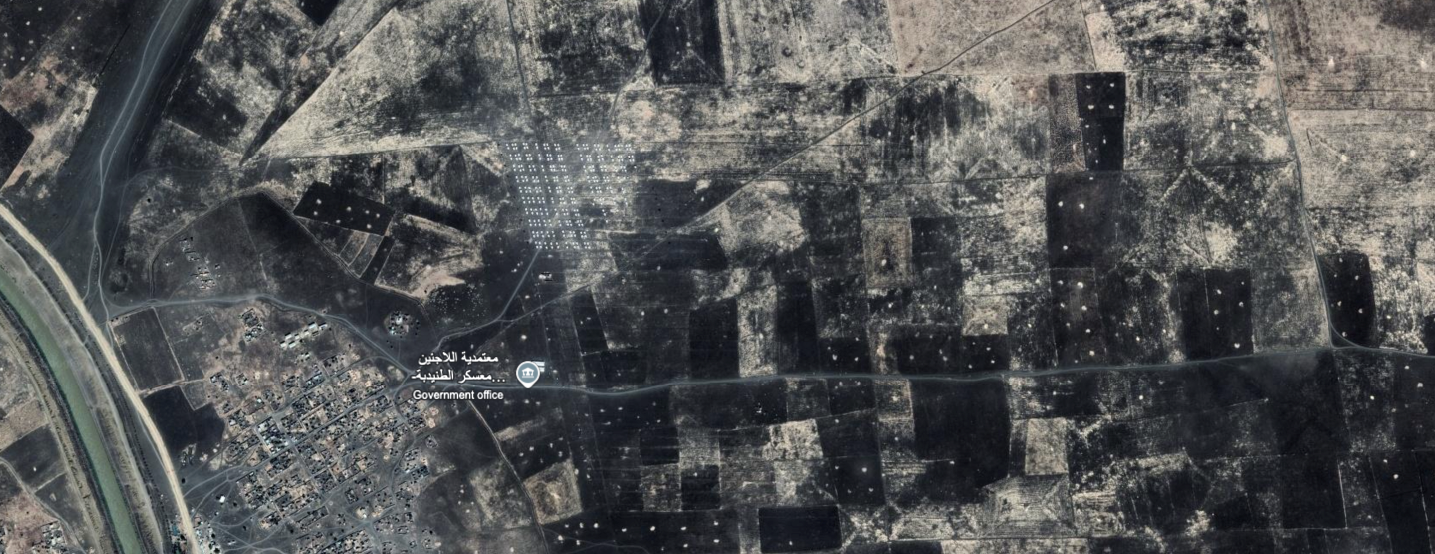
Tunaydba, eastern Sudan. Google Earth. 30th December 2020. In this image, you can see the beginnings of a camp for Tigrayan refugees emerging with about 300 tents.
During the Tigray war and thereafter, Sudan has been a shelter for tens of thousands of Ethiopians fleeing the brutal war in Tigray. Unfortunately, in a couple of years, the roles have tragically reversed. As Sudan itself descends into a devastating internal war, its citizens are now the ones seeking safety in Ethiopia—retracing the very routes once taken in the opposite direction. This reversal lays bare the cruel symmetry of suffering in a region where peace is always precarious and borders rarely separate crises—they merely shift them.
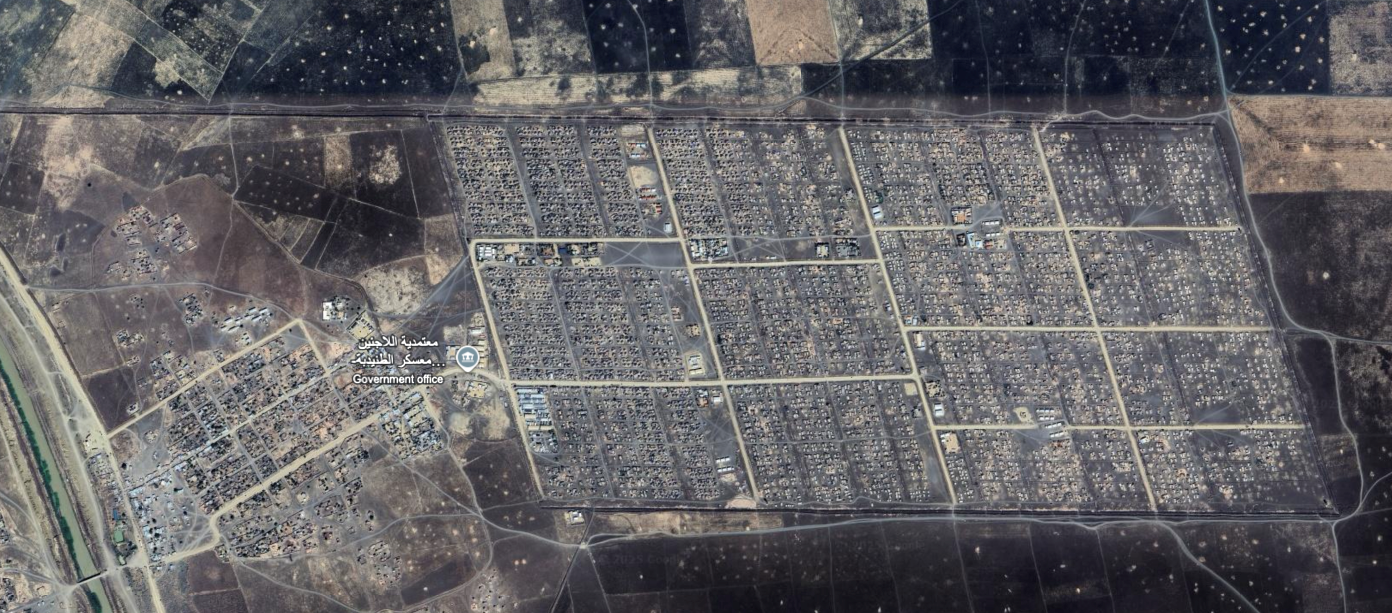
Tunaydba, eastern Sudan. Google Earth. 5th February 2025. This image shows the extent of the transformation in recent years.
What makes this moment even more poignant is that it is not only the recent arrivals from the Tigray war who now have to flee back to Ethiopia. Many Ethiopians who have lived in Sudan for decades, building lives, raising families, and becoming part of the social and economic fabric of Khartoum and other cities, are also being uprooted. Their journey home is far from easy: they return to a country that has changed dramatically, often with limited support, fractured networks, and the emotional weight of leaving behind the place they once considered home.
The environmental, social, and livelihood consequences of such mass displacement—both internal and cross-border—are profound and enduring. These extend beyond immediate humanitarian emergencies, reshaping demographic patterns, straining host communities, and altering the socio-political and ecological landscape of the region.
The wars in both countries, though rooted in different political struggles, are deeply connected by geography, history, and human movement. Together, these wars have redrawn the social and humanitarian map of the Horn of Africa: once relatively stable trade corridors have become frontlines; border towns have turned into hubs of displacement; and entire ecosystems of livelihoods—pastoralism, farming, and cross-border exchange—have been disrupted. What was once a landscape of trade and interdependence has become one of isolation and survival, as the Horn of Africa faces yet another cycle of intertwined conflicts and humanitarian emergencies. Border regions such as El-Fashaga, historically an area of contestation between Sudan and Ethiopia, have become even more volatile, with shifting control, militarization, and population movements amplifying longstanding tensions.
Note: This article gives the views of the author/academic featured and does not necessarily represent the views of the Global Development Institute as a whole
Please feel free to use this post under the following Creative Commons license: Attribution-NonCommercial-NoDerivatives 4.0 International (CC BY-NC-ND 4.0). Full information is available here.