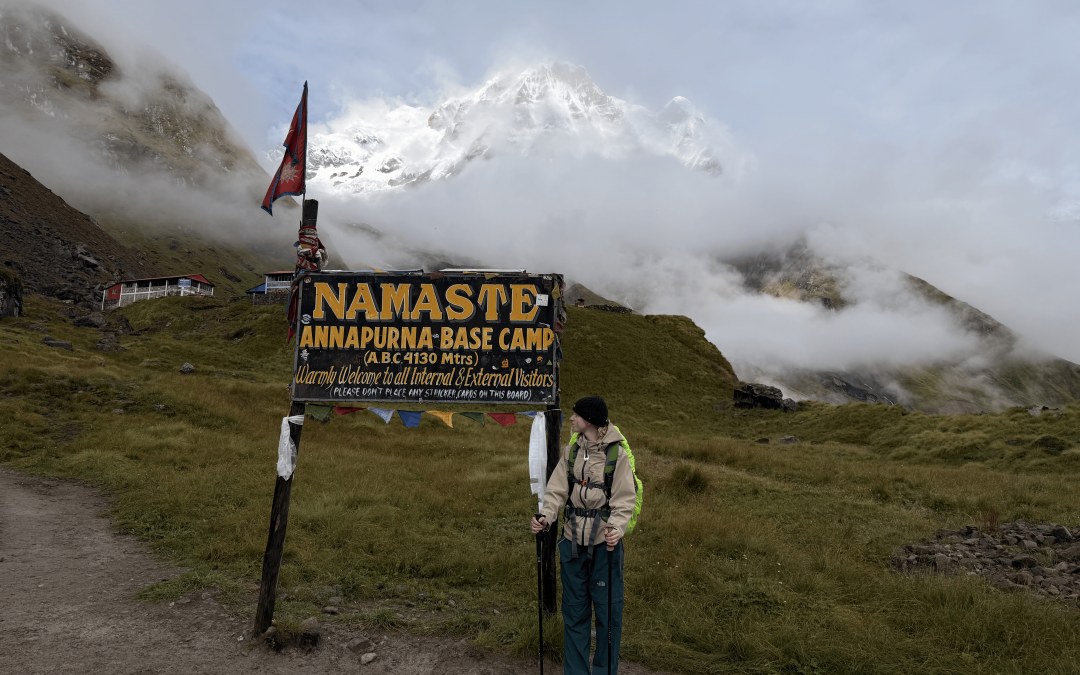
In this blog, Evie Taylor, undergraduate student on GDI’s Global Development course, recounts her eye-opening summer travels in Nepal.
Touchdown in Kathmandu
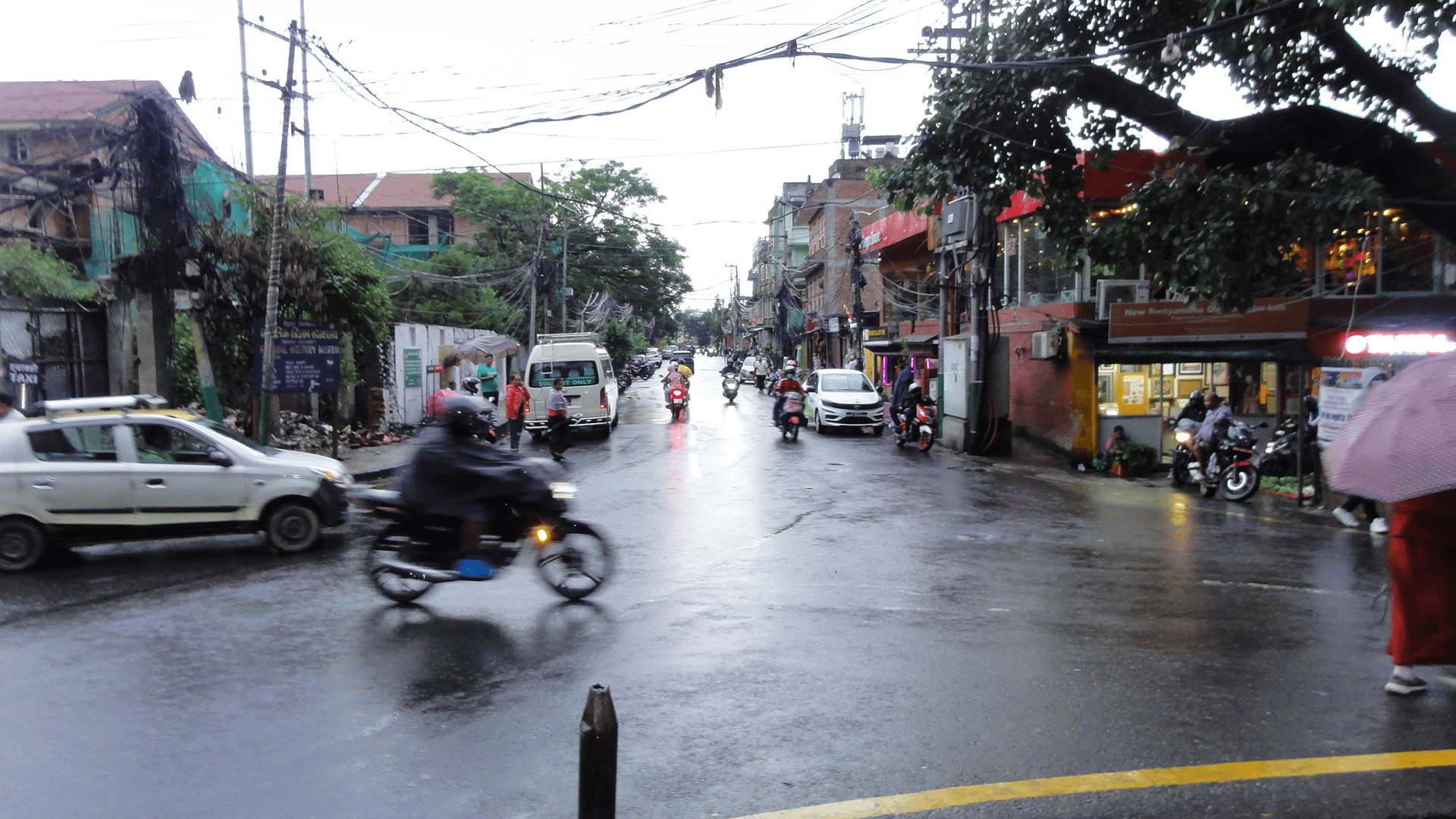
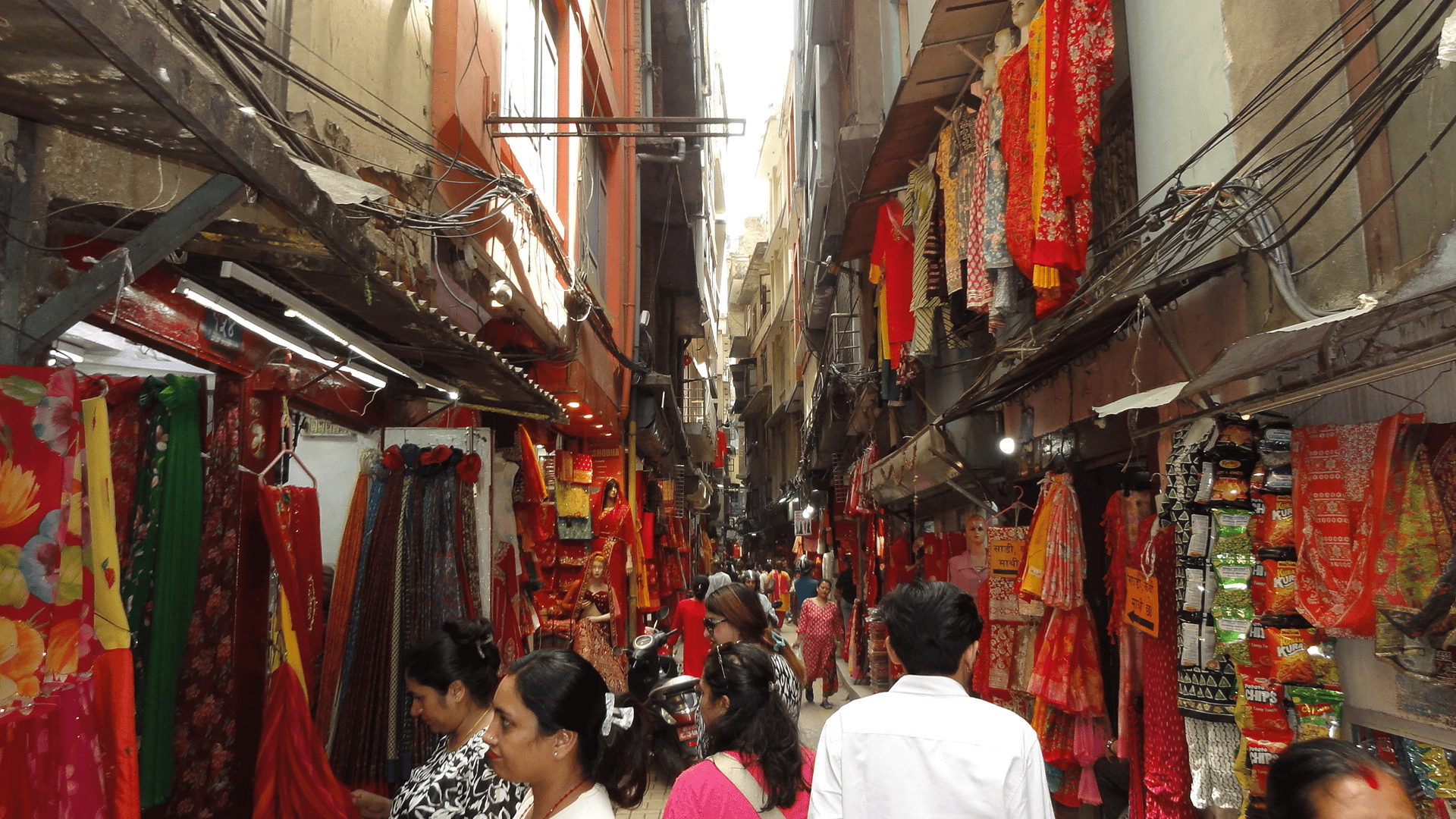
After the chaos of India, touching down in Nepal felt like breathing out. There was a sense of calmness in the air that New Delhi certainly lacked. In Kathmandu, the streets are busy, but no one’s in a rush to go anywhere. I had travelled to India before coming, partly to visit the Taj Mahal, but also to see a nation I thought I would only be able to study. I gained a greater understanding of how complicated “development” actually is after visiting India, a country at the heart of so many developmental debates.
Nepal, however, was where my journey really began. I wasn’t just here to take in the sights and go trekking; I was here to help teach English to Nepali women who had made the brave decision to return to school and continue their education after having to leave or not receiving one as childeren. As a Global Development student, I was eager to move beyond theories and statistics and experience development in practice. When I came across a volunteering programme that focused on women’s education in Nepal, I knew immediately that this was the perfect fit for me. With help from Manchester’s Zochonis Special Enterprise Award, I was able to travel there and spend 5 weeks teaching English in Tokha, Kathmandu to women of all ages. For me this was more than volunteering, it was a way to experience development on a human scale. I had the chance to contribute meaningfully towards the SDGs, in particular SDG 5: Gender Equality.
Life in Nepal
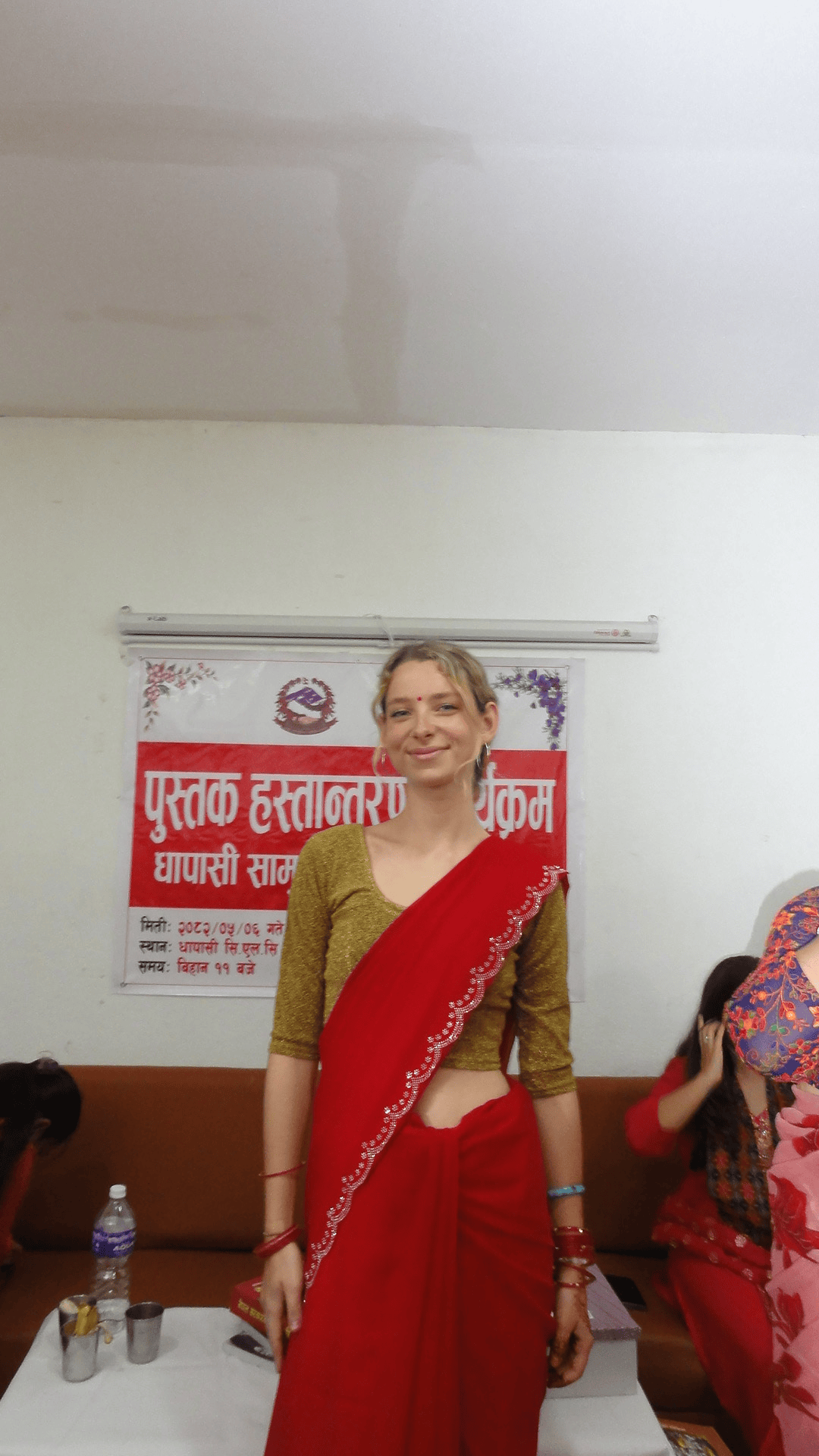
Nepal’s society is deeply ingrained in a hierarchical system, heavily shaped by tradition and influenced by religion.Communities are close-knit but so welcoming to ‘outsiders’ (like me!), and festivals only bring everyone closer together. I was fortunate to experience this first-hand at a Teej celebration. During this three-day festival, women wear red Sarees, fast, and pray for the long lives of their husbands and the well-being of their families. The celebration at the school where I was teaching was filled with dancing, cake, amazing food and exchanging bangles as gifts. I was lucky enough to even receive a red Saree as a gift from one of the women I taught. It’s hard to describe how electric the air was; everyone was singing and dancing to traditional Nepali music, and I felt so welcomed into their lives.
Like many countries, patriarchy is everywhere. Men are often prioritised due to Hindu beliefs, long-established gender roles and social norms. Education isn’t really prioritised for girls, and many drop out early to marry and become housewives. Currently, 30% of girls aged 15-19 are not in education in Nepal, and nearly 40% of those who are married before the age of 18 give birth before they become a legal adult (UNESCO, 2023). In contrast, boys’ education is seen as an investment in the future.
Many men move abroad after university to pursue their careers and secure jobs overseas, often leaving their wives to manage the household on their own. Despite this, the women I taught were determined to finish their education. Their resilience stood in sharp contrast to the world around them. Walking through the streets of Kathmandu or hiking through the quiet villages of the Himalayas, you’re met with the paradox of life in Nepal. You’ve got this amazing country filled with generosity and community, but when you go a little deeper, you’ve got a country deeply rooted in patriarchy and inequality that shapes the lives of women in subtle and not-so-subtle ways.
The School
As I walked through the small town of Tokha on my way to school, I had no idea what I would encounter. Everything had been left to my imagination. When I arrived at Subhashree Community School, it was not what I expected. The classrooms were simple and nothing like the secondary school and university classrooms I had become accustomed to over the years. They were small classrooms with three rows of wooden tables and chairs, and the concrete walls were adorned with drawings created by the students, which related to their studies. When the women started to filter in for the first period, after their busy mornings of housework, I was in awe at the vast age range of these women. I taught women from 13 to around 70 years old, with most of them being in their 30s and 40s.
The school was divided into twelve levels, with Level 1 students being beginners and Level 12 being the most advanced. I was asked to teach levels 1-3. Still, I also occasionally taught a level 7 class, which really showed me how well this school works. In Level 1, the English spoken between me and the women was extremely basic, and the learning we were doing was based around singular words, such as colours, and basic sentences.
However, as I progressed through the levels, the work became more complex, and I could have more conversations with the women.
As the weeks went on, it became clear that this school was a lifeline for these women, providing a rare environment where women’s voices were the centre of attention and offering them access to a new community. Some of these women had been denied an education for decades, and this was their chance to restart. The school provided them with opportunities that they never thought they’d have – the chance to gain confidence, skills, and a safe space to learn without judgment.
The Classroom
Teaching at this school was both a challenging and rewarding experience. Within the classes, the students were at different stages, with some grasping certain concepts and others requiring additional support. In Nepal, learning disabilities, like dyslexia, often go undiagnosed, so we had to find creative ways to ensure that every student had a chance to succeed.
The teaching style was quite different from Western approaches and what I had expected. The lessons were often set up in a call and response style – I’d say a word and they’d copy me; “i”, “like”, “dal”, “bhat”. It may seem simple, but it worked. We would review passages of words in groups multiple times until everyone understood, and then the women would come up to the board to teach their peers.
In the classroom, the energy was contagious. You couldn’t leave these women without a smile on your face. Level one students loved helping each other and celebrated getting answers right with a song and dance. In the different levels, everyone helped everyone, regardless of age. In these classes, there was really no age gap.
The challenges these women face are significant. Housework and wifely duties can prevent them from attending class, sometimes for days, and often the women would be late for the first period, missing half the class. One in three young women in Nepal are married off as children (UNESCO,2023), limiting their education opportunities, and older women don’t really have the opportunity to go to school at all. The women’s dedication to learning demonstrates how education can be a tool of empowerment, allowing them to discover their true potential and opening up new opportunities for these women. The struggles these women faced reflect the harsh reality of many women across the globe.
Nepal and the Rest of the World
The gender inequality I experienced in Nepal is not unique to the country. Across South Asia and much of the Global South, women face very similar structural barriers.
Expectations for women surrounding marriage, household duties,and education are more than common in Nepal’s neighbouring countries and across Asia. In many rural communities, girls’ education isn’t prioritised, and young girls are expected to manage households and work on farms. This isn’t just a cultural issue, it’s a development issue.
Yet, the empowerment of Nepali women is also a global phenomenon. Women in these positions are reclaiming their right to education by participating in development programs and slowly reshaping cultural norms. Schools like the Subhashree Community School demonstrate how localised efforts can have a profound impact by giving women tools to assert agency in their lives and contribute economically and socially to their communities.
Reflections
Nepal is one of the most beautiful countries I’ve ever visited, from the Annapurna peaks to Kathmandu’s chaotic yet calm atmosphere. However, what stayed with me the most during my 5-week stay was the kindness and generosity of the Nepali people. I met women whose days started with cooking and cleaning, and women who would come into class with their babies, still eager to learn. That effort and determination really shifts your perspective.
Teaching in Nepal made me see education from a different outlook. It’s easy not to think twice about learning and education because it’s a privilege many of us take for granted.
Still, in that classroom in Tokha, the women treated learning as something urgent. Watching the women read aloud to the whole class or write a word right on the whiteboard showed me that education isn’t just about lessons or getting the correct answer, but about recognition. It’s about being seen and valued in a society that hasn’t always treated them that way. It made me realise that education is never just a given; it’s a privilege that people will continue to fight for.
My favourite moments were the everyday moments, like when the students came in each morning with smiles on their faces, saying “Namaste” or the laughter that would fill the classroom after I badly mispronounced a Nepali word. The women I was teaching didn’t want anything special. They just wanted the same chances that we in wealthier societies take for granted.
When I left Nepal, it didn’t feel like I’d just gone through a “life-changing experience”. I was left with a clearer sense of how easily a human right like education can be so unevenly shared and how powerful it is when someone finally gets access to it.
Note: This article gives the views of the author/academic featured and does not necessarily represent the views of the Global Development Institute as a whole
Please feel free to use this post under the following Creative Commons license: Attribution-NonCommercial-NoDerivatives 4.0 International (CC BY-NC-ND 4.0). Full information is available here.