Yesterday I was sad to read of even further declines in UK giving over the past year. Today I am furious to hear what UK aid cuts will look like in practice. And if you’re following global development headlines, you might feel the same way.
Such devastating stories are an indictment of where we are and where we’re heading. So let me take my ‘Professor’ hat off and say a little about what we’ve learned in these past days and what that means for some of the most vulnerable populations in the world.
But I won’t end with the same emotions. Because this isn’t just a story about crisis. I’ll end with one simple, practical step that can turn despair into something else entirely.
So, here goes. Take a deep breath and know that once you’re through the pain of the content, there is something you can do, right now.
Two headlines we can’t ignore
Yesterday the Charities Aid Foundation 2026 Giving Report came out. The findings aren’t pretty. Six million fewer people in the UK are giving to charity than a decade ago. The sector has lost an estimated £12.4 billion in income as a result.
Global charities have been hit particularly hard. In 2016, 19% of donors supported global development. By 2025 that figure had fallen to just 11%. Funding from these donors dropped from £970 million to £727 million, a loss of £243 million even before inflation.
This isn’t a generosity crisis. The data also show that it is an affordability crisis – and it’s a trust crisis. People haven’t stopped caring, but many have stopped believing – that their money is used well, that organisations are transparent, that the charity model is working, that impact is real. Too often, that loss of trust has been earned. A small number of the biggest charities dominate the sector and receive the vast majority of its income. But when trust erodes at the top it affects the entire sector.
The second headline came just a day later. This time from the UK Government detailing how it would roll out the £6 billion of aid cuts announced last year. Aid to Africa alone will be reduced by nearly £900 million by 2028-29. We knew these cuts were coming. We were told that that they are of necessity rather than ideological. But it’s hard to hold onto that framing when you hear the visceral reality of what this means in pounds saved, progress wiped out and lives lost.
The Equality Impact Assessment that accompanies these announcements is (by law) admirably transparent. It makes it very clear: these cuts will ‘inevitably have negative impacts for many programme beneficiaries’. There is no way to make cuts this big without causing harm.
While funding is protected for Fragile and Conflict Affected States, bilateral funding elsewhere – especially in Africa – will see the deepest reductions. Decades of progress, particularly in health and social protection, risk being undone. And as always, it will be “likely to affect the most vulnerable disproportionately.”
A system that isn’t working – and a truth we overlook
None of this is happening in a vacuum. We’ve known for decades that the aid and charity system is not working as effectively as it should. Our research has consistently shown how power, decision-making and resources remain concentrated in donor countries far removed from the communities they are meant to serve.
The system has become increasingly top-down, hierarchical and difficult to change, despite widespread good intentions and efforts to move towards new forms of locally-led development to improve things.
And yet in the middle of all this, there’s a truth that we don’t talk about enough: you. You are not a small part of this system. Our research has actually revealed that you are (by far) its biggest driver. Before the pandemic, people in the UK were giving around £2 billion a year to development charities.
Yes, that giving has declined, perhaps understandably so. But the values behind it haven’t disappeared, and that matters. Because it means the story isn’t over.
£7.20.
Let’s make this real. If you divide the £6 billion in aid cuts across the UK population, each person’s ‘share’ comes to about £7.20 a month. That’s it. Not billions. Not millions. Something human. Something tangible. Something possible.
So here’s the question: what if each of us chose to give our £7.20? Not as charity in a traditional sense. But as an act of solidarity. A way of saying ‘this matters’.
A different way forward
At the Global Development Institute we’ve spent decades researching what works – and what doesn’t. One of the clearest lessons is this: it’s not how much you give, it’s how you give, that counts.
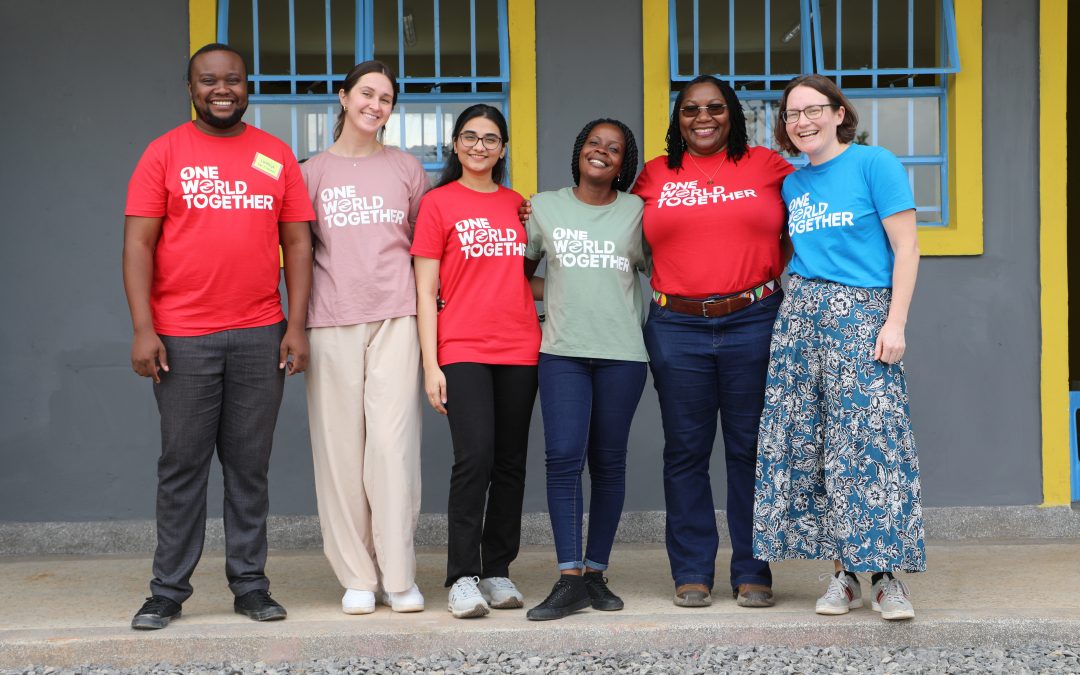
That’s why our researchers and students launched One World Together in 2023, a new way to give that connects your generosity directly with communities in Livingstone, Manchester and Nairobi and transforms it into long-term, flexible and no-strings-attached funding for them. That is funding that trusts communities to decide what they need – and when.
And when you trust communities, something powerful happens. They can support young people not just to attend school, but to thrive – with nutrition, mental health support, childcare and the resources to overcome real barriers to individual lives. They can respond to crises as they emerge. Invest in new opportunities before funding catches up. Build change on their own terms. And because more of your donation reaches communities directly, with no strings attached, its impact can be significantly greater than through traditional, highly intermediated models.
From despair to solidarity
When I calculated the £7.20 figure I was stopped in my tracks. Because across our community, the average donation from our supporters is £7.93. People are already doing this. Together. Our supporters are already choosing to act in quiet, consistent solidarity. This parallel clarified what has driven us from day 1 of this journey – that change doesn’t always come from the most powerful actors or the big institutions, from grand gestures or sweeping policies. Sometimes it starts with something smaller, more human. A choice, a commitment, a refusal to look away.
In Manchester, we don’t look back in anger. I said that I would end on hope, and here is why. Because when people come together – even in small ways – they can change what feels inevitable. And the truth is – we already are.
Learn more and join One World Together here.
Note: This article gives the views of the author/academic featured and does not necessarily represent the views of the Global Development Institute as a whole.
Please feel free to use this post under the following Creative Commons license: Attribution-NonCommercial-NoDerivatives 4.0 International (CC BY-NC-ND 4.0). Full information is available here.