
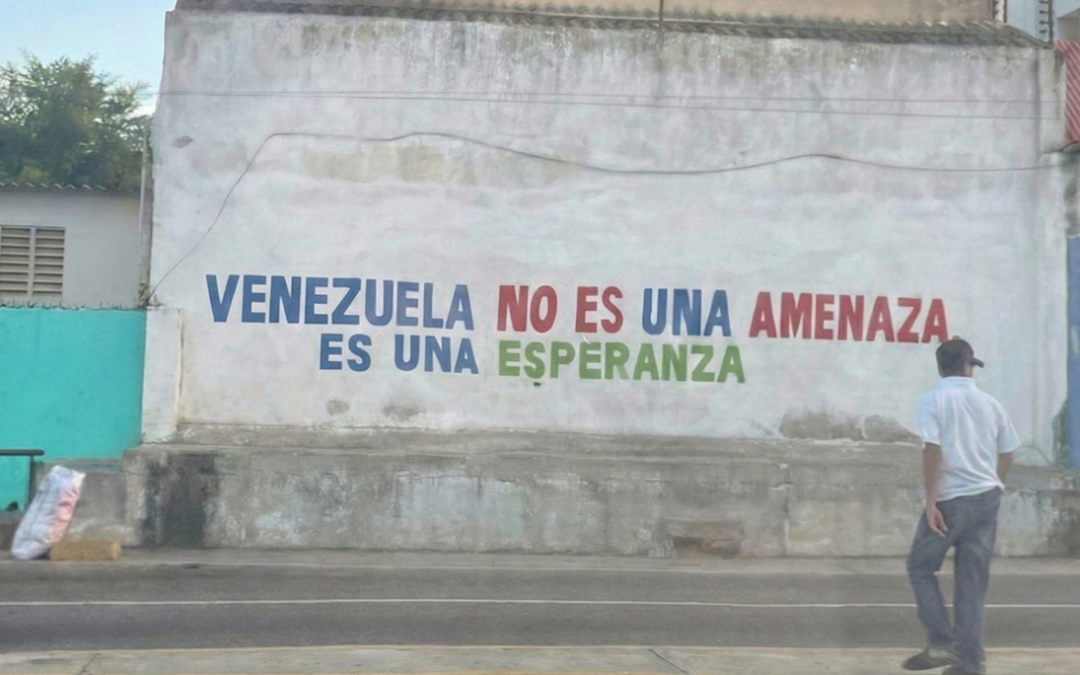
The following blog post by GDI PhD student Mariana Hernández-Montilla recounts her experiences in Venezuela during the recent capture of Nicolás Maduro. Mariana has kindly provided both English and Spanish versions of the piece. Please scroll down to find the Spanish version.
* * *
Maracaibo, Venezuela
December 2025
Home for December break. A pause from my doctoral life at Manchester. These trips back have become routine over the years, even as the obstacles multiply. A few weeks to reconnect with family, my cable a tierra. To remember why I do this work. To recharge.
I expected this visit to be like the others.
It wasn’t.
Bombardment
It was 2 in the morning on January 3rd while I was having dinner with my cousins to say goodbye to one of them who was returning to Buenos Aires the next day, one of the more than 8 million Venezuelan migrants who left the country in search of opportunities. That trip didn’t happen because that morning they would close the borders.
While we were eating, one of them, looking at his phone, tells us: they’re bombing Caracas. An attack announced for months, but at the same time so unexpected and feared. Our first reaction was disbelief: was it artificial intelligence? A viral meme? Misinterpreted fireworks? Shortly after, we would be running home because we no longer felt safe. On the way back we saw the military bases preparing for an attack. One block from home.
The following days the police and military forces would patrol the city incessantly, terrorizing and intimidating.
That was a long night we will never forget, my mother, my brother and I in front of the television until past dawn, full of disbelief and intense but confused emotions. That January 3rd few people left their homes, we didn’t hear the celebrations, the gatherings, the pot-banging that we all thought we would hear when we learned that Maduro was no longer in power.
In fact, we heard nothing.
Silence
The endless lines at the few open supermarkets didn’t take long to appear. Neither did the tripled prices. When there’s hunger, you don’t talk about peace, or oil, or even the future. People walked around with confused faces. Expressionless. That’s how we spent the 4th and 5th. Even family WhatsApp groups were silent.
Silence. Confusion. Uncomfortable, incomplete joys. Shock. Although on television I saw how around the world Venezuelans gathered to celebrate while my phone filled with messages asking me about the country’s situation.
I lost count of how many times I had to explain what was happening. I repeated the story so many times that at some point I had to stop. The news was starting to weigh too heavily on me.
Duality
While explaining, many times I felt judged for feeling joy, but also for feeling worry and anger. As if I had to choose a single emotion, as if contradiction wasn’t valid.
But there are intense and conflicting feelings. Systematic repression, hundreds of deaths in the protests of 2014 and 2019, crimes against humanity documented by the Hague and the UN: extrajudicial executions, torture, disappearances. Thousands of political prisoners, electoral fraud, the destruction of the economy that caused the worst crisis in the country’s history that scattered us around the world. Of course I’m glad to see Maduro facing justice.
But at the same time, it’s horrible to see them bombing your country and hear that they plan to invade other countries. Celebrating the fall of a tyrant is one thing. Celebrating that a foreign power can invade neighbouring countries under the Monroe Doctrine is something entirely different. If Trump doesn’t hand over power and exploits resources arbitrarily, that’s pure colonialism, and history teaches us that’s a tragedy for the colonised.
Imagine the level of desperation, fear and frustration someone must feel for an invasion of another country and bombardments with the smell of oil to bring us a glimmer of hope. If you have not gone through it, maybe it won’t make sense. A perverse irony of history. It’s what we have. This doesn’t justify anything, it only explains why some receive this invasion with relief despite knowing its price.
Our situation remains tragic; the risk of sustained interventionism is there. And that’s why this situation demands nuance: understand the joy, shelter it. But firmly reject the replacement of one tyranny with another. The horizon must be democracy, not a new subjugation.
Fear
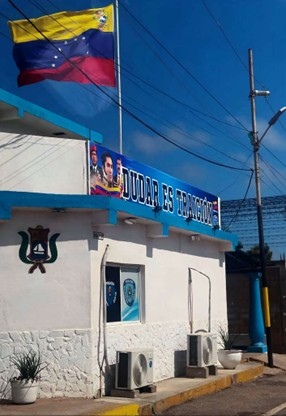
Bolivarian National Guard. Slogan: ‘Always loyal, never traitors. To doubt is treason.
It seemed fear had settled in to stay. The transitional government began checking phones at checkpoints, searching for words like “invasion,” “Maduro,” “Trump” in WhatsApp chats, detaining anyone they found celebrating. The law says one thing. The streets do another.
No one wants to be one more of the nearly thousand political prisoners who we don’t know whether are still alive. Celebrating became a luxury, expressing yourself too. People knew it. That’s why WhatsApp groups were being deleted and silenced. To doubt is to betray. That’s why we saw on the news how they took away the first detainees for celebrating Maduro’s fall.
The government organised marches demanding Maduro’s release. The real streets: silence. That’s how fear works.
Resistance
And in the streets, little by little, everything seemed to follow its rhythm. Calm returned soon, but tense. Inflation, uncertainty, fear. Almost 25 years of this government have taught me that people in Venezuela don’t break easily. They resist, they solve things with humour, and this time was no exception.
Although there’s fear in the street, there are also jokes and people thinking about how to return to normalcy. Because in Venezuela, survival is literal: eating is a luxury, we live in medieval times, waiting for the basic to become basic again.
Venezuelans are more worried about the economy than about politics. While international attention focuses on Trump and Maduro, in the streets people worry about the cost of living, getting food, security. Talking about the economy in Venezuela is like talking about a rollercoaster without brakes. The projected inflation for 2025 is 548%, just an echo of the trauma of 2018, when the figure exceeded 130,000%.
But we keep going forward anyway. And in the midst of all this, a question remains that no one wants to answer.
What’s really happening with the oil?
Oil
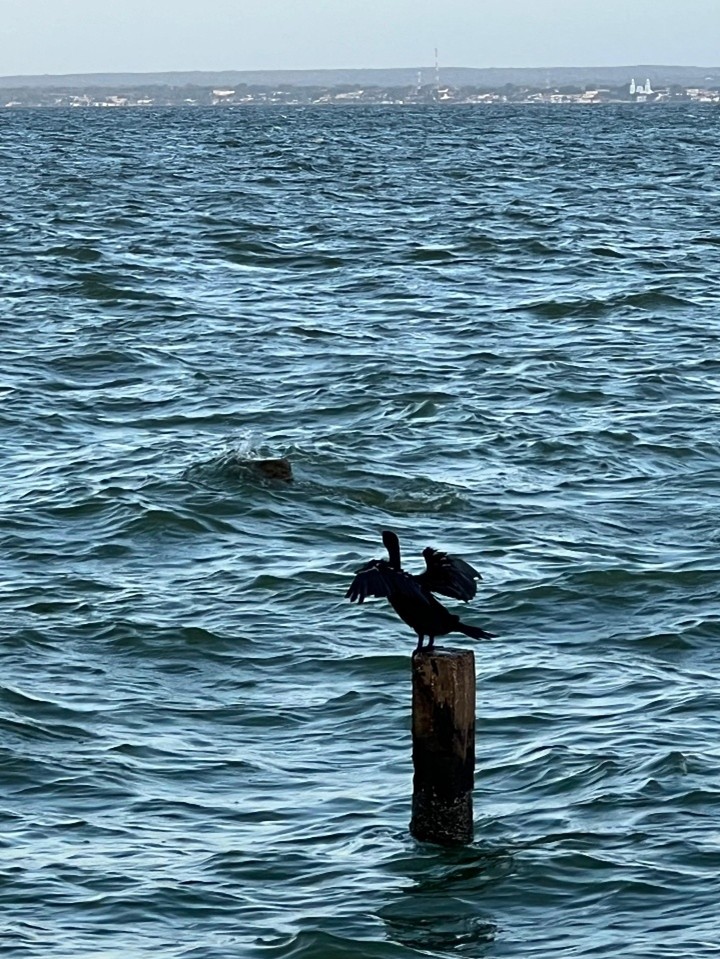
Oil-covered bird in Lake Maracaibo
Venezuela has the world’s largest oil reserves. It was never used for the people. It was used to buy weapons, finance militia, secure political alliances. No schools, no hospitals. Only networks of power trafficking. Yes, Venezuela was plundered. But one crime doesn’t legitimize another.
When you’re this tired, it’s hard to think straight. But we must try. Venezuela doesn’t need to change owners. Many interventions end very badly. Freedom doesn’t mean changing oppressors. As Hannah Arendt would say, being liberated from a tyrant is not the same as being free. Freedom requires the capacity to act and think for oneself, not just to change tutors. We need to recover our national and international sovereignty, not exchange authoritarian corruption for external dependence.
When Trump was asked about freeing political prisoners or allowing the return of opponents in exile, he responded: “We haven’t gotten to that yet. What we want to do now is fix up the oil.” Oil first. Always.
Return
We’re processing one emotion at a time. The future looks dark, but it’s a different darkness. A stirring at the core. A tremor in a system believed immovable. A change that frightens but also excites.
A week and a half after the attack they opened the borders, and I had to leave Venezuela once again with great sadness, but grateful to have been home with my people during that January 3rd.
I write this from a plane to Manchester where I know many more questions await me that the news cannot answer. They talk about Trump and Maduro, but little is known about how people feel.
This blog is far from being a critical piece or a history lesson. It’s just a visceral description of my experience as a Venezuelan, as an observer, someone who has lived in several countries but has never abandoned hers, and with the luxury of being able to say what I think because I’m already outside.
Now is the time to feel empathy before judging, to put books aside and listen before opining, to redefine our version of hope, because you can have hope amidst chaos. And as Benedetti would say, defend joy as a destiny. Defend it from fear, from guilt, and also from the obligation to be happy.
Meanwhile, Venezuela remains in tense calm. I’m not complaining. With so many lives lost, crying over oil would be like disrespecting the pain.
Mariana
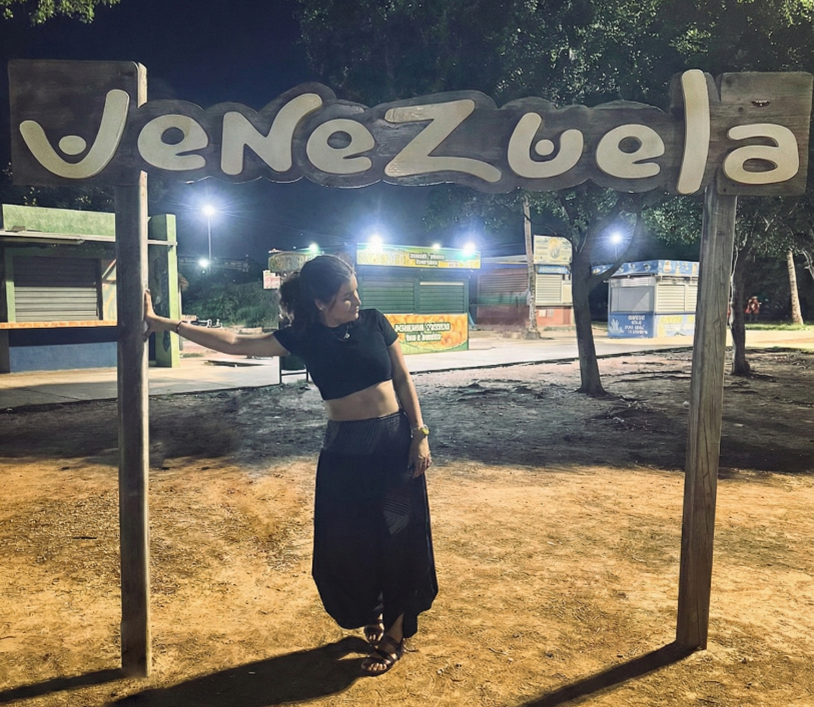
Maracaibo, Venezuela. January, 2026.
* * *
Venezuela post Maduro: un país en tensa calma
Maracaibo, Venezuela
Diciembre, 2025
En casa para las vacaciones decembrinas. Una pausa de mi vida doctoral en Manchester. Estos viajes de regreso se han vuelto rutina con los años, aunque cada vez se multipliquen los obstáculos. Unas semanas para reconectar con la familia, mi cable a tierra. Para recordar por qué hago este trabajo. Para recargar.
Esperaba que esta visita fuera como las otras.
No lo fue.
Bombardeos
Eran las 2 de la mañana del 3 de enero mientras cenaba con mis primos para despedir a uno de ellos quien regresaba a Buenos Aires al día siguiente, uno de los más de 8 millones de migrantes venezolanos que salió del país en busca de oportunidades. Ese viaje no se realizó porque esa mañana cerrarían las fronteras.
Mientras comíamos, uno de ellos viendo su teléfono nos dice: están bombardeando Caracas. Un ataque anunciado por meses, pero al mismo tiempo tan inesperado y temido. Nuestra primera reacción fue de incredulidad: ¿sería inteligencia artificial? ¿Un meme viral? ¿Fuegos artificiales mal interpretados? Poco después, estaríamos corriendo a casa porque ya no nos sentíamos seguros. De vuelta vimos las bases militares preparándose para un ataque. A una cuadra de casa.
Los días siguientes la policía y las fuerzas militares rondarían la ciudad incesantemente, aterrorizando y amedrentando.
Esa fue una larga noche que nunca olvidaremos, mi madre, mi hermano y yo frente al televisor hasta pasado el amanecer, llenos de incredulidad y emociones intensas pero confusas. Ese 3 de enero pocos salieron de sus casas, no se escucharon las celebraciones, ni las concentraciones, ni las cacerolas que todos pensamos escuchar cuando supiéramos que Maduro ya no estaba en el poder. De hecho, no escuchamos nada.
Silencio
Las filas infinitas en los pocos supermercados abiertos no se hicieron esperar. Los precios triplicados tampoco. Cuando hay hambre, no se habla de paz, ni de petróleo, ni siquiera del futuro. La gente andaba con cara de confusión. De inexpresión. Así pasamos el 4 y el 5. Hasta los grupos de WhatsApp de familia estaban en silencio.
Silencio. Confusión. Alegrías incómodas, incompletas. Shock. Aunque en la televisión veía cómo alrededor del mundo los venezolanos se reunían a celebrar mientras mi teléfono se llenaba de mensajes preguntándome sobre la situación del país.
Perdí la cuenta de cuántas veces tuve que explicar lo que pasaba. Repetí la historia tantas veces que en algún momento tuve que parar. Las noticias empezaban a pesarme demasiado.
Dualidad
Mientras explicaba, muchas veces me sentí juzgada por sentir alegría, pero también por sentir preocupación y enojo. Como si tuviera que elegir una sola emoción, como si la contradicción no fuera válida.
Pero es que hay sentimientos intensos y encontrados. Represión sistemática, cientos de muertos en las protestas de 2014 y 2019, crímenes de lesa humanidad documentados por la corte de la Haya y la ONU: ejecuciones extrajudiciales, torturas, desapariciones. Miles de presos políticos, fraudes electorales, la destrucción de la economía que provocó la peor crisis del país que nos dispersó por el mundo. Por supuesto que me alegra ver a Maduro enfrentando la justicia.
Pero al mismo tiempo, es horrible ver que bombardean tu país y escuchar que planean invadir otros países. Celebrar la caída de un tirano es una cosa. Celebrar que una potencia extranjera invada países vecinos amparándose bajo la Doctrina Monroe es otra muy distinta. Si Trump no entrega el poder y explota recursos arbitrariamente, eso es colonialismo puro, y la historia enseña que es una tragedia para los colonizados.
Imagina el nivel de desesperación, miedo y frustración que puede llegar a sentir alguien para que la invasión de otro país y los bombardeos con olor a petróleo nos traigan un atisbo de esperanza. Si no lo has vivido, quizás no va a tener sentido. Una ironía perversa de la historia. Es lo que tenemos. Esto no justifica nada, solo explica por qué algunos reciben esta invasión con alivio a pesar de conocer su precio.
Nuestra situación sigue siendo trágica, el riesgo de un intervencionismo sostenido está ahí. Y por eso esta situación exige matices: entender la alegría, cobijarla. Pero rechazar con contundencia el reemplazo de una tiranía por otra. El horizonte debe ser la democracia, no una nueva subyugación.
Miedo
Guardia Nacional Bolivariana. Slogan: “Leales siempre, traidores nunca. Dudar es traición.”
Parecía que el miedo se había instalado para quedarse. El gobierno de transición empezó a revisar teléfonos en checkpoints, buscando palabras como “invasión”, “Maduro”, “Trump” en los chats de WhatsApp, deteniendo a quien encontraran celebrando. La ley dice una cosa. La calle hace otra.
Nadie quiere ser uno más de los casi mil presos políticos de quienes no sabemos si siguen con vida. Celebrar se volvió un lujo, expresarse también. La gente lo sabía. Por eso los grupos de WhatsApp estaban siendo borrados y silenciados. Dudar es traicionar. Por eso veíamos en las noticias cómo se llevaban a los primeros detenidos por celebrar la caída de Maduro.
El gobierno organizaba marchas para pedir la liberación de Maduro. Las calles verdaderas: silencio. Así funciona el miedo.
Resistencia
Y en las calles, poco a poco, todo parecía seguir su ritmo. La calma volvió pronto, pero tensa. Inflación, incertidumbre, miedo. Casi 25 años de este gobierno me han enseñado que en Venezuela la gente no se rompe fácilmente. Resiste, resuelve con buen humor, y esta vez no fue una excepción.
Aunque hay miedo en la calle, también hay chistes y gente pensando cómo volver a la normalidad. Porque en Venezuela, sobrevivir es literal: comer es un lujo, vivimos tiempos medievales, esperando que lo básico vuelva a ser básico.
Los venezolanos están más preocupados por la economía que por la política. Mientras la atención internacional se enfoca en Trump y en Maduro, en las calles preocupa el costo de la vida, conseguir comida, la seguridad. Hablar de economía en Venezuela es como hablar de una montaña rusa sin frenos. La inflación proyectada para 2025 es de 548%, solo un eco del trauma de 2018, cuando la cifra superó el 130,000%.
Pero seguimos adelante de todas formas. Y en medio de todo esto, queda la pregunta que nadie quiere responder. ¿Qué pasa realmente con el petróleo?
Petróleo
Ave petrolizada en el Lago de Maracaibo
Venezuela tiene las más grandes reservas de crudo del mundo. Nunca se usó para el pueblo. Se usó para comprar armas, financiar milicia, afianzar alianzas políticas. Nada de escuelas, nada de hospitales. Solo redes de tráfico de poder. Sí, Venezuela fue saqueada. Pero el crimen de uno no legitima el crimen de otro.
Cuando estás agotado, es difícil pensar con claridad. Pero hay que intentarlo. Venezuela no necesita cambiar de dueño. Muchas intervenciones terminan muy mal. La libertad no significa cambiar de opresor. Como diría Hannah Arendt, liberarse de un tirano no es lo mismo que ser libre. La libertad requiere la capacidad de actuar y pensar por uno mismo, no solo cambiar de tutor. Necesitamos recuperar nuestra soberanía nacional e internacional, no cambiar corrupción autoritaria por dependencia externa.
Cuando le preguntaron a Trump sobre liberar presos políticos o permitir el retorno de opositores en exilio, respondió: “We haven’t gotten to that yet. What we want to do now is fix up the oil.” El petróleo primero. Siempre.
Regreso
Estamos procesando una emoción a la vez. El futuro pinta oscuro, pero es una oscuridad diferente. Una remoción a la fibra. Un temblor a un sistema que se creía inmovible. Un cambio que asusta, pero emociona.
Semana y media después del ataque abrieron las fronteras y me tocó dejar Venezuela una vez más con mucha tristeza, pero agradecida de haber estado en casa y con mi gente durante ese 3 de enero.
Escribo esto desde un avión hacia Manchester donde sé que me esperan muchas más preguntas que las noticias no pueden responder. Se habla de Trump y de Maduro, pero de cómo se siente la gente poco se sabe.
Este blog está muy lejos de ser una pieza crítica o una lección de historia. Es solo una descripción visceral de mi experiencia como venezolana, como observadora, alguien que ha vivido en varios países, pero nunca ha abandonado el suyo, y también con el lujo de poder decir lo que pienso porque ya estoy fuera.
Ahora es momento de sentir empatía antes de juzgar, de dejar los libros de lado y escuchar antes de opinar, de redefinir nuestra versión de la esperanza, porque se puede tener esperanza en medio del caos. Y como diría Benedetti, defender la alegría como un destino. Defenderla del miedo, de la culpa, y también de la obligación de estar alegres.
Mientras tanto, Venezuela sigue en tensa calma. No me quejo. Con tantas vidas perdidas, llorar por el petróleo sería como faltarle el respeto al dolor.
Mariana
Maracaibo, Venezuela. Enero 2026
Note: This article gives the views of the author/academic featured and does not necessarily represent the views of the Global Development Institute as a whole
Please feel free to use this post under the following Creative Commons license: Attribution-NonCommercial-NoDerivatives 4.0 International (CC BY-NC-ND 4.0). Full information is available here.