by Dr Erika Garcia Fermin, Honorary Research Fellow at the Global Development Institute
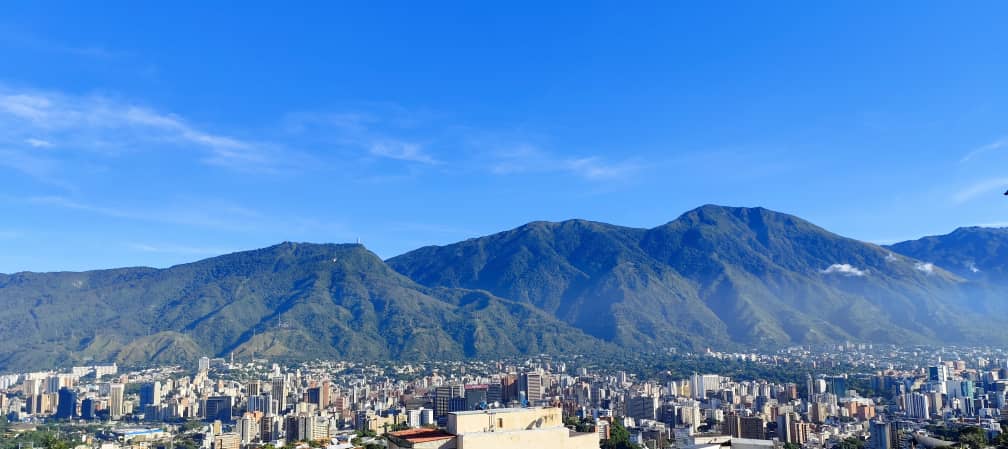
Last week I had a really energising conversation with Tom Goodfellow and Beth Perry on Urban Radar, a podcast by Sheffield Urbanism that discuss current events through the lens of cities and urban life. This time, we talked about Venezuela, and about my city, Caracas. The conversation stayed with me after we wrapped up, so here I am thinking through some of what we discussed, and to clarify a few points that, in hindsight, I’d like to have expressed more clearly.
The misiones and the reworking of urban functions
We began by talking about the misiones, Hugo Chávez’s (1999–2013) social programmes, and why their design mattered. One point I raised was their clear spatial logic. In a deeply unequal city like Caracas, where around half the population lives in informal settlements known as barrios, redistributive politics naturally centred in those spaces. The barrios became the heart of Chávez’s project and the main focus of the misiones.
That spatial focus shaped how the programmes operated on the ground. They weren’t delivered from afar. Clinics, classrooms, and food distribution points were embedded directly in the barrios. For a time, that proximity mattered. The state became visible in places long excluded from public services, improving access to healthcare, education, food, and, in some cases, housing.
At the same time, this delivery model reshaped the institutional landscape. Fuelled by oil revenues during the 2000s commodity boom, the misiones operated outside existing public systems, relying on special agencies, the military, and partisan grassroots groups. As resources and political attention were channelled into this parallel apparatus, traditional public institutions were sidelined and left facing shrinking budgets, staff shortages, and deteriorating infrastructure.
Over time, this produced a system split in two. Traditional public institutions, initially better equipped to deliver services, continued to erode, while the misiones expanded as a parallel, deeply politicised system operating under a different institutional logic. As this divide hardened, social provision ceased to be universal. Access became increasingly uneven and discretionary, shaped by who delivered the service and where one stood politically.
This clientelar structure proved especially fragile once oil prices collapsed. As the misiones became financially unsustainable, already weakened public institutions were unable to absorb the shock. Service breakdowns accelerated, turning an economic crisis into a humanitarian one and driving the mass out-migration that followed.
Urban governance and the authoritarian turn
We also talked about how an urban governance lens helps make sense of how authoritarianism took hold in Venezuela, first during the Chávez years (1999–2013) and then under his successor, Nicolás Maduro (2013–2026), after Chávez’s death. In the early years of Chávez’s presidency, mayors, despite the novelty of local democracy, still had some real, if uneven, room to act. In cities like Caracas, they pushed ahead with transport projects, service reorganisation, and police reform, often with a degree of autonomy from the centre.
But as mayors became political actors in their own right, that local influence increasingly came into conflict with the growing concentration of power around Chávez. Over time, this tension fuelled a steady recentralisation of authority, which played out along three main lines.
Weakening of municipal finances: Transfers that were constitutionally meant to be mandatory became discretionary and increasingly tied to political loyalty. For many mayors, especially those in opposition, this made planning ahead, or governing at all, extremely difficult.
Parallel structures: New funding channels operated outside municipal budgets, routing oil revenues through presidential funds such as FONDEN, communal councils, and, at times, the military. This bypassed constitutional transfer rules and sidelined elected mayors, who often had little say over how money was used in their own cities. Over time, these parallel structures went further, replacing elected authorities with regime-appointed figures and cutting mayors off from both decision-making and resources.
Political persecution: As authoritarian practices became entrenched, particularly under Nicolas Maduro, pressure also became personal. Opposition mayors and councillors were banned from running for office, imprisoned, or forced into exile. Holding local office increasingly meant taking serious political risks if you were not aligned with the centre.
Cities and out-migration
We then turned to the consequences. Hollowed-out institutions, years of mismanagement, and centralised power meant that the 2014 oil price collapse tipped the country into a humanitarian emergency. In the years that followed, though the severity has shifted over time, shortages of food, basic goods, and medicines became widespread, while core urban systems (water, transport, and electricity) began to fail, with power cuts sometimes lasting days. Combined with growing political repression and insecurity, these conditions pushed millions of people to leave. Over the past decade, nearly eight million Venezuelans have left the country in search of safety and better opportunities, a group I’m part of, making this the largest migration crisis in recent Latin American history.
In cities, the effects have been stark: a hollowing out of the working-age population as younger adults leave, reshaping everyday life, care arrangements, and urban economies. Formal jobs have given way to informal survival strategies, shrinking the urban tax base, while remittances from abroad have become a crucial lifeline for many families, adding new layers of inequality. At the same time, internal migration has intensified. People have been moving toward Caracas, which has managed to hold on to relatively more reliable services, even as other cities continue to empty out. The result is an uneven urban landscape: some places stretched thin under growing pressure, others slowly draining of people, activity, and resources.
Narratives
From these urban consequences, the conversation moved onto the struggle over narrative and voice in today’s Venezuela, and the question of how much space remains for grassroots actors to shape or reclaim it.
My sense is that this space has not disappeared entirely, but that it is tightly constrained. For years, the state has worked to close down grassroots mobilisation and shrink political space. Security forces, often operating alongside armed paramilitary groups (colectivos), have targeted protesters and dissidents, using lethal force during major protest waves in 2014, 2017, 2019, and 2024. This has been accompanied by widespread arbitrary detention, disappearance, torture, and other serious human rights violations, a pattern that intensified after the disputed July 2024 election. Since then, more than 1,900 political prisoners have been arrested, pushing the total number of politically motivated detentions since 2014 past 18,000. Hundreds have been released in recent weeks, but as of 8 February more than 600 people remain behind bars.
Still, I think those releases matter. They open small but real cracks in a system long sustained by violence and fear. Early signs are already visible: politicians returning to public life, and small but persistent protests. If repression continues to loosen, a slow reawakening of grassroots mobilisation may follow.
Understanding Venezuela from within
That brings us to how Venezuela is talked about in the international arena, and something I’m taking this opportunity to articulate more clearly. Picking up on something Beth raised, and drawing on Claudia González’s reflection, part of the problem is that the dominant stories about Venezuela are filtered through theories from elsewhere, often rooted in Global North perspectives. In that process, complex domestic realities are flattened into familiar ideological frames, while evidence produced by Venezuelans on the ground is routinely dismissed as biased or exaggerated. The result is a narrative in which Venezuela is explained mainly through external forces. This framing tends to do three things at once: it downplays or excuses authoritarian practices when they are packaged as resistance to U.S. or Western dominance; it treats internal repression as secondary to questions of sovereignty; and it quietly strips Venezuelan state actors of agency and responsibility for the misuse of power that has pushed the country to the brink of collapse.
This way of seeing Venezuela has another consequence: it forecloses the possibility of learning from it. Following Ananya Roy’s argument that cities in the Global South should not be treated merely as cases that confirm or deviate from theories produced elsewhere, but as sites of theorisation in their own right, Venezuela should be taken seriously as a theory-generative case. Its experience with populist rule and gradual centralisation of power offers a useful reference point for understanding authoritarian dynamics elsewhere, including in the United States under Trump. From an urban perspective, the parallels are clear: the erosion of institutions, the normalisation of political violence, the punishment of opposition-run local governments, the criminalisation of protest, and the sidelining of mayors as democratic authorities all mirror patterns long visible in Venezuela.
The domestic contradiction
These narratives matter because they shape how Venezuela’s internal political struggles are understood, supported, or dismissed. For more than two decades, Venezuelans have worked to resist institutional erosion, slow authoritarian consolidation, and, once authoritarianism became entrenched, push for a democratic transition. Those efforts have taken many forms: popular mobilisation and civil resistance, electoral strategies, engagement with regional democratic mechanisms, and international mediation. Many of these routes have since been blocked or exhausted, all while those fighting for democracy have done so under extreme power asymmetries, both within Venezuela and internationally.
This brings us to the tension many Venezuelans are living with today. At the very moment when authoritarian practices are becoming more visible under the Trump administration, the removal of Nicolás Maduro from power has opened a political window towards democracy, that simply did not exist before. This does not mean a democratic transition is guaranteed. The same authoritarian regime remains in place, reorganised rather than dismantled, with old logics of power still operating under new configurations. And yet, that opening should not be dismissed.
For those who are not Venezuelan, the challenge is to resist treating a system of power built for indefinite rule as justifiable in the name of sovereignty or geopolitical alignment. Acknowledging this does not require endorsing the means through which change has occurred, but rather being attentive to how narrative framings shape whose suffering is taken seriously and whose demands for democracy are deemed legitimate. As the agenda for what comes next begins to take shape, it becomes especially important to prioritise and amplify Venezuelan voices in insisting on a genuine democratic transition grounded in free and transparent elections and the dismantling of the repressive structures that have long sustained power through violence and fear.
As Tom pointed out, I remain cautiously optimistic, not because of the new configuration of power now mediated by the United States, but because of the brilliance and persistence I’ve seen, up close and from afar, among Venezuelans inside and outside the country who keep resisting and refuse to let hopelessness take hold.
Note: This article gives the views of the author/academic featured and does not necessarily represent the views of the Global Development Institute as a whole
Please feel free to use this post under the following Creative Commons license: Attribution-NonCommercial-NoDerivatives 4.0 International (CC BY-NC-ND 4.0). Full information is available here.