Workshop Title: Resilient Amazon Futures: Strengthening Food, Water, Forest, and Land Governance for Sustainable Development
UK Principal Instructor: José A. Puppim de Oliveira, University of Manchester
Brazil Principal Instructor: Claudio Szlafsztein, Federal University of Pará (UFPA)
Mentors: Maria Julia Ferreira, National Institute of Amazon Research (INPA); Aarti Krishnan, University of Manchester (UoM); João Campos-Silva, Instituto Juruá; John James Loomis, University of Manchester (UoM)
Discipline: Business Studies
Dates and place: 25–29 May 2026, Belem, Brazil
Venue: Federal University of Pará (UFPA)
Deadline for application submission: 31 March 2026 to the email: resilientamazonfutures@gmail.com
Introduction
Amazonia BR/UK Workshop grants are designed to provide financial support to bring together a UK/Brazil bilateral cohort of early career researchers to take part in workshops to meet the overarching objectives. This programme is supported by UK government funding and Brazil and forms part of the International Science Partnerships Fund (ISPF).
As part of this programme, we are now recruiting early career researchers to participate in the above workshop “Resilient Amazon Futures: Strengthening Food, Water, Forest, and Land Governance for Sustainable Development”.
Expectations of the workshop: The workshop will provide a unique opportunity for sharing research expertise and networking. During the workshops early career researchers will have the opportunity to present their research in the form of short oral presentations and discuss this with established researchers from the UK and Brazil. There will be a focus on building up links for future collaborations and participants selected on the basis of their research potential and ability to build longer term links (see more below).
Funding available: The British Council acting on behalf of the International Science Partnerships Fund (ISPF) will cover the costs related to the participation to the workshop, including: travel (both international and local), accommodation and meals. Costs for the visa, and travel insurance will also be covered; however participants will be responsible for making all the necessary arrangements. The British Council accepts no responsibility for any problems which may occur with travel or accommodation arrangements or any other issues participants might experience when the participants are away from their home.
Background and rationale of the workshop
Water and food security are among the most pressing development challenges of the 21st century, particularly in regions that host globally vital ecosystems such as the Amazon. In the Brazilian Amazon, climate change, deforestation, unsustainable land use, and socio-economic inequalities are deeply intertwined, affecting access to water, food, land, and livelihoods for millions of people.
This workshop responds to the urgent need for interdisciplinary, policy-relevant, and development-oriented research that can help chart alternative pathways for the Amazon, pathways that improve living conditions while safeguarding forests, biodiversity, and climate resilience. It places particular emphasis on vulnerable and marginalized populations, including indigenous, quilombola, riverine, and rural communities.
The workshop builds on existing collaborations within Brazil’s Amazonia+10 research programme and aims to develop a new generation of researchers capable of co-producing knowledge with communities and policymakers, contributing to tangible development outcomes over the next decade.
Workshop Themes
We welcome submissions addressing (but not limited to) the following themes associated with Amazon region:
- Climate change impacts on water availability, quality, floods, and droughts
- Food security, nutrition, and rural livelihoods in the Amazon
- Land use change, deforestation, and landscape restoration
- Forest governance, biodiversity conservation, and ecosystem services
- Community-led and Indigenous approaches to resource management
- Bioeconomy, sustainable value chains, and local development
- Governance, institutions, and public policy for sustainable development
- Global–local interactions, including international regulations and trade
- Interdisciplinary and transdisciplinary research methods
- Science–policy–society interfaces in Amazonian contexts
Interdisciplinary, comparative, applied, and policy-oriented contributions are particularly encouraged. The research should be relevant to the Amazon, but not necessarily about the Amazon only. Also, researchers do not need to have all results of their research. Ongoing research efforts are welcomed as well.
Submission Format
Applicants are invited to submit:
- An academic CV (maximum 4 pages)
- The Workshop Application Form
- An extended abstract (500 words) outlining:
- Research question(s)
- Methods/data
- Key findings or expected contributions
- Relevance to the workshop themes
Application and Deadline
There is no registration fee. The full application below must be completed and submitted by the 31 March 2026 to: resilientamazonfutures@gmail.com
What the Workshop Offers
Selected participants will benefit from:
- Opportunities to present their research (oral presentations and posters)
- Mentorship from senior scholars from Brazil and the UK
- Skills-based sessions (academic writing, project pitching, interdisciplinary methods)
- Engagement with policymakers, practitioners, and local communities
- Field visit and co-production activities with Amazonian communities
- Networking with an international cohort of researchers
- Opportunities for joint publications, policy briefs, and future collaborations
Travel, accommodation, and subsistence costs will be covered for selected participants supported by the programme. There is no registration fee.
Eligibility Criteria
- Applications must be submitted using the Amazonia BR/UK application form.
- Application must be submitted before the above deadline.
- Participants must be Early Career Researchers: Early Career Researchers are defined as someone who has completed or is close to completion of their PhD, potentially waiting for their final defence, which must be passed prior to taking up the award. ECRs must not have held a permanent academic post with a research component or a post with a research-related element, or one which allowed them to supervise PhD students or submit research grants as a principal investigator.
- Participants must have a research or academic position (a post, research contract, or fellowship etc) at a recognised research institution either in the UK or in Brazil.
- Please note that participants are expected to attend all sessions of the workshop in person.
Quality Assessment
- Experience and relevance of the applicant’s research area to the workshop
- Motivation and contribution to the aims of the workshop
- Description of the long term impact expected through the participation in the workshop
- Ability to disseminate workshop’s outcomes
Selection Procedure
- Eligibility check
- Quality assessment
Notification of results
Applicants will be notified by email about the results by 10 April 2026.
Equal Opportunities
Equal opportunities and diversity are at the heart of the British Council’s cultural relations ambitions. While recognising that some research fields are dominated by one particular gender, co-ordinators are encouraged to work towards an equal gender balance, promote diversity. They must not exclude applicants on the basis of ethnicity, gender, religious belief, sexual orientation, social status or disability. Participants’ selection undertaken by workshop organisers must not contravene this policy. Extra support to enable participation of Early Career Researchers with special needs will be given. We strongly encourage applications from Indigenous, Quilombola, riverine, and researchers from traditional communities. The selection process will actively consider diversity and inclusive representation.
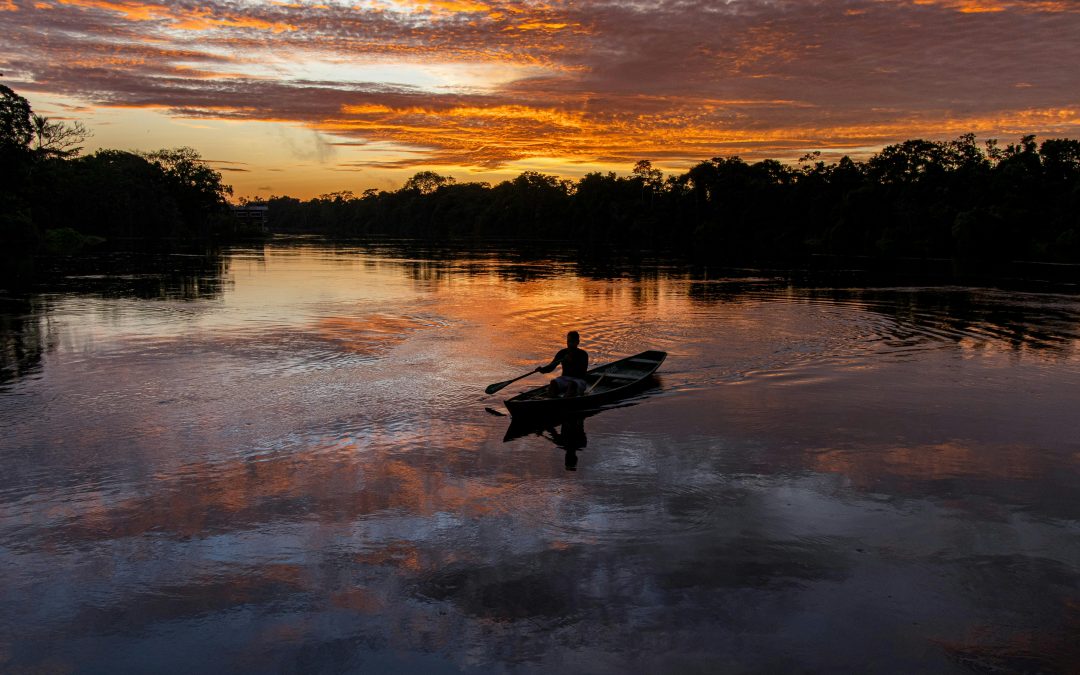
Top image Photo by Eduardo Amorim.
Note: This article gives the views of the author/academic featured and does not necessarily represent the views of the Global Development Institute as a whole
Please feel free to use this post under the following Creative Commons license: Attribution-NonCommercial-NoDerivatives 4.0 International (CC BY-NC-ND 4.0). Full information is available here.