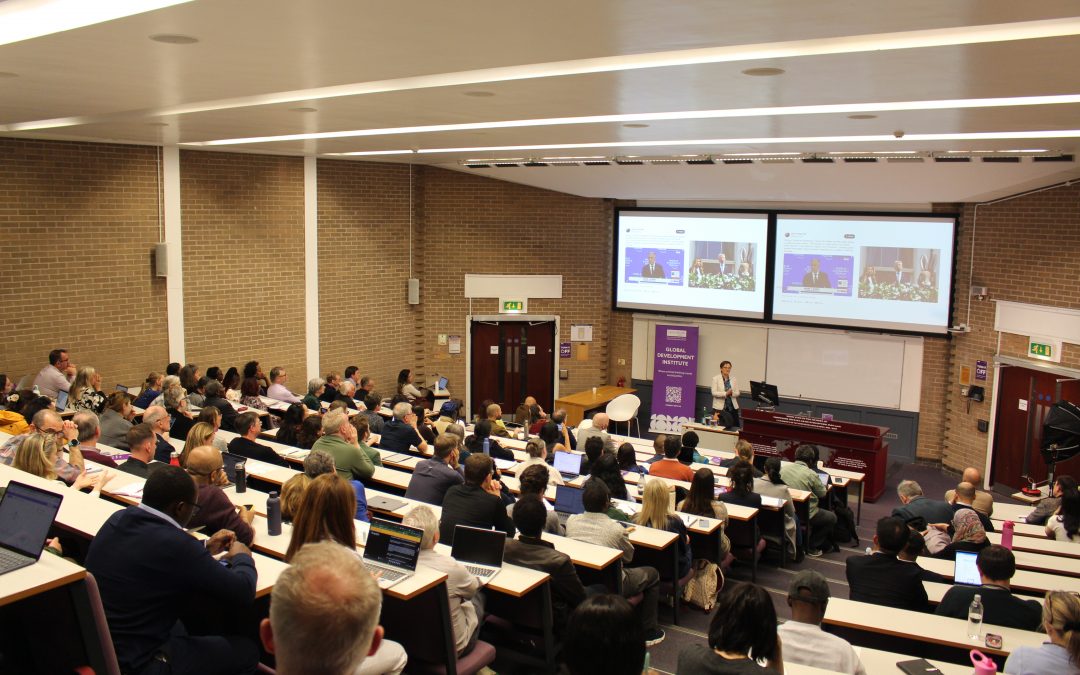
Earlier this month, the Global Development Institute held a conference asking, ‘What is the Future of Global Development?’ We welcomed a host of scholars, practitioners, and students from across the world, enjoying lively debate about the critical juncture in which we currently find ourselves. As Professor Sam Hickey noted in his opening conference address, geopolitical ruptures and escalating global crises mean we’re living through a moment of great consequence, with reverberating effects across the development sector. Development dynamics have always been enmeshed in global power structures, something to which our five plenary sessions were closely attuned.
We started the week with presentations by political economists Lee Jones and Yuen Yuen Ang. Jones focused on the end of the unipolar era and the emergence of a Second Cold War, analysing the move away from stable US hegemony toward our current moment of geopolitical crisis and an ascendant China. Identifying the roots of this crisis within global capitalism’s mounting contradictions, Jones examined how leaders are responding to years of deindustrialisation and decaying public goods through a kind of state capitalism that serves national interests. The implications for ‘big D’ development are significant, with multilateral institutions losing the power and resources that have fuelled development projects for decades.
Ang’s presentation provided some food for thought about how we can weather this period of uncertainty. Characterising ‘polycrisis’ thinking as Eurocentric, she shifted the narrative towards one of ‘polytunity’. In other words, she framed current disruptions as opportunities to transform dysfunctional global institutions and systems for the better. Rather than maintaining faith in technocratic governance paradigms, Ang made the case for the ‘AIM’ framework – Adaptive, Inclusive, and Moral political economy. This framework highlighted the need for creativity and global community, and provided a flourish of hope among some difficult conversations.
After some brilliant parallel panel sessions, Monday evening’s plenary was delivered by economist Daniela Gabor, who traced the effects of American hegemony’s switch from the Washington Consensus to the Wall Street Consensus on the development landscape. Gabor argued that the latter – characterised by calls to mobilise private capital and engage in derisking via development finance – has not been successful in shoring up US hegemony. As well as not being sufficient to meet current demands, such an approach undermines development outcomes by producing extractivist imperatives and reproducing patterns of dependency in the Global South.
Having provided a thorough diagnosis of the problems, Gabor explained how the current US administration is continuing to pursue a derisking logic seen in previous administrations (seen, for example, in the replacement of USAID with the International Development Finance Corporation). In the latter part of the lecture, Gabor provided some insight into potential strategies to help us move on from broken neoliberal development dynamics, noting that transformation cannot be delegated to the market. She highlighted the need to build public legitimacy for state-led policies, particularly to drive decarbonisation and address intensifying climate challenges.
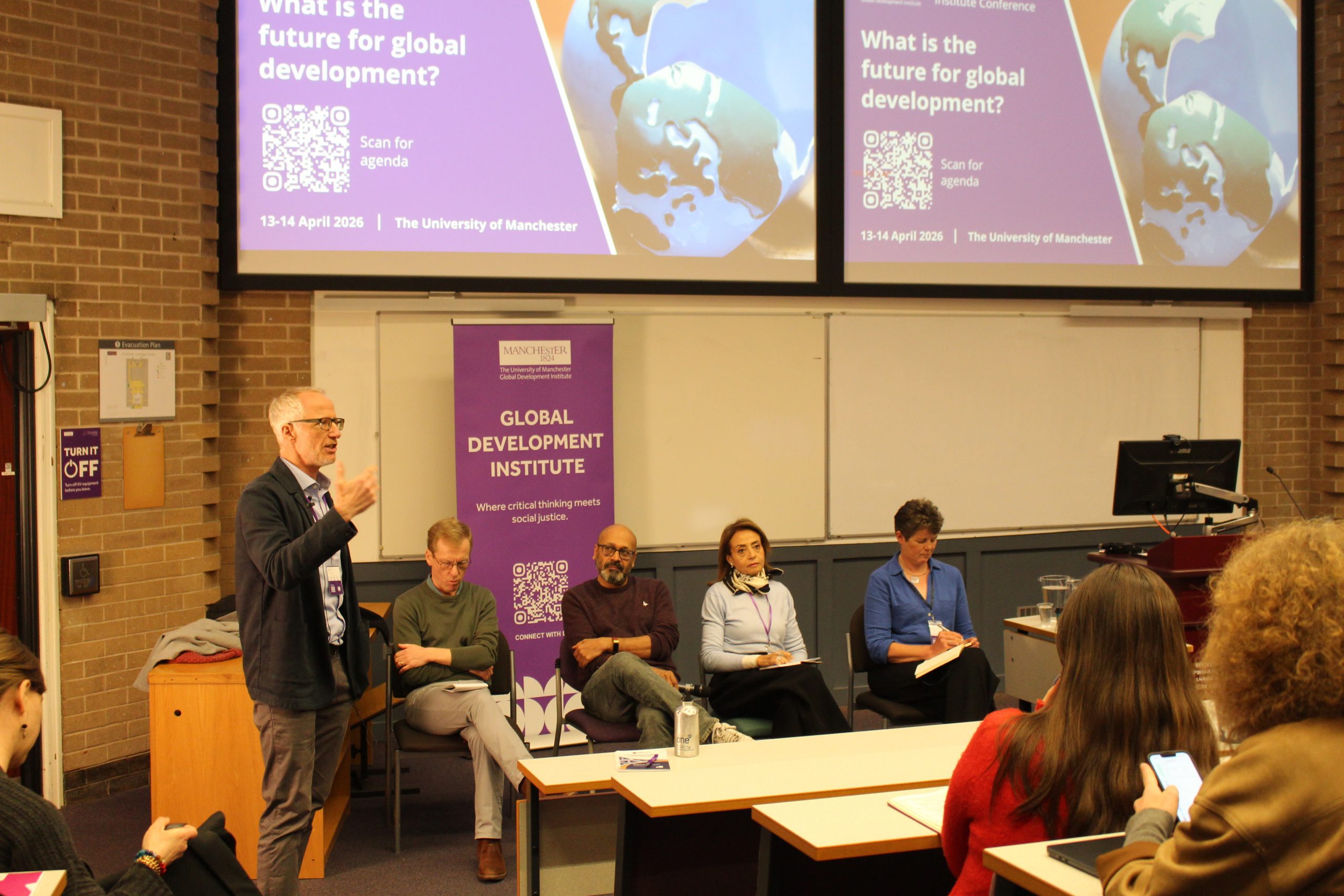
Left to right: Sam Hickey, Tony Bebbington, Imran Matin, Amani Amou-Zeid, Emma Mawdsley
Following a successful first day (including a delicious dinner and some excellent poster presentations by GDI postgraduates), we started bright and early with a plenary session featuring development scholar Ken Opalo and former UN diplomat Len Ishmael. Opalo started by examining the shuttering of USAID in the wider context of decreasing foreign aid and an increasingly multipolar world. He examined the implications of such trends for development assistance in African countries, noting the need for governments to fill financial gaps left by donors, as well as to learn the systems once overseen by these donors. Such a challenge, Opalo argued, requires resilience and domestic policymaking approaches responsive to contextual complexities.
Next up, Ishmael presented economic and political disorder as an opportunity to rebalance global power dynamics, with the contemporary moment a rare opportunity for Global South actors to secure their interests and lay the groundwork for a New World Order. It was a lively session, with plenty of audience engagement and questions to mull over in subsequent discussions.
Between some more fascinating parallel panels and the final plenary, GDI’s International Advisory Board members discussed their reflections on the conference as a whole and the debates that had emerged. While praising the high calibre of panellists and keynote speakers, they provided some generous interventions to provoke healthy debate. Some noted, for example, how the event’s focus on geopolitics may have been to the detriment of broader discussions on the climate crisis, decolonisation, and epistemological issues surrounding Development Studies, as well as its future prospects as a discipline. Indeed, as some audience members emphasised, we need to ensure the voices of students and young practitioners are actively involved in ongoing debates, as they’re going to be doing much of the hard work involved in building a more socially just world.
After a quick break, we began the final plenary sessions, starting with Jim O’Neill and Gemma Cheng’er Deng, who presented the rationale behind their new strategic platform – BRICS+ Thinking. Having coined the term BRIC back in 2001, O’Neill is working with Deng to bridge the gap between academic and policy communities. As they explained, they plan to dialogue between policymakers, academics, and business leaders to encourage positive relationships between dominant and emerging powers and ensure the departure from unipolarity is as smooth as possible.
Winnie Byanyima, Executive Director of UNAIDS and an Under-Secretary-General of the United Nations, was next up to the stage, examining how inequality broke multilateralism and how we can start to rebuild it. Like many of our speakers, Byanyima underlined how geopolitical instabilities threaten the rules-based order, which has always been shot through with inequitable imperatives and colonial dynamics. Drawing on her successful campaigning work, Byanyima encouraged us not to mourn this dysfunctional system, but to consider how we can reform multilateralism in a progressive and justice-oriented way.
Following this inspiring message, the conference wrapped up with a tribute to GDI’s longstanding Professor David Hulme, who retires at the end of July. Sam Hickey delivered a heartfelt roundup of David’s significant contributions to the field, which was followed up by a standing ovation to close the proceedings.
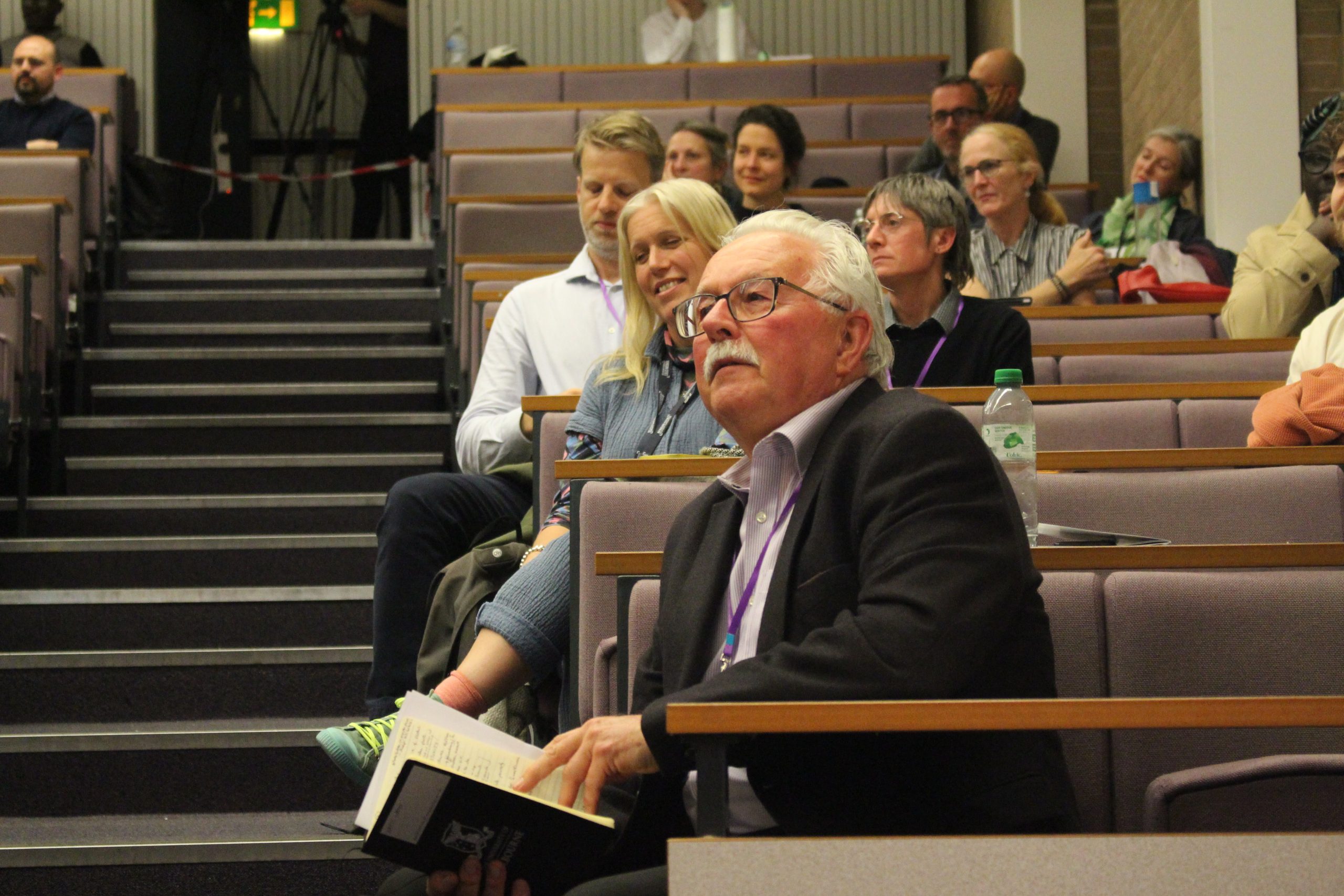
Professor David Hulme
The conference provided a valuable opportunity for scholars to share ideas and reflect on a daunting time for the field. We anticipate such discussions to develop and evolve well into the future, with GDI’s scholars ready to provide valuable interventions on a range of pressing issues. If you’re keen to keep on top of these emerging ideas or want to receive the latest outputs straight to your inbox, we encourage you to sign up for our newsletter. You can also follow us on BlueSky, LinkedIn, or Instagram.
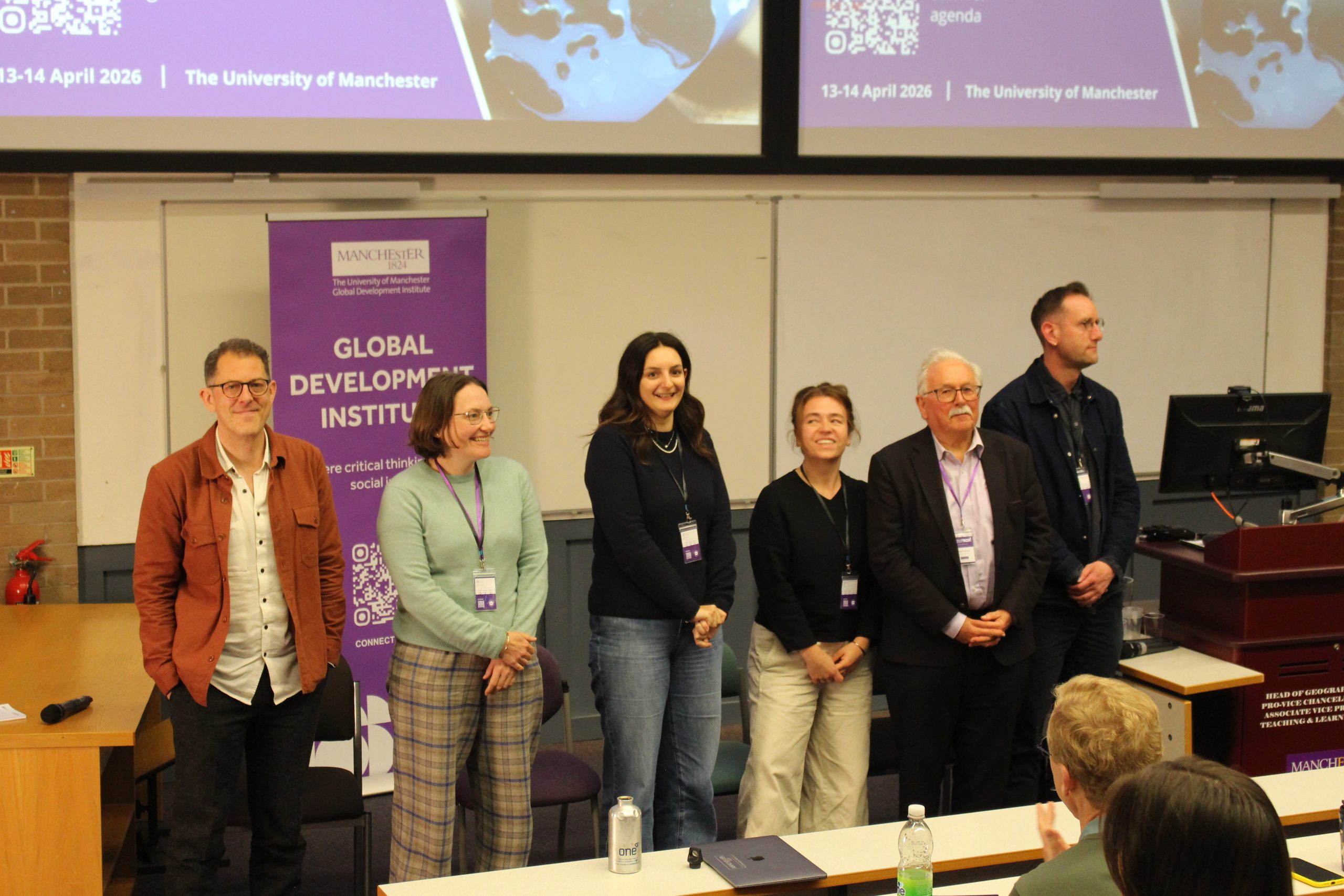
The GDI Academic Organising Committee: Seth Schindler, Niki Banks, Elisa Gambino, Katarzyna Cieslik, David Hulme, Tom Gillespie
Please feel free to use this post under the following Creative Commons license: Attribution-NonCommercial-NoDerivatives 4.0 International (CC BY-NC-ND 4.0). Full information is available here.
Excellent conference! The array of speakers was nicely balanced and their contributions (and those of the audience) were thought-provoking. And a well deserved valedictory for David. Congrats to Sam and all the organizing team.