
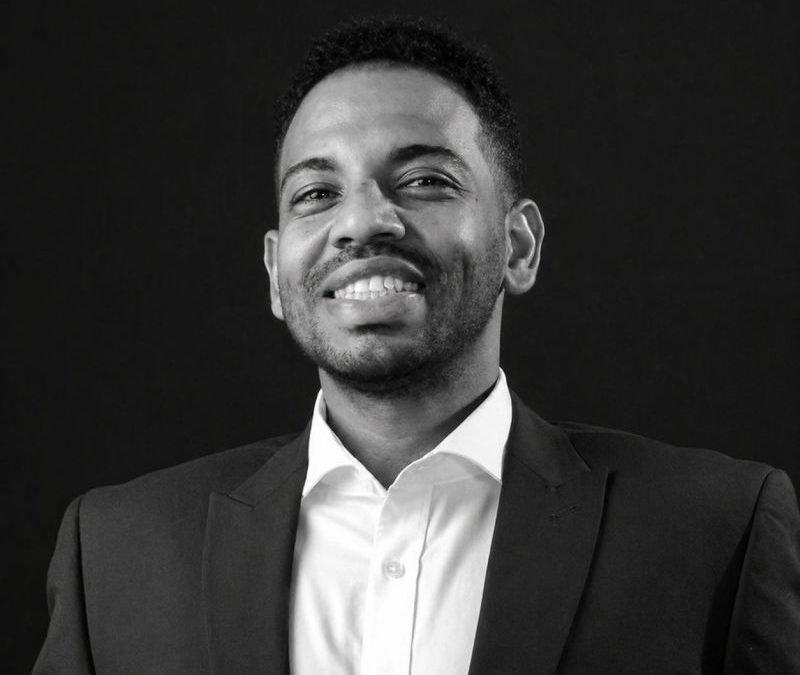
by Dilek Celebi, Honorary Research Fellow
Hamid was not asking for sympathy. He was demanding attention for his people. Most of the world chose the easier option.
He is gone now. And what makes that loss unbearable is not only grief—it is the specific anger of watching someone fight for visibility that never fully arrived. Hamid was a Sudanese academic who documented his country’s war not from a conference room but from his own garden, holding spent bullets in his hands. He was not analysing catastrophe. He was living inside it, as one of millions displaced by a conflict that the world had already decided it could afford to monitor from a distance.
That decision was not arbitrary. It followed a logic we need to name directly.
When fighting erupted in Khartoum in April 2023 between the Sudanese Armed Forces and the Rapid Support Forces, hundreds were killed within days. Hospitals collapsed. Civilians lost electricity, water, and safe passage. By early 2024, Sudan had surpassed all other countries to become the world’s largest displacement crisis, with more than eight million people forced from their homes. It produced almost no sustained global attention. No mass conferences. No mass meetings. No mass marches. No prominent resignations in protest. No social media tidal wave.
Compare that to other conflicts where mobilisation was near-instant—where moral consensus solidified within days, where the enemy was already familiar and the narrative already legible. I am not making an argument about relative suffering. I am describing a structure.
We do not only choose which victims to care about. We choose our enemies. And we choose them carefully—according to what confirms our existing politics, which adversaries we are already primed to condemn, which situations allow outrage without demanding complexity. Some conflicts arrive pre-packaged with a clear villain and a recognisable frame. They require nothing from us except the willingness to be angry. Others have fragmented perpetrators, unfamiliar histories, no ready-made alliance of condemnation. They ask more. So they receive less.
This is not neutrality. It is preference with impunity.
What I find hardest to sit with is that Hamid’s own academic circle—my circle—was not exempt from this. We are trained to notice power, to interrogate narrative, to resist the path of least intellectual resistance. And still, many of us did not raise our voices. Not because we were unaware. Awareness was never the obstacle. The obstacle was a threshold we unconsciously maintain: we wait for sufficient deaths, for clearer perpetrators, for the kind of consensus that makes engagement feel safe rather than costly. Sudan did not cross that threshold for enough of us. Not in time.
That is what is meant by the quiet violence of intellectual distance. It is not ignorance. It is the capacity to witness suffering in real time and postpone response until it becomes politically convenient to respond. It is the ability to call ourselves informed while remaining strategically silent.
Hamid did not have that option. He was already past every threshold.
He kept speaking even when it felt like no one was listening—not because it was effective in the way he deserved, but because silence was not something he was willing to offer his people. That persistence now stands in sharp contrast to those of us who calculated the cost of solidarity and found it inconvenient.
The comfortable version of this argument would end here, with a call for more equal attention, more consistent outrage, better media coverage. But that framing lets individuals off too easily. Selective engagement is not only produced by states or algorithms or editorial boards. It is reproduced daily by people like me—through what we share, what we amplify, what we allow to pass in silence. Every time we speak loudly about one injustice while staying quiet about another, we participate in a hierarchy of suffering. We signal, whether we intend to or not, that some wars are urgent and others are tolerable.
Hamid refused that signal his entire life.
The only response to his death that would not be hollow is to refuse it too—not as a tribute, but as a practice. To ask, when we next feel outrage, why this conflict and not that one. To apply that question to ourselves before we apply it to others. To resist the pull toward convenient enemies and familiar frames.
That discomfort is not a gesture of mourning. It is the minimum.
Long live Sudan. Long live Hamid’s legacy.