
By Professor José A. Puppim de Oliveira
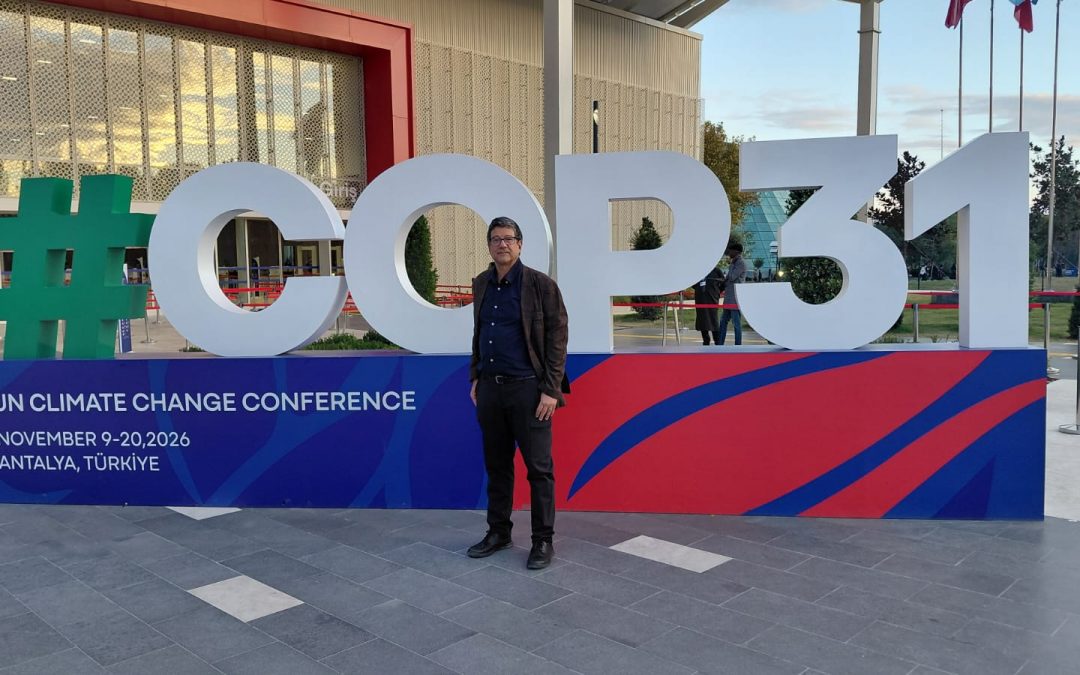
Attending the 31st Conference of Parties (COP-31) of the UNFCCC in Antalya, Turkey, from 11 to 16 November, provided an important space to reflect and discuss where international climate ambition intersects with local realities.
As cities become the primary battlegrounds for both climate adaptation and emission reduction, and to align climate ambitions with the Sustainable Development Goals (SDGs), my contributions across COP-31 focused on closing the disconnect between policy design, capital mobilisation and ground-level delivery.
Representing the Global Development Institute participating in key side events and following the UNFCCC negotiations allowed me to engage directly with policymakers, researchers, and financial institutions on a core challenge: how to transform high-level policy frameworks into inclusive, resilient, and actionable urban investments. These are my reflections of the main debates and events I took part in:
Governing Climate Finance Pathways
My participation began on Friday, 13 November, in the panel discussion titled “Governing Climate Finance Pathways from South Asia’s Recent Experience.“
The discussion examined how climate-vulnerable developing economies can effectively connect climate ambition, legal and institutional architecture, financial regulation, project preparation, capital mobilisation, implementation, and accountability.
Drawing on international experiences, I highlighted what distinguishes countries that successfully convert climate policies into actual investment and implementation – from those where policy architecture remains disconnected from delivery.
From Campuses to Climate Solutions
Accelerating climate action requires a practical education-to-innovation framework that connects green schools, universities, research initiatives, and global partnerships to translate knowledge into scalable solutions.
During the event “From Learning Campuses to Climate Solutions: Advancing Climate Resilience through Education, Innovation and Partnerships.”, I presented several transdisciplinary projects that I am involved with alongside practitioners and students. These included our work in the Global Studios on Local Biodiversity Strategy and Action Plans (LBSAPs), the Amazon+10 project on sustainability and value chains, as well as insights from the ISPF British Council Workshop on resilient Amazon futures.
These initiatives demonstrate how collaborative academic and student partnerships can serve as practical incubators for local resilience and biodiversity action.
National Assessments of Cities and Climate Change
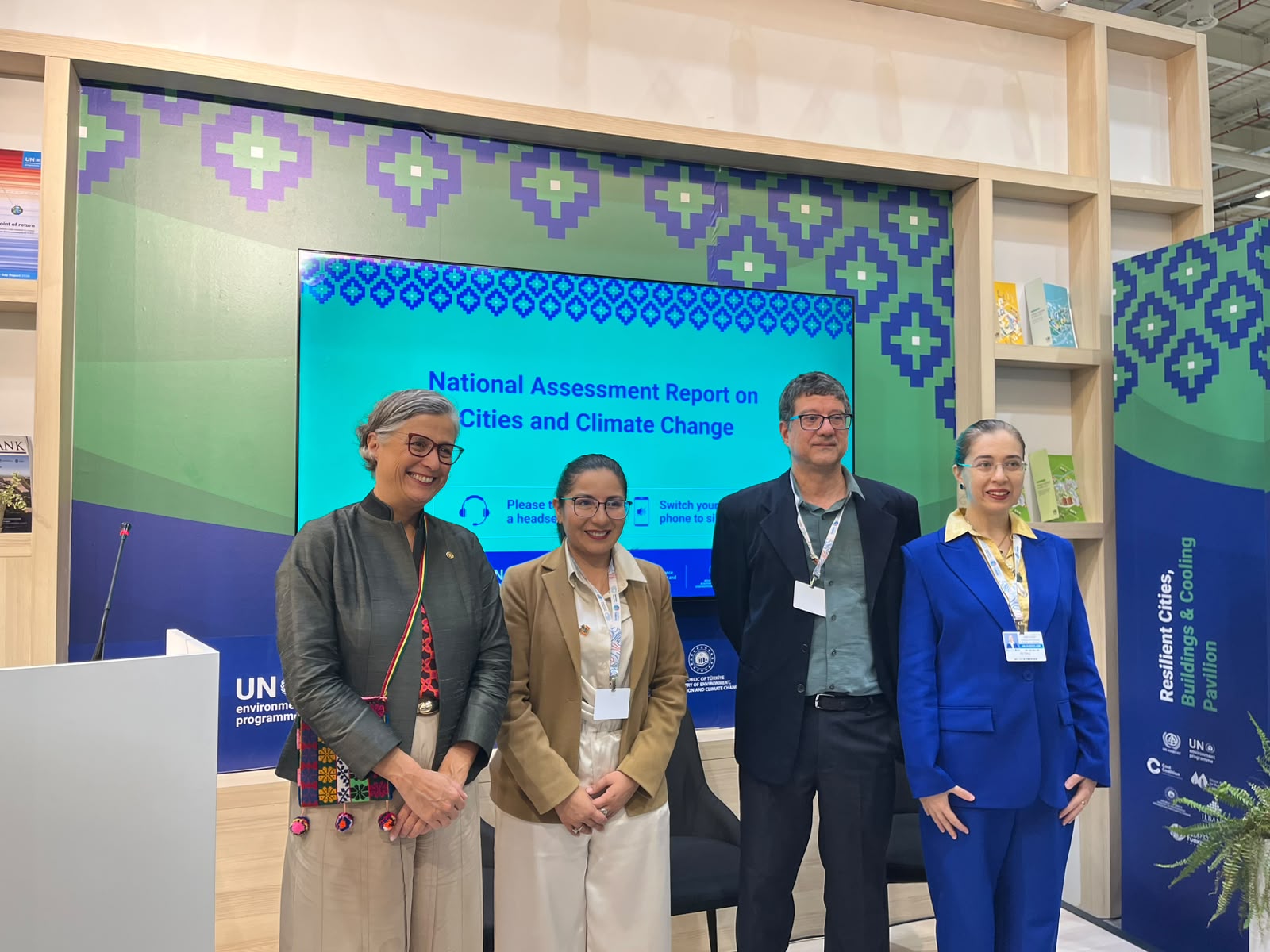
On Saturday, 14 November 2026, my sessions focused on the urban climate agenda. I moderated a session organized by UN Habitat on “National Assessment Report on Cities and Climate Change”, which at the opening and closing remarks of Dr. Anacláudia Rossbach, Executive Director of UN Habitat.
At this event, I discussed an innovative idea for country-specific assessments on cities and climate change. As a Coordinating Lead Author for the Intergovernmental Panel on Climate Change (IPCC) Special Report on Climate Change and Cities, I highlighted how national-level urban assessments are an increasingly important complement global reports. A lively discussion happened on the idea with key inputs from representatives from different countries.
Country-specific assessments offer context-sensitive analysis tailored to national realities and policy frameworks. By reflecting local conditions, these national reports can make urban climate policies far more policy-relevant and accelerate domestic implementation.
The High Cost of Delaying Urban Climate Investment
Also on 14 November, I delivered the keynote address at the event “Financing Inclusive and Resilient Cities: From Climate Policy to Infrastructure Investment.” This event was organized by the City Climate Finance Gap Fund—a global initiative supported by the governments of Germany and Luxembourg and implemented by GIZ, the World Bank, and the European Investment Bank (EIB).
Drawing from my role for the IPCC Cities report, I emphasized that financing inclusive and resilient urban infrastructure is becoming increasingly urgent and demanding. Emerging markets and developing economies face severe constraints from higher financing costs and debt vulnerabilities. At the same time, most of the finance do not reach cities, and local governments and organizations working on the ground.
Delaying investment carries an even higher cost. Deferring action will increase future fiscal losses, widen infrastructure and service gaps, and lock cities into carbon-intensive, climate-vulnerable, and socially unequal pathways. Conversely, well-designed investments yield immediate and long-term benefits across economic, social, and environmental dimensions.
Green and Blue Infrastructure
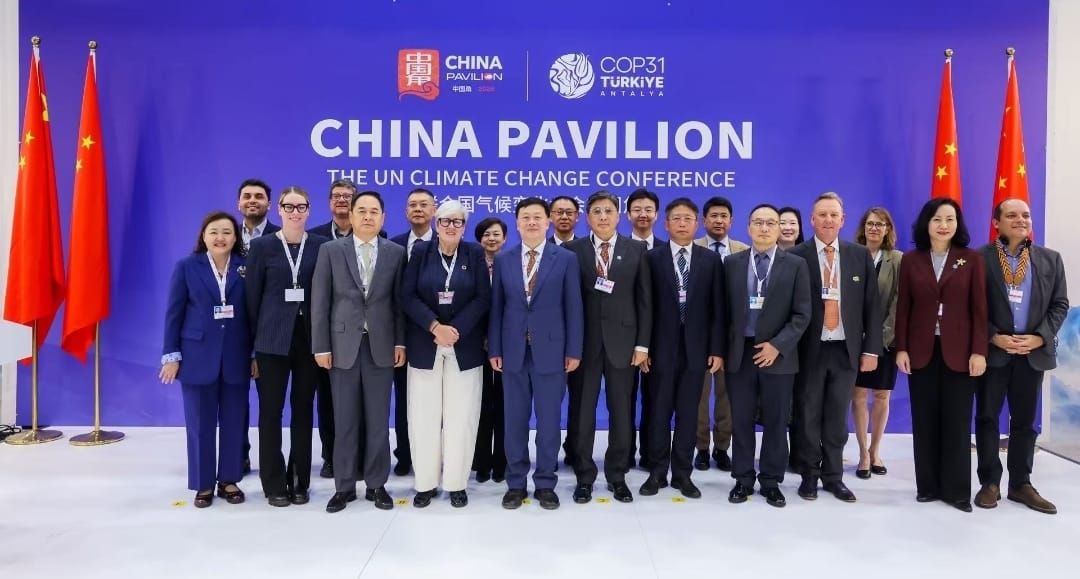
Later that day, I contributed to the “2026 Global Dialogue on Sustainable Urban Development,” guided by the Department of Climate Change of the Ministry of Ecology and Environment of China. It had keynotes of Head of the Chinese Delegation at COP-31, Li Gao, Vice Minister of Ecology and Environment (China) and Rachel Kyte, UK Special Representative for Climate.
With green, inclusive, and climate-resilient urban development recognized as a central pillar of the 2030 Agenda for Sustainable Development, cities are central to achieving emission reductions and adaptation goals. During this dialogue, I presented GDI’s research on using green and blue infrastructure for urban adaptation. I highlighted the necessity of enhanced capacities of local governments and cooperation among national governments, international organizations, research institutions, and city representatives to implement these nature-based solutions effectively.
My key message at COP 31 was that building climate resilience requires aligning finance with local governance and building local capacity, embedding nature-based infrastructure into urban design, and ensuring that inclusion of those most affected by climate change remains at the forefront of global climate action.
While the discussions were fruitful, the real test is for both national and local governments to translate knowledge and ambition into policy, then policy into action. For the first time in a UNFCCC COP, there was a high-level plenary discussion on cities and climate change with the presence of head of states and city leaders, such as Sir Sadiq Khan. With temperatures climbing around the world and weather patterns becoming ever more extreme, there’s no room for delay, and cities and local governments, supported by a multi-level governance structure, can play a significant role in moving forward the implementation agenda.
Read more:
UNFCCC COP-31 will be discussed in the U0M’s Sustainable Futures Annual Conference, Thriving, Inclusive and Sustainable Places, on 2 December. If you interested please register (for free) at this link.
Note: This article gives the views of the author/academic featured and does not necessarily represent the views of the Global Development Institute as a whole.
Please feel free to use this post under the following Creative Commons license: Attribution-NonCommercial-NoDerivatives 4.0 International (CC BY-NC-ND 4.0). Full information is available here.