
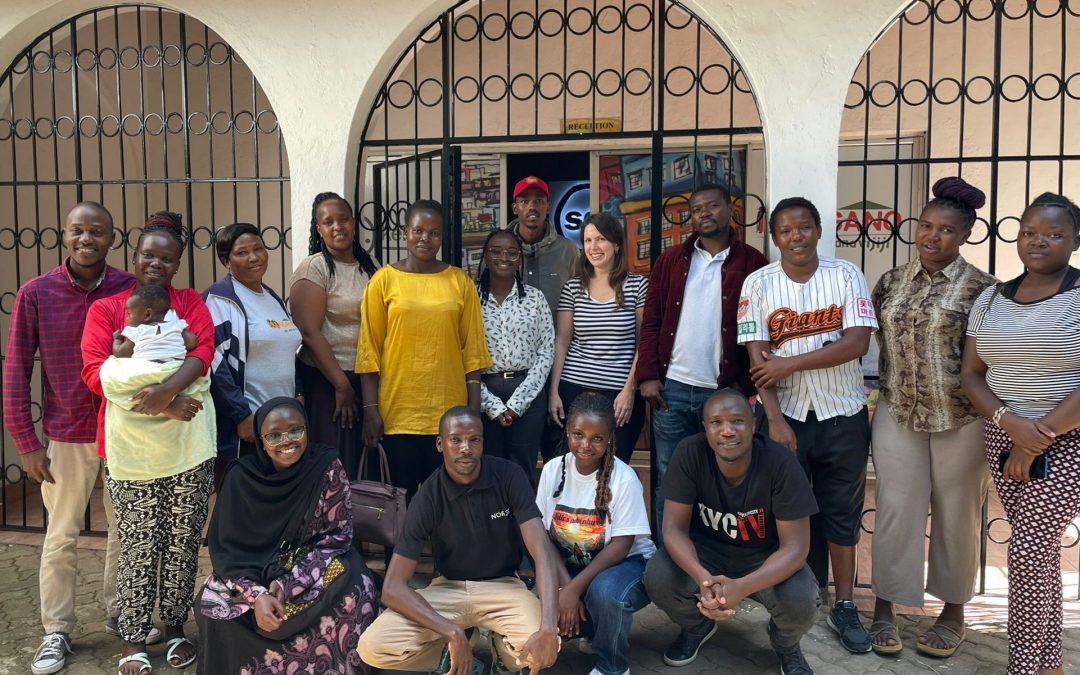
by Kamila Gojobe, Dennis Kariuki Mwangi, and Daniela Cocco Beltrame
based on collective work including also: Nancy Njoki; Christine Mwelu; Jacob Omondi; Javella Atieno; Elizabeth Were; Dennis Kariuki Mwangi; Ann Wambui; Toure Anami Daudi; Damaris Kakhayange; Barbara Boyani; Nurah Dadacha; Zena Iqbal; Charles Lukyamuzi; Lawrence Otieno; Eva Muchiri Jane Wanjiru
What happens when young people are not just the people being researched, but the people asking the questions? What happens when they work alongside their elders, in broad coalitions where they are encouraged to test their ideas, make mistakes, and become part of something bigger than themselves? This was the starting point of our research project on intergenerational movement-building and African youth in urban social movements, in co-production between the University of Manchester and Slum/Shack Dwellers International (SDI), a transnational network of women-led federations working to improve life in their cities.
Hi! We are Kamila Gojobe, Dennis Kariuki Mwangi, and Daniela Cocco Beltrame. Dennis hails from Mathare (Nairobi, Kenya) and was a community-based youth co-researcher in the project; Daniela is from Quilmes (Buenos Aires, Argentina) and was an academic co-researcher in the project; and Kamila is a youth leader in SDI-Kenya (SDI-K) and was part of the analysis of findings for the project.
Our research came to be in 2023 after years of work by SDI affiliates in multiple countries on intergenerational movement-building and youth engagement. It largely stemmed from the push leading up to the 2023-2027 SDI strategic plan, which included discussions on how to continue building strength to drive just and inclusive urban development, as well as on creating an environment for youth to thrive within the movement.
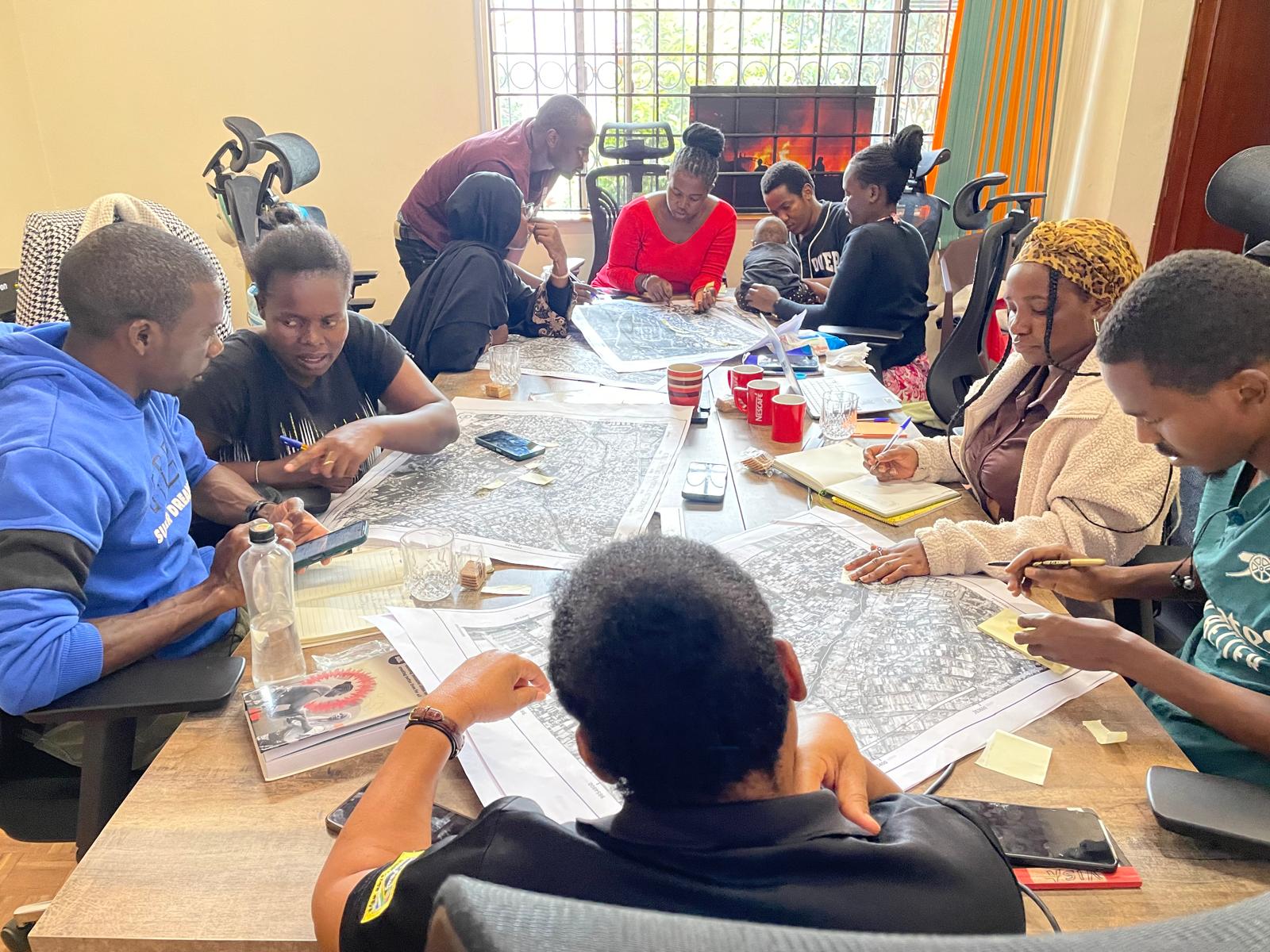
Building on this work, our project (part of Daniela’s PhD at the University of Manchester) focused on understanding how youth within SDI navigate and negotiate their agency within intergenerational networks, and what youth participation in SDI may reveal about the practices and constraints of contemporary urban social movements in Africa. All co-researchers participated in the process from the beginning, rather than simply being brought in as an endnote to answer questions prepared by someone else. We shaped the research design and the methodology, and then went into the field, spoke with our communities, and began making sense of what we were hearing. Being co-researchers as opposed to simply research participants changed the way we understood the question of youth participation, and building a movement between different generations.
Starting with a different question
A lot of conversations about young people in our communities begin with a simple question: Why are young people not participating in movement-building? But perhaps that is not always the right question. Our research started by asking something more basic: Who is included under the term ‘youth’? It sounds like an easy question. Governments and organisations often define youth by age, usually within a range somewhere between 15 and 35. But when we listened to people within Muungano wa Wanavijiji, the SDI Kenyan Federation, then it became clear that age does not tell the whole story.
Within SDI, people described different experiences of being young. There were those navigating earlier youth, youth who were still building their experience in the movement, and youth mentors who had gained enough experience and trust to guide others. Youth was therefore not only about a number. It was also about experience, responsibility, participation and the ability to contribute to the community.
For the young researchers, discovering this was also part of discovering ourselves. When you are young, you can easily be placed into one category and expected to fit inside it. But the conversations showed that people’s lives are much more complicated. A young person can become a caregiver. A young mother may no longer be treated as youth. Someone can be the same age as another person but have completely different experience and responsibilities.
So, who gets to decide when someone stops being a youth?
Going into the field and listening
The research became more meaningful when we moved beyond definitions and into people’s actual experiences. The co-researchers went into communities and listened. They spoke with young people and community leaders about their experiences, the challenges they faced, and the role that community groups and locally led initiatives played in their lives. This part of the process mattered because it was different from simply collecting answers. Listening to people speak about their lives changed the way we understood an issue.
Some young people were already involved in activities such as community enumeration, data collection, advocacy, mobilisation and communications through an SDI programme called ‘Know Your City TV’. Others were harder to reach. Some had become disconnected from community organisations; others had experienced previous forms of engagement that left them unwilling to participate again. Some simply did not know that these opportunities existed. This made us realise that saying “young people should participate” is not enough. We also have to ask: Participate in what, for what? On whose terms? And what makes participation possible?
When participation meets today’s everyday life
One of the strongest things that came through the research was the importance of livelihoods. Young people are trying to participate in their communities while also trying to survive. For some, that means looking for employment. For others, it means finding ways to earn an income, support their families, stay healthy and build a future. Parts of this reality are not far from the one experienced by some older members of social movements. Older members may remember a time when joining a movement meant giving your time and energy without expecting anything in return. But for many young people today, long term unemployment and unstable livelihoods, combined with erosion of social trust, and perceptions of corruption of collective spaces, contribute to cases of individual isolation or weakened civic engagement.
Most told us they care deeply about their communities, but they still ask what participation will mean for their own lives. Some may need transport reimbursement. Others may be looking for opportunities that can contribute to their livelihoods. This does not necessarily mean that young people care less. It may simply mean that they are participating within a different framing. That distinction is important. If we judge today’s young people using the context and expectations of a different generation, we may risk misunderstanding the issue completely.
Finding young people where they already are
But not all young people are withdrawing. Our research also took us to youth bases, places where young people already gather, socialise, work, organise and support one another. These spaces are important because they show that young people are not necessarily waiting for an organisation to create a space for them. They are already creating spaces. Many youth bases are connected to income-generating activities, allowing young people to build social connections while trying to support themselves economically. Our findings showed that many of these spaces are male-dominated when happening in public, with women’s youth bases often existing in less visible places.
This raises another important question for movements: What if, instead of asking young people to come to us, we went to where young people are already organising themselves? Maybe meaningful youth engagement begins there.
The research changed us too
Perhaps one of the most important things about this process is that the research did not only produce findings. It created opportunities for people to listen to one another. Dennis explains that, in Mathare for example, the process created space for dialogue between younger people and senior community leaders. People were able to speak openly about how they experienced one another, what they disagreed about, and what they thought could change. That is important because intergenerational conflict is sometimes discussed as if one generation is the problem and another has the solution. But sitting together can reveal something different.
Older people have experiences that young people may not have. Young people are living through realities that older generations may not fully understand. And there is much diversity within both. All can learn from each other, and perhaps research may become more than collecting information for someone else to make sense of it. It can become a central part of who we are, a workspace we build and maintain to understand ourselves and each other and solve problems together.
Young people are not waiting to be included
The biggest lesson for us as a team is that young people should not only be seen as a target group that needs to be ‘included’. We are already doing things. We are organising. We are creating spaces. We are collecting information. We are telling stories. We are looking for ways to earn a living. We are raising consciousness and questioning systems that affect us. We are not just one thing, we are diverse. And, in this research, we were also designing the methodology, going into the field and producing knowledge about ourselves.
That changes the conversation. The research suggests that meaningful youth participation requires more than invitations to attend activities. Young people want to be trusted with the responsibility of asking the questions and testing the answers, we want to make our own mistakes, we want real opportunities to take part in decision-making alongside our elders. Our participation in this project made us think that, perhaps, instead of asking how to get young people to participate, we should ask: what happens when younger generations are encouraged and supported to become part of something bigger than themselves?
Note: This article gives the views of the author/academic featured and does not necessarily represent the views of the Global Development Institute as a whole.
Please feel free to use this post under the following Creative Commons license: Attribution-NonCommercial-NoDerivatives 4.0 International (CC BY-NC-ND 4.0). Full information is available here.