
by Louisa Hann
Many previous editions of GDI Digest have focused on the fragility of our political moment. From the perils of climate breakdown to the anti-liberatory potentials of AI, situations once considered unthinkable are careening into the realms of possibility.
As we’ve explored before, researchers are well-positioned to identify such threats in their germinal stages, as well as the dynamics driving them. But how can we make sense of the fallout when old norms and assumptions are broken? And how can we build something positive when the status quo fractures beyond repair? Below, we’ve identified some of the latest GDI research to diagnose crossed boundaries and tipping points, as well as make calls for practical action and positive change.
How can we deal with volatile food prices?
The price of food represents one of the most pressing issues affecting people around the world today, with heatwaves, wars, and shipping disruptions denting the affordability of everyday essentials. To make things even more worrying, a so-called ‘Godzilla’ El Nino weather event is poised to wreak havoc on harvests and global food supplies in coming months, threatening lives and livelihoods across continents.
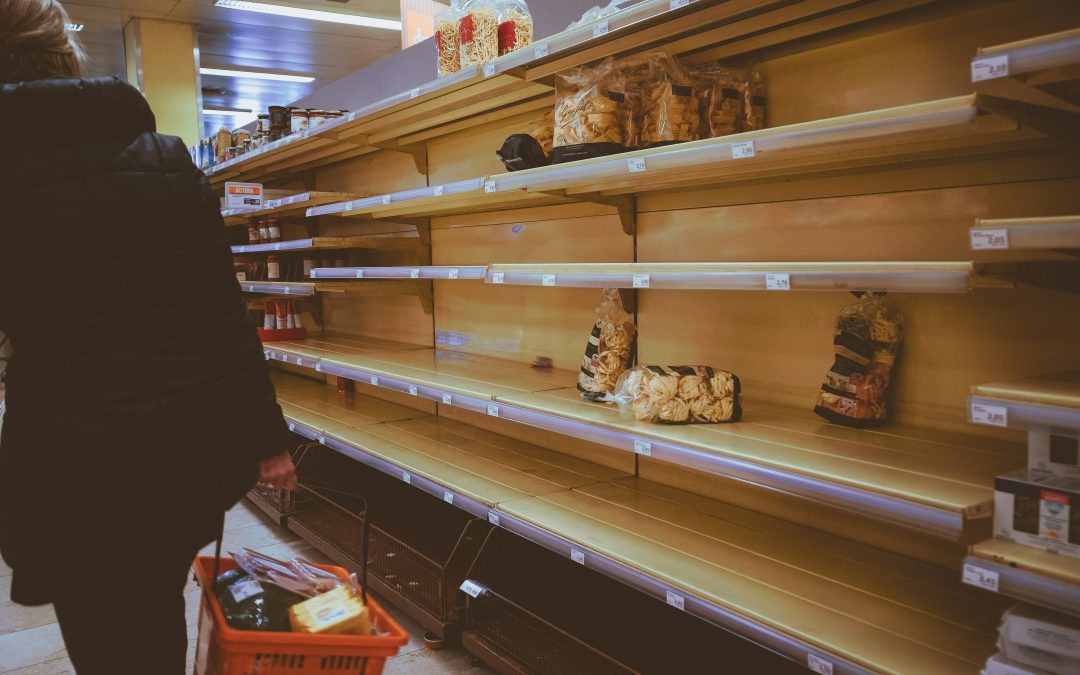
Recent crises – such as Covid-19, Russia’s invasion of Ukraine, and severe droughts and heatwaves – have revealed the cracks in a food system that remains undergirded by neoliberal assumptions and inadequate planning. When it comes to protecting the health and nourishment of populations, we need new frameworks prepared to absorb shocks and avoid empty shelves. As Sophie van Huellen argues alongside co-authors Isabella Weber and Merle Schulken, a Keynesian approach designed to protect producers and consumers through public buffer stocks could offer an effective solution.
Evidencing their claims through the 2022-23 food price crisis, they show that non-interventionist approaches designed to maximise profit are unable to provide the security needed in our current conjuncture, producing negative social outcomes that disproportionately hit poorer households. In today’s globalised world, the paper concludes, the buffer stocks could be governed in a variety of ways, most simply at the level of the world market, with global buffer stocks whose prices are determined on international exchanges.
Further reading on food security:
- ‘Kerala’s Rice Bowl is Threatened by a Salty Future: Farmers Must Be Part of the Solution’ by Saumik Paul, Anikha S. Kumar, Jibin J K and Bhagya Gopakumar – This blog explores how flooding and saltwater intrusion are threatening rice production, livelihoods, and food security in the Kuttanad region of Kerala, India. The researchers explore how rice farmers’ deep knowledge of the landscape is a vital resource in finding effective solutions.
How can global production practices adapt to ecological pressures?
When often associate boundaries and tipping points with the climate. This isn’t surprising given the increased frequency and urgency of warnings about the threat posed by Earth system tipping points and their cascading effects. Much attention has focused on the potential for the Amazon rainforest to fall into a pattern of ‘dieback’, for example, wherein global heating and deforestation disrupt the forest water cycle to such an extent that the ecosystem degrades into savanna-like conditions. In turn, the rainforest will flip from being a net carbon sink to a net carbon emissions source, with severe implications for the world’s ability to tackle climate change.
Avoiding this fate will require transformations in environmental governance, ensuring drivers such as deforestation are kept in check. A hotspot for resource extraction, the Brazilian Amazon plays a significant role in global value chains (GVCs), with corporate and state actors under increasing scrutiny for deforestation and agricultural practices.
The ways in which firms are responding to such pressures are complex and deeply political, encompassing measures that go beyond mere technological fixes and respond to contingent social and ecological dynamics. As GDI’s John Loomis, Khalid Nadvi, and Jose Antonio Puppim de Oliveira argue in a new article, planetary boundaries themselves are reshaping the organisation of governance of global production systems in diverse and uneven ways.
Developing their argument through comparative analysis of the beef cattle and biodiversity-based cosmetics value chains, they show that climate effects impact sectors in different ways, requiring sector-specific policy approaches that consider social equity and economic viability as well as environmental limits. In short, there’s no one-size-fits-all approach that will support sustainable transitions with GVCs, requiring policymakers to consider how market dynamics and power relations interact with the ecological tipping points that threaten resource hotspots like the Amazon.
Further reading on GVCs in the Amazon:
- ‘Aligning Transnational due Diligence: The EU Deforestation Regulation and Brazil’s Fragmented Beef Governance’ by John Loomis, Khalid Nadvi, and Jose Antonio Puppim de Oliveira – Brazil is the world’s largest beef exporter, but worries surrounding the industry’s significant environmental impact are incentivising stricter rules on production practices. But how effective are these regulations?
- ‘Subnational policy and sustainability in southern-led global value chains: a comparative study of sugarcane and cosmetics in Brazil’ by John Loomis, Khalid Nadvi, and Jose Antonio Puppim de Oliveira – With southern-led GVCs on the rise, how are they responding to pressures and rules surrounding sustainable transitions?
How are ageing populations impacting care provisions?
Sustained and significant population aging is a fairly recent phenomenon, with regions across the world only just starting to struggle with the social and economic effects of rising life expectancies and declining fertility rates. In the fight for a fairer, more socially just world, the organisation of elder care represents a vital component.
As part of this, longstanding assumptions about aging and a life well-lived warrant renewed scrutiny. GDI’s Gindo Tampubolon has been researching the complexities of how people age in different parts of the world, with a particular focus on the long-term effects of childhood poverty on an individual’s life course. As shown in a recent journal article examining 80,000 people across 32 wealthy and developing nations, participants who were poor in childhood were more likely to enter later life in ill health, raising important questions for policymakers.
Societies across the world will face mounting elder care needs in coming years, compounded by other issues such as low fertility rates. While workers from overseas may alleviate the issue to some extent in wealthier nations, competition for such workers may become intense, not least due to rising care needs in less wealthy regions. As Gindo argues in a blog post responding to Prime Minister Andy Burnham’s proposals for a National Care Service, the UK also needs a national childhood strategy to tackle upstream problems. As well as reducing care costs in the long term, such a strategy will make for a more just society by improving the lives of people with less well-off parents.
Further resources on aging in the twenty-first century:
- In Conversation: Gindo Tampubolon on healthy ageing around the world – In this podcast, Gindo discusses his experience working as a lead expert for the World Health Organization’s Life Course & Healthy Ageing expert group as part of the UN’s Decade of Healthy Ageing Initiative.
How can we nurture imaginative ways of thinking?
With many of us inured to the language of crisis and existential threat, it’s easy to feel powerless when it comes to shifting the status quo. However, the future isn’t determined. For GDI’s Heather Alberro and co-authors of a recent journal article, ‘“Educating to transgress”: ecotopian pedagogies for the Symbiocene’, addressing the existential threat posed by climate breakdown requires educators to adopt transformative pedagogies that foster modes of thought capable of challenging our current socioeconomic paradigm. After all, younger generations will be responsible for maintaining and creating solutions to ecological crisis, with many feeling great anxiety about the historical inabilities of governments to adequately challenge the problem.
Heather and colleagues put forward the notion of ‘ecotopian pedagogies’ as means to disrupt the systemic drivers of continued climate destruction. While they acknowledge such an approach has been hamstrung by the neoliberalisation of higher education, it remains a space to reclaim radical hope through pedagogical methods that support anti-hegemonic, collective, and radically imaginative thinking.
Rather than teaching people how to simply recover from climate shocks and implement short-term fixes, this form of teaching encourages collective and speculative ways of thinking that allow people to see beyond the constraints of present material conditions and political impasses.
Read more from GDI researchers:
Looking for further reading material from our fantastic researchers? You’ll find further research outputs on the GDI website or via Research Explorer. You can also keep track of the latest updates from our researchers via Instagram, LinkedIn, and Bluesky. If you haven’t done so already, we recommend signing up to our newsletter to receive monthly updates and commentary.
Photo by Boris Dunand on Unsplash
Note: This article gives the views of the author/academic featured and does not necessarily represent the views of the Global Development Institute as a whole.
Please feel free to use this post under the following Creative Commons license: Attribution-NonCommercial-NoDerivatives 4.0 International (CC BY-NC-ND 4.0). Full information is available here.