
Understanding the politics of inequality
By Sam Hickey, Sophie King and Sarah Hunt
History has much to tell us about the politics of inequality, but the moral of the story depends upon the lens through which we choose to interpret its lessons. The recent DLP conference on this theme raised many of the questions that ESID is attempting to address, as well as demanding some considered defence of the ‘political settlements plus’ framework that constitutes our analytical lens for understanding the politics of inclusion.
International Women’s Day
by Brooks World Poverty Institute
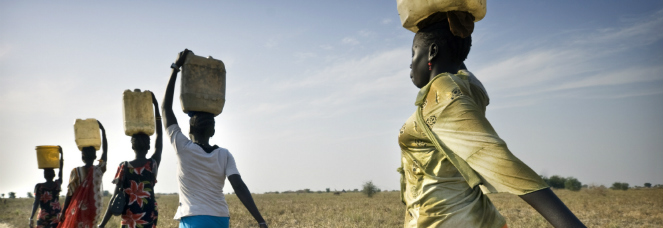
International Women’s Day on Sunday 8th March celebrates the economic, political and social achievements of women. Brooks World Poverty Institute research demonstrates that women play a vital role in improving global value chains – as workers, farmers, producers and consumers – which can have a significant impact on pro-poor development.
3 Big Issues for Research Uptake
by Chris Jordan, Communications and Research Uptake Manager at Brooks World Poverty Institute
 There’s an increasing pressure both in the UK and around the world for researchers to demonstrate the tangible benefits to society of their work. ‘Impact’, ‘uptake’ and ‘knowledge exchange’ are taken (and resourced) increasingly seriously. The days of the ivory tower are numbered.
I joined The University of Manchester a year ago from ActionAid, where I’d worked on campaigns and advocacy. As a ‘communications and uptake manger, I’m excited about the shift, and making the most of the amazing research that is done here.
How do Rural Labour Markets Respond to Shocks?
By Ralitza Dimova
The occupational portfolio choice of small farmers in rural environments is among the most high profile areas of research and policy debate in development economics. One key focus area is the choice between relatively risk-free – though less profitable – activities such as subsistence farming and higher-risk and higher return activities like livestock and cash crop production. The consensus is that relatively asset-poor and risk-averse households are likely to opt for subsistence farming and out of higher value cash crop alternatives, thus potentially going down the slope of further destitution. By contrast, off-farm (especially non-agricultural) labour market opportunities tend to be seen as an escape route for farmers out of poverty, especially in the event of shocks. However, most of the related literature highlights lack of availability of such opportunities for households that have failed to reach a certain wealth and education threshold. In both cases, the policy advice is in favour of asset reallocation from relatively wealthier to relatively asset poor households.
‘Rising Powers’, Responsible Consumption, and Standards
By Development @ Manchester,
Two journal articles involving Manchester Rising Powers research have been included in a free online article collection featuring the most downloaded articles published in Routledge Social Sciences journals in 2014.
The links between employment and development
By Ralitza Dimova
Approximately 200 million people around the world are actively looking for work; if they formed their own country, it would be the fifth largest in the world.[i] [ii] Developing countries account for more than half of these people. The number of those who neither work nor look for work in these countries is in the hundred millions, while among those working, the majority hold occupations in farming, small household enterprises or in casual or seasonal day labour. Their labour productivity is between 10 and 40% of that in advanced economies.
Development in 2015
By David Hulme,
As we enter 2015, Professor David Hulme looks ahead to the next twelve months in international development as the Millennium Development Goals come to an end and plans take shape for the next phase.
Dispatch from Lima: Seven Trends We Spotted at UN Climate Talks
By Lauren Gifford and Jonas Bruun
Two veterans of UN climate talks cut through the jargon and tell us what’s new and trending at this year’s summit in Lima, Peru.
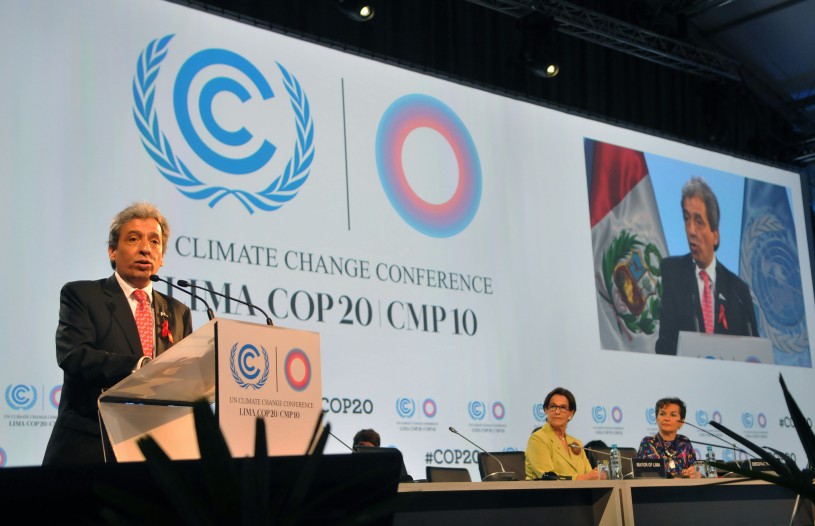
(Photo: cancilleriadeperu / Flickr)
Paths to development: Is there a Bangladesh surprise?
By
Bangladesh’s economy has recorded remarkable economic performance in the new millennium, though its per capita income has remained low. Even more spectacular has been the steady improvement in its levels of many social development outcomes. Popular commentaries have drawn comparisons with India and Pakistan in highlighting the significance of Bangladesh’s development achievements. This phenomenon has been termed as the “Bangladesh conundrum,” and has received extensive coverage in international media outlets, such as the New York Times, the Economist and the Wall Street Journal.
Swimming Alone? The Role of Social Capital for Enhancing Climate Resilience in Bangladesh
By Joanne Jordan
Social capital is becoming increasingly recognised as having a key role in enhancing resilience to climate stress. Joanne Jordan, Lecturer in Climate Change and Development at IDPM, considers in a paper recently published in Climate and Development, the relative importance of different types of social capital for enhancing resilience, by exploring how relationships of exchange and reciprocity influence responses to climate stress in South-west Bangladesh. Specifically, she identifies four types of social capital-based support (with monetary support as a subset) and the interlinkages among the types (and processes) of social capital with diverse effects on resilience to climate stress.