By Louisa Hann and Chris Jordan
We’re delighted that two of GDI’s longstanding collaborative projects have been nominated for the University of Manchester’s inaugural Partnership Excellence Awards. The awards recognise the benefits of equitable collaboration for both researchers and the partners with whom they engage, as well as any impacts to have emerged from the partnerships.
Ahead of the awards on the 7 October, we wanted to take the opportunity to reflect on what makes our partnership with Slum Dwellers International (SDI) and around One World Together something we want to shout about.
The snowball effect
We’ve been shortlisted for a long-term ‘strategic alliance’ award for our partnership with SDI. This is a partnership that has snowballed from one committed engagement, to a multifaced network of people and activities stretching across research, teaching and social responsibility.
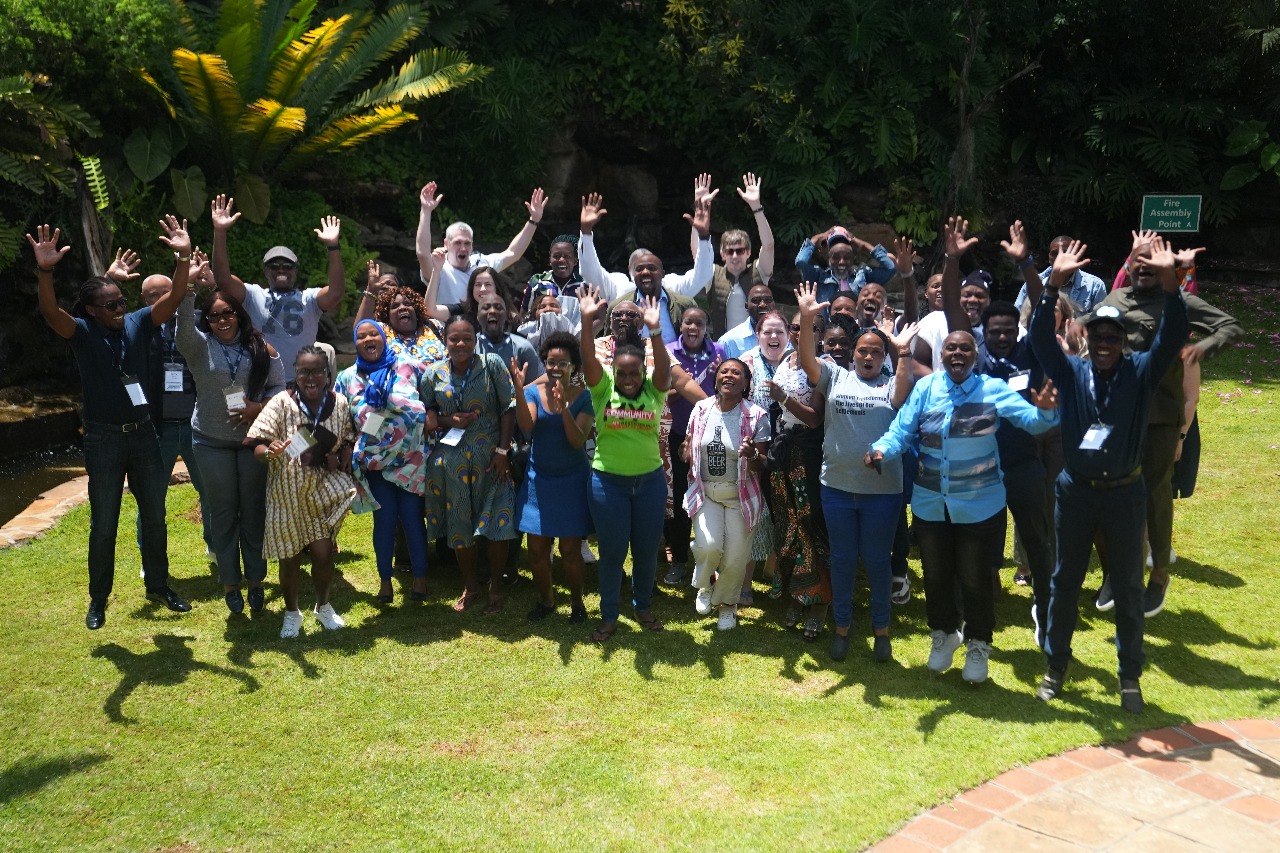
ACRC and SDI partners in Nairobi
SDI is a global network of community organisers working to change elite perceptions of informal settlements and improve the lives of people who live in them. The origins of the partnership stretch back to the early 1990s through Professor Diana Mitlin’s engagement with grassroots activists in Africa, who would go on to form SDI. Diana helped shape their advocacy and upgrading approaches based on her research into informal settlements, the success of which attracted over $36 million in support from the Bill and Melinda Gates Foundation.
Having built a solid relationship with SDI, GDI invited some of its community members to teach on a new master’s module – ‘Citizen-Led Development’ – in 2011. As well as enriching students’ knowledge of community-led development approaches, it supported SDI members’ confidence in their organising skills and value to the academic community. Since then, members of SDI have been visiting Manchester on an annual basis to engage in collaborative social responsibility, research, and teaching activities, inspiring community leaders in Manchester to set up Community Savers in 2016, a network of local associations taking action on poverty and inequality.
Throughout the years, GDI has also engaged in several externally funded research projects in collaboration with SDI, most notably the DFID-funded Effective States and Inclusive Development (ESID) research centre and the ongoing FCDO-funded African Cities Research Consortium (ACRC). Grounded in principles of co-production and with an emphasis on incorporating community knowledge, ACRC’s partners are developing research to address stubborn development challenges across African cities.
In Nairobi, for example, action research has already established practical ways to connect the informal settlement of Mukuru to mainline sewers, dramatically lowering annual cholera rates from the hundreds to a single isolated case. Similar stories continue to emerge from other focus cities, demonstrating the effectiveness of putting community knowledge in dialogue with researchers and state actors.
While GDI’s partnership with SDI is now fully institutionalised, it remains driven by people at its heart. SDI’s current managing director Beth Chitekwe-Biti was supervised by Diana Mitlin during her PhD at GDI. She plays a vital role as research director for community knowledge within ACRC, as well as influencing GDI’s overall strategy as part of our International Advisory Board. Beth is one of five SDI-associated PhD researchers who have come through GDI, while many members of GDI staff have their own deep links with SDI and its national federations.
The ‘so what’ of research
Having enriched and supported GDI’s years of research into community organisations and funding challenges, SDI also played a fundamental role in the formation of our second nominated project – One World Together (OWT).
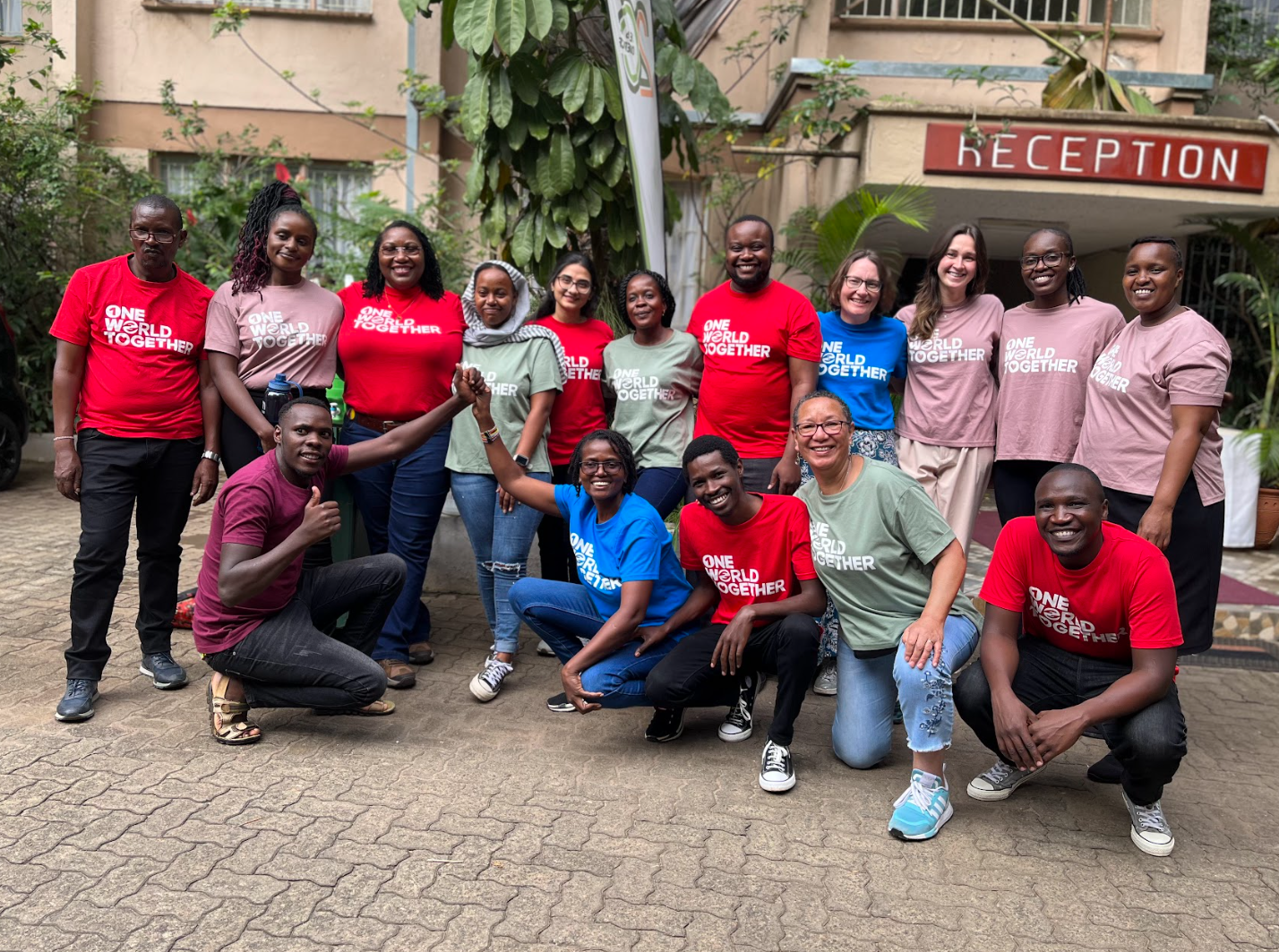
One World Together team and partners at a summit in Kenya in 2024.
Established by Professor Nicola Banks and Chibwe Masabo Henry in 2023, OWT is an independent social enterprise that pools small donations to provide long-term, flexible funding to community-led organisations, including SDI-affiliated groups such as Community Savers in Manchester and Muungano wa Wanavijiji in Nairobi.
The original impetus behind OWT came from years of research into the role of NGOs and the charitable giving of the UK public to development organisations. Nicola and colleagues had meticulously documented how pressures and incentives in the aid system were failing community organisations on the frontline. Rather than continue to critique the problems within academic journals, Nicola decided to design a different type of funding model to fix it.
In terms of measurable impacts to date, OWT has provided £24,000 (and counting) over three years to community-led organisations in the UK, Kenya and Zambia through its Solidarity Fund. Successive cohorts of GDI students have also worked with OWT through the School of Environment, Education, and Development’s Changemakers programme, building practical skills and confidence in their abilities to make a positive difference in their professional lives and beyond.
As OWT continues to go from strength to strength, it demonstrates the potential for community-centred movements and academic institutions to work together to develop the capabilities of young people and students while promoting social justice and tackling some of the world’s deeply entrenched inequalities.
Critical thinking + social justice
Regardless of the award results, we’re incredibly proud of both our relationship with SDI and the progress that One World Together is making in demonstrating a different model of trust-based funding for development. While they are shortlisted in different categories and take very different forms, we also love the fact that there’s an intrinsic link between them.
This blog (which is already on the long side) only scratches the surface of the deep links, relationships and commitments that underpin genuine partnerships, but we hope it provides a flavour of what’s happening.
We’re fond of saying that GDI is where critical thinking meets social justice – but we hope that these partnerships really demonstrate exactly what it means in practice.
Note: This article gives the views of the author/academic featured and does not necessarily represent the views of the Global Development Institute as a whole.
Please feel free to use this post under the following Creative Commons license: Attribution-NonCommercial-NoDerivatives 4.0 International (CC BY-NC-ND 4.0). Full information is available here.