
When people think about creating a cooperative, they often imagine legal registration, governance structures, business plans, and financing. These are all important steps. But after spending the past few years researching and working alongside cooperatives, I have become convinced that one challenge is often even greater: learning how to cooperate.
How do you make decisions when priorities conflict? How do you disagree without damaging relationships? How do you build trust among people with different personalities, expectations, and experiences? These questions rarely appear on registration forms, yet they often determine whether a cooperative succeeds in the long term.
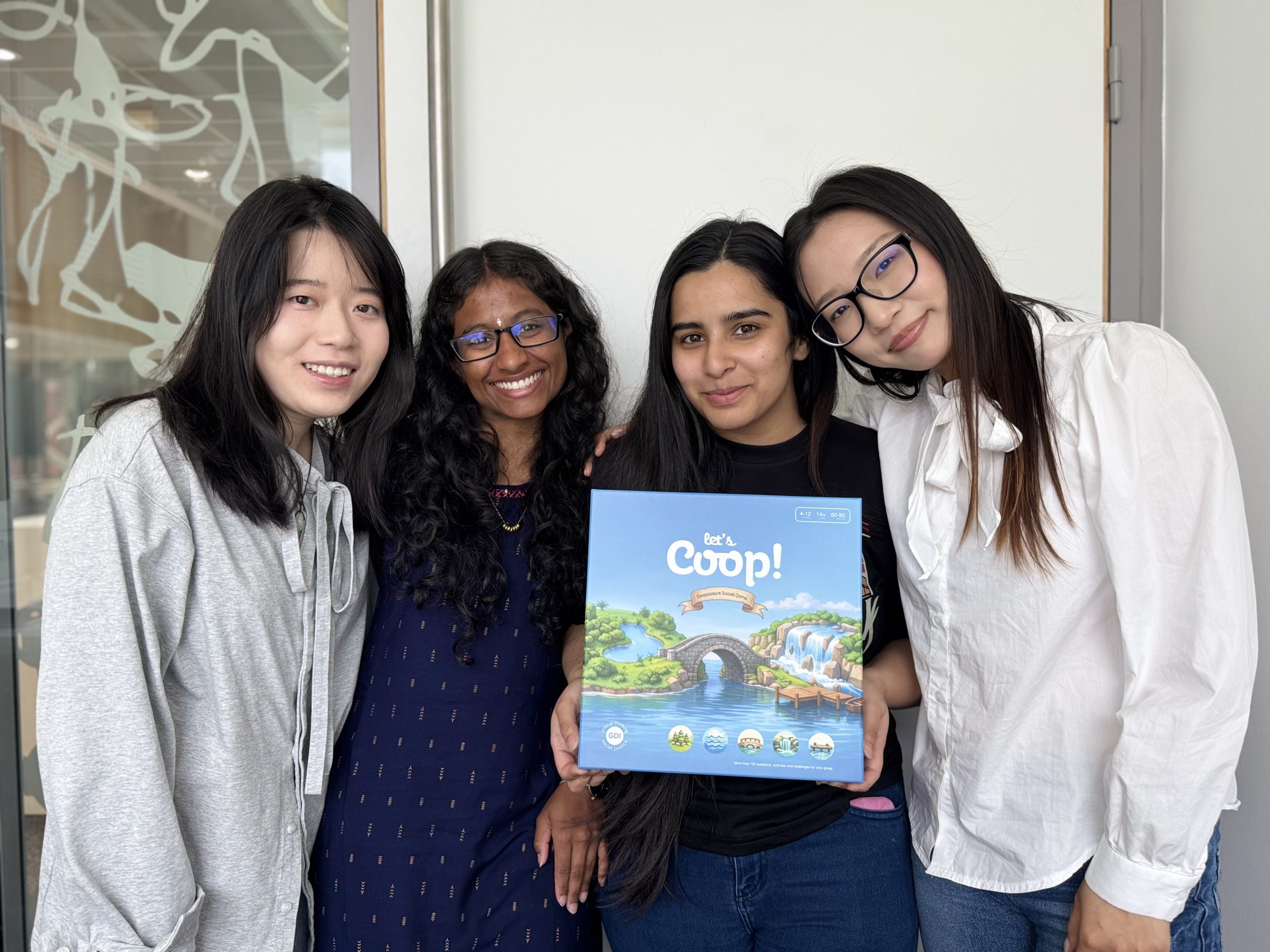
Those questions eventually led me to create ‘Let’s Coop!’, a board game designed to help people experience cooperation in action.
Why a board game?
Talking about trust, leadership, conflict or money is not always easy. In many organisations, these conversations only happen once problems have emerged. By then, positions may already be fixed and discussions can quickly become defensive.
Games create a different kind of environment. When people respond to fictional cooperative scenarios instead of real organisational conflicts, they often feel more comfortable sharing opinions, questioning assumptions, and listening to different perspectives. Difficult conversations become easier because nobody feels personally criticised. Participants are invited to discuss situations together, explore possible responses, and reflect on how they make decisions as a group.
‘Let’s Coop!’ was designed around this idea. There are no winners or losers. Participants move together through a series of cooperative challenges that encourage discussion, negotiation, and collective decision-making. The journey through the game becomes more important than reaching the end.
For the facilitator, this opens another layer of observation. As conversations unfold, it becomes possible to notice leadership styles, communication patterns, participation, confidence, decision-making approaches, and how cooperative values influence the choices being made. These observations become the starting point for reflection and, eventually, for designing organisational development activities that respond to the group’s own reality.
Learning from different conversations
Once the first design was finalised and the prototype printed, the real journey began.
Testing ‘Let’s Coop!’ was never simply about checking whether the mechanics worked. Every session became an opportunity to observe how different groups approached cooperation, how they discussed difficult organisational questions, and, perhaps most importantly, what they could teach me about improving the game itself.
The first testing session took place at the University of Manchester with students from the MSc in Human Resource Management. Unlike many of the groups who would later play the game, most participants had little previous contact with cooperatives. This made the conversations particularly interesting.
Testing session with MSc students
What fascinated me was not the fact that participants held different opinions. In fact, that was exactly what I had hoped for. It was valuable seeing how the game created a space where those different perspectives could be explored without becoming confrontational. Nobody was trying to convince everyone else they were right. Instead, people became curious about each other’s reasoning. Watching that happen around the table was one of the first moments when I realised the game was doing exactly what I had hoped: creating a safe environment for conversations that might otherwise never happen.
Their feedback was deeply valuable. Beyond suggesting practical improvements to some of the activities and the overall design, they confirmed that the game encouraged reflection while remaining enjoyable to play.
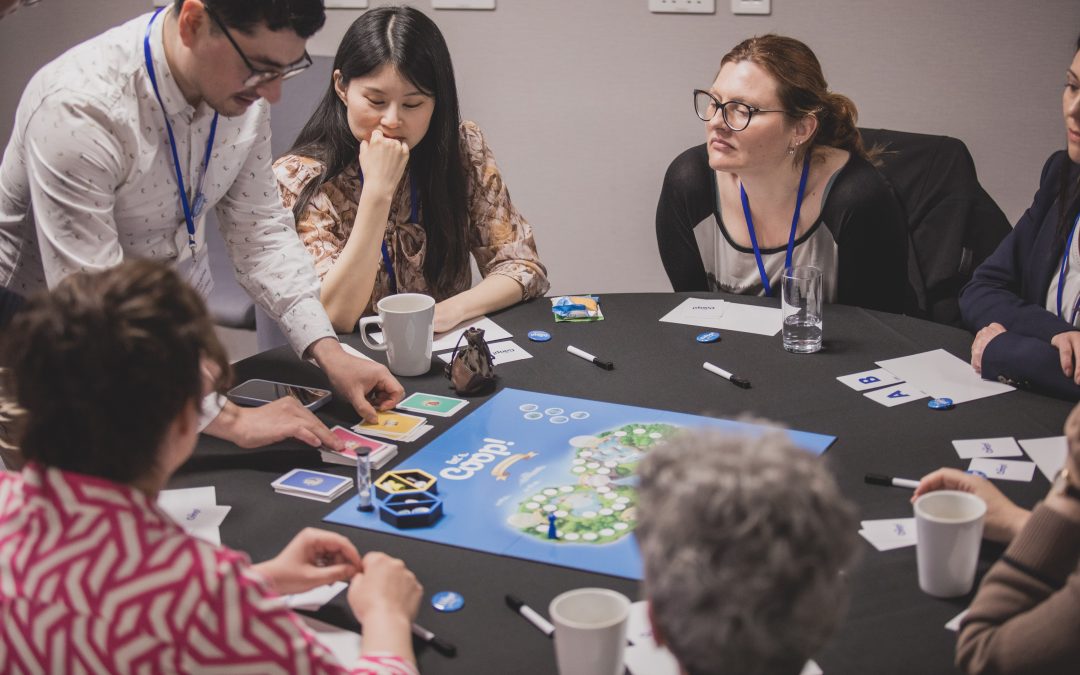
A few weeks later, ‘Let’s Coop!’ travelled to the annual conference of the UK Society for Co-operative Studies, hosted by the University of Birmingham Business School. This was a completely different audience. Around the table were academics, researchers, consultants, cooperative practitioners, and cooperative members from countries including the United Kingdom, India, Serbia, and China.
Very quickly, the conversation moved beyond the cards themselves. Participants began sharing stories from their own organisations, comparing experiences, and reflecting on how similar dilemmas appeared in completely different cultural and institutional contexts. Leadership, participation, difficult decisions, and balancing individual and collective interests seemed to be universal challenges.

Gameplay at the UK Society for Co-operative Studies
Perhaps the most rewarding part of the session came afterwards. Several participants commented that they could already imagine themselves using Let’s Coop! within their own organisations, while others offered thoughtful suggestions that directly informed the next version of the game.
And while I was back in Manchester making those improvements, another copy of Let’s Coop! was already travelling across the Atlantic. The first Spanish version was on its way to southern Chile, ready to begin a completely new chapter.
The Chilean testing sessions took place on Chiloé Island, in the Los Lagos Region, facilitated by Paula Vlasich and Lorena Oyarzún, two professionals with extensive experience in cooperative development and education.
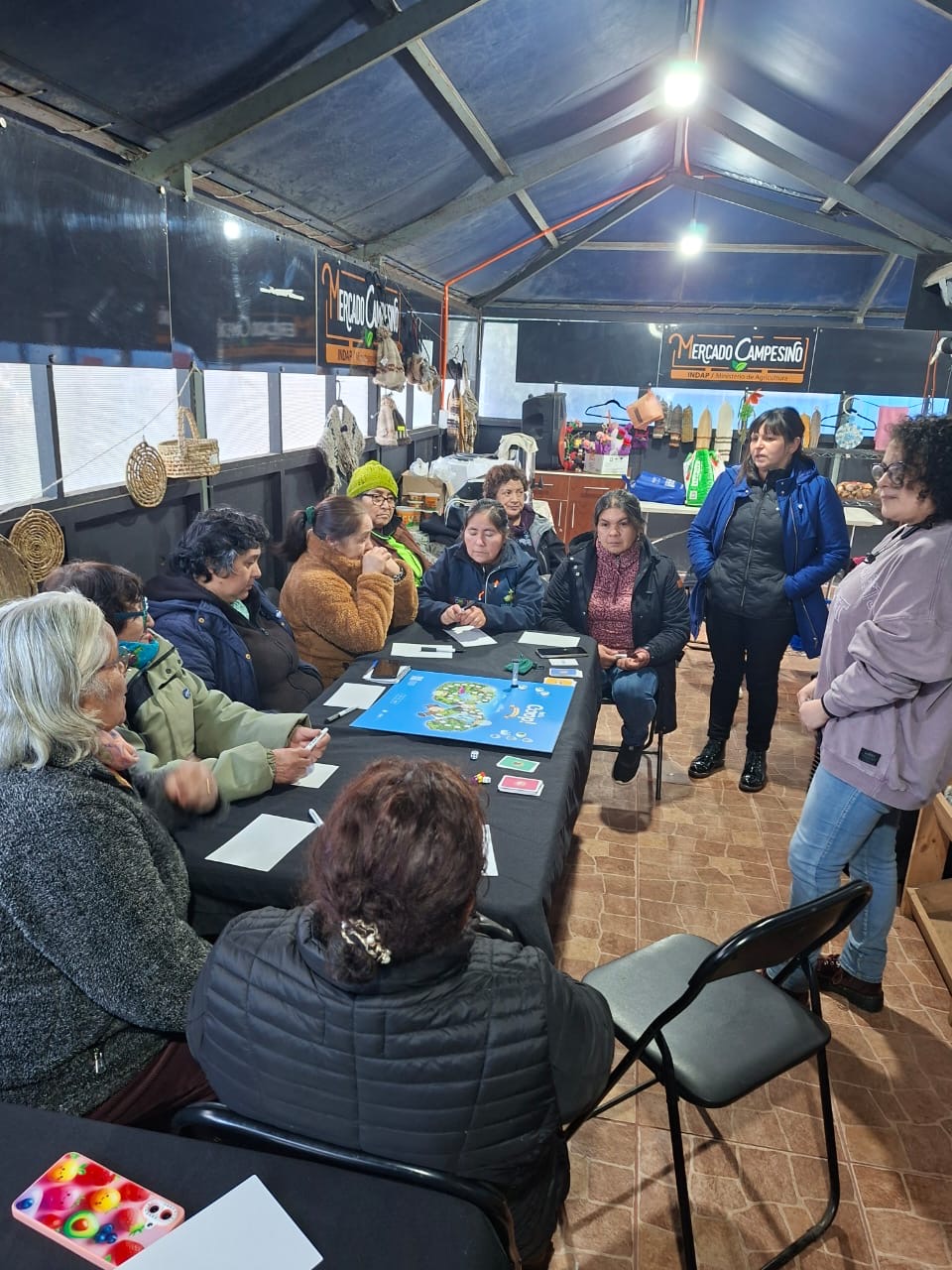
First session with ADEMUCAM, Chonchi
The first session was held with ADEMUCAM, an associative group of women farmers from Chonchi. The game quickly sparked conversations about the future of the organisation, revealing that although members shared many common priorities, each also brought different aspirations and expectations. The relaxed atmosphere created by the game allowed these differences to be discussed openly and respectfully.
The second session took place in Dalcahue with Cooperativa El Chilcón, a cooperative of six women producing traditional handicrafts. Here the experience was different again. The activities highlighted the strengths the cooperative had already built over the years. Clear priorities, shared goals, and a strong awareness of their collective identity became visible throughout the different challenges. Instead of identifying problems to solve, the game opened conversations about how an already successful organisation could continue learning and growing.
For Paula and Lorena, this was also the moment when the game truly came to life. As the activities unfolded, they could observe leadership styles, communication patterns, participation, concerns, confidence, and even the roles people naturally adopted within the group. None of these observations were imposed by the facilitator. They emerged naturally through the conversations. And actually, that is the real purpose of ‘Let’s Coop!’: to help make visible how groups already cooperate, creating a starting point for reflection and future organisational development.
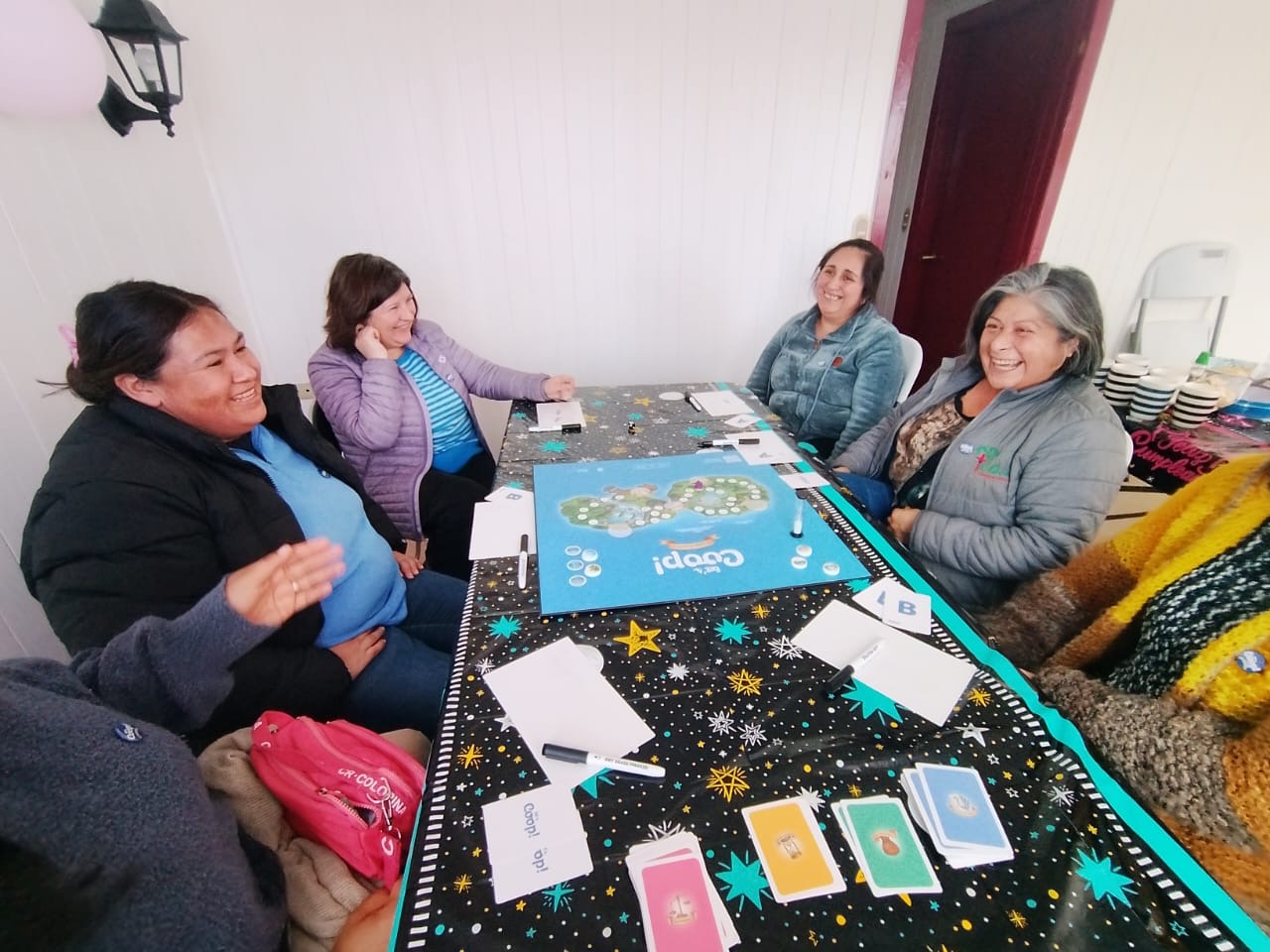
Session with Cooperativa El Chilcón, Dalcahue
The final international testing experience took place in Budapest during the Youth Voices, Cooperative Choices event organised by Cooperatives Europe, DIAKESZ, and YECN under the #Coops4Dev programme.
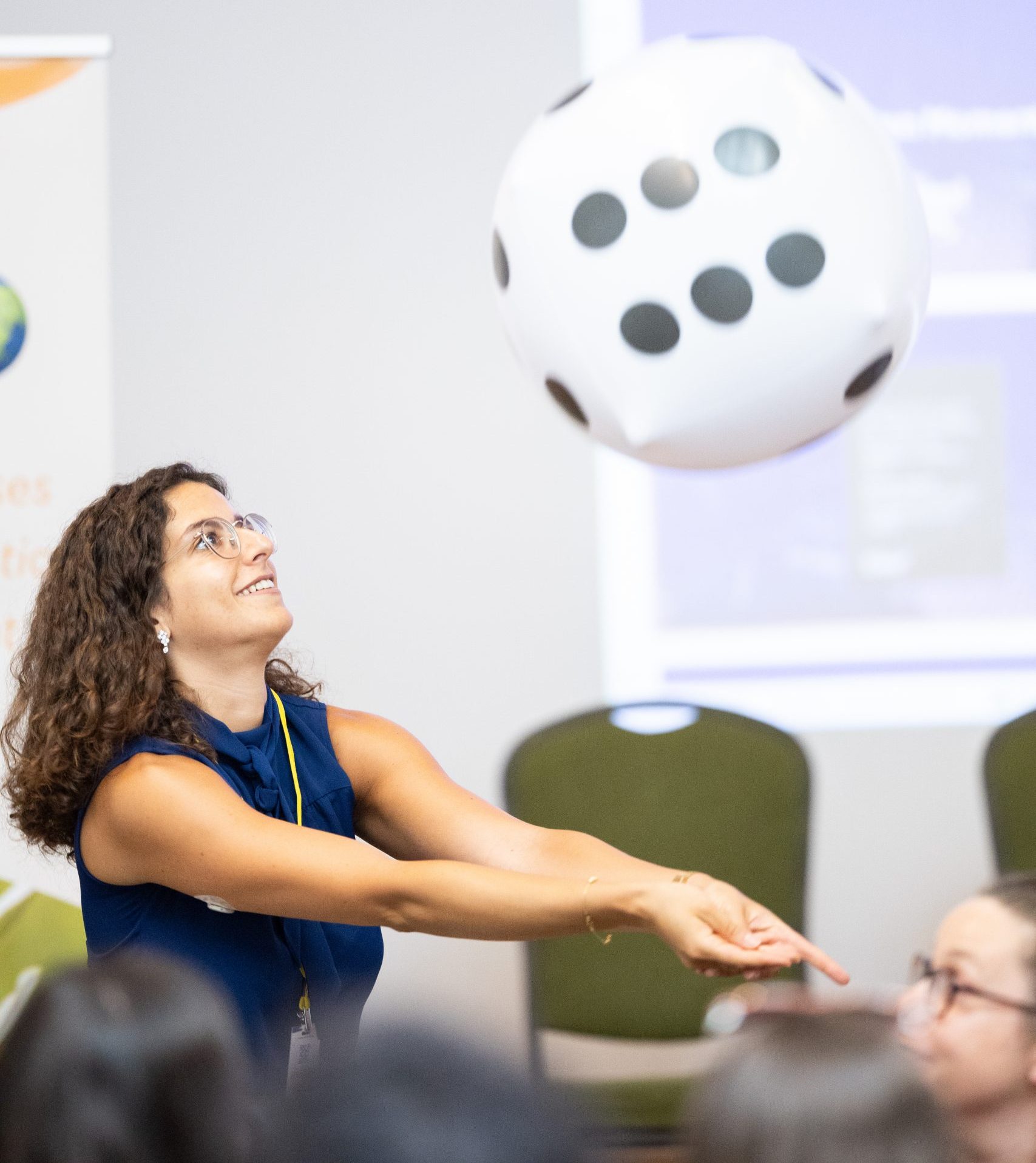
Youth Voices, Cooperative Choices event
With almost fifty participants, one board and one table were clearly not going to be enough. Big groups called for big dice! So, oversized cards and giant dice became part of the experience.
Although each group only explored part of the game, the energy in the room was remarkable. One observation particularly stayed with me. Participants occasionally wanted to challenge the game’s agreed rules because they believed their own solution was more appropriate. It was a fascinating reminder that cooperation is not simply about having good intentions. It also involves respecting collectively agreed rules, negotiating different viewpoints, and sometimes accepting that the collective decision may not be exactly the one we would have chosen ourselves.
What comes next?
Although the GDI Innovation Fund project has now come to an end, ‘Let’s Coop!’ is only just beginning its journey.
One of the current priorities is protecting the game through copyright and trademark registration, creating the foundations for its future distribution while preserving the methodology behind it.
The next step is to bring the project back to where it all started. I hope to organise a final session with colleagues at the University of Manchester to introduce the game to lecturers and leave a copy available for future teaching activities. My hope is that ‘Let’s Coop!’ can become another tool to support discussions around organisational development, teamwork, and cooperation within the classroom.
Beyond the UK, I also hope to explore opportunities to make the game available to cooperative organisations across Europe. The positive response received during the different testing sessions showed that many organisations recognise the need for practical tools that encourage reflection and dialogue, and I would love to continue developing partnerships that allow those conversations to happen.
Back in Chile, however, is where I believe the project will have its greatest impact. Last year I co-founded IMPACTIA+, a worker cooperative created to support the development of other cooperatives. Within this work, ‘Let’s Coop!’ will become one of the first tools organisations encounter. It will help reveal how groups currently cooperate, identify strengths and opportunities for development, and inform future organisational development processes tailored to each cooperative’s own reality.
I am deeply grateful to the GDI Innovation Fund for supporting this project. It transformed an idea sketched on paper into a tool that is now helping people have meaningful conversations about cooperation in different countries and contexts. For a researcher, it is difficult to ask for much more than that.
Read a full report about the project here.
Note: This article gives the views of the author/academic featured and does not necessarily represent the views of the Global Development Institute as a whole.
Please feel free to use this post under the following Creative Commons license: Attribution-NonCommercial-NoDerivatives 4.0 International (CC BY-NC-ND 4.0). Full information is available here.