by Tanja Bastia, Thais França, Andrea Souto, Felicity Atieno Okoth, Lorena Izaguirre, Satrio Nindyo Istiko
Between 29th and 2nd July, the International Migration Research Network (IMISCOE) held its annual conference in Girona. On the last day of the conference, we gathered for a workshop to discuss how we can move decolonial critiques forward with more embodied, community-based and collective approaches to studying migration. The backdrop to the workshop was the recognition that in today’s political and social climate, migrants, migration, as well as migration scholars are often used as scapegoats for the ongoing crisis of capitalism (Michiel Baas and Nina Glick Schiller).
Considering this, it is essential to examine the analytical contributions that a decolonial perspective can offer for a more comprehensive understanding of the migration phenomenon. The aim of the workshop was to gather some answers to these two questions:
- How can we move from individual-based research agendas to collectively constructed approaches that destabilise conventional knowledge about migration?
- How can we bring the body into our research praxis?
Workshop participants were encouraged to present their experience of community-based and collective approaches to migration research with a view of exploring potential avenues for future research agendas. The session built on participants’ experience of community-based research, collective autobiographies and decolonial research approaches to explore the conceptual and practical potential of doing migration research differently. In their interventions, the two organisers (Tanja Bastia and Thais França) also asked participants to speak to how these approaches can, or possibly should, also be embodied, both in terms of the research topic but also by taking into account the researchers’ bodies and research as an embodied process. As some have argued, the decolonial process cannot begin, unless we also take into account how our knowledge as well as our participation in research are products of how we are, how we live, and how we show up in our bodies.
We began the workshop with a 10 minute body scan to allow ourselves time to settle into our bodies. The workshop was being held on the last day of the conference; the programme had been packed with plenaries and around 300 parallel sessions. The weather had been hot, with the occasional thunderstorm. Settling through a body scan allowed us to slow down and connect with how we were feeling and acknowledge the embodied process of conference participation too.
 Felicity Atieno Okoth started us off with a reflection on her research, which has ethnographically explored the situated and translocal practices of Congolese and Burundian migrants, including refugees, in Nairobi, Kenya. During her fieldwork, Felicity volunteered in a refugee-led organisation and fundraised for a community-based organisation. Using a decolonial approach, she critically explored the extent to which her role in the organisations was extractive or empowering, at both the personal and collective levels. She argued for ‘radical openness ’, as a pluralistic and mosaic philosophy that embraces non-dominant ways of knowing. Felicity also stressed the benefits of long fieldwork and the need to centre epistemic affects (fear, joy, doubt, sadness, suspicion, etc.) during our engagements in the field and in our analysis, as well as allowing the body to guide the questions we as migration researchers ask of participants.
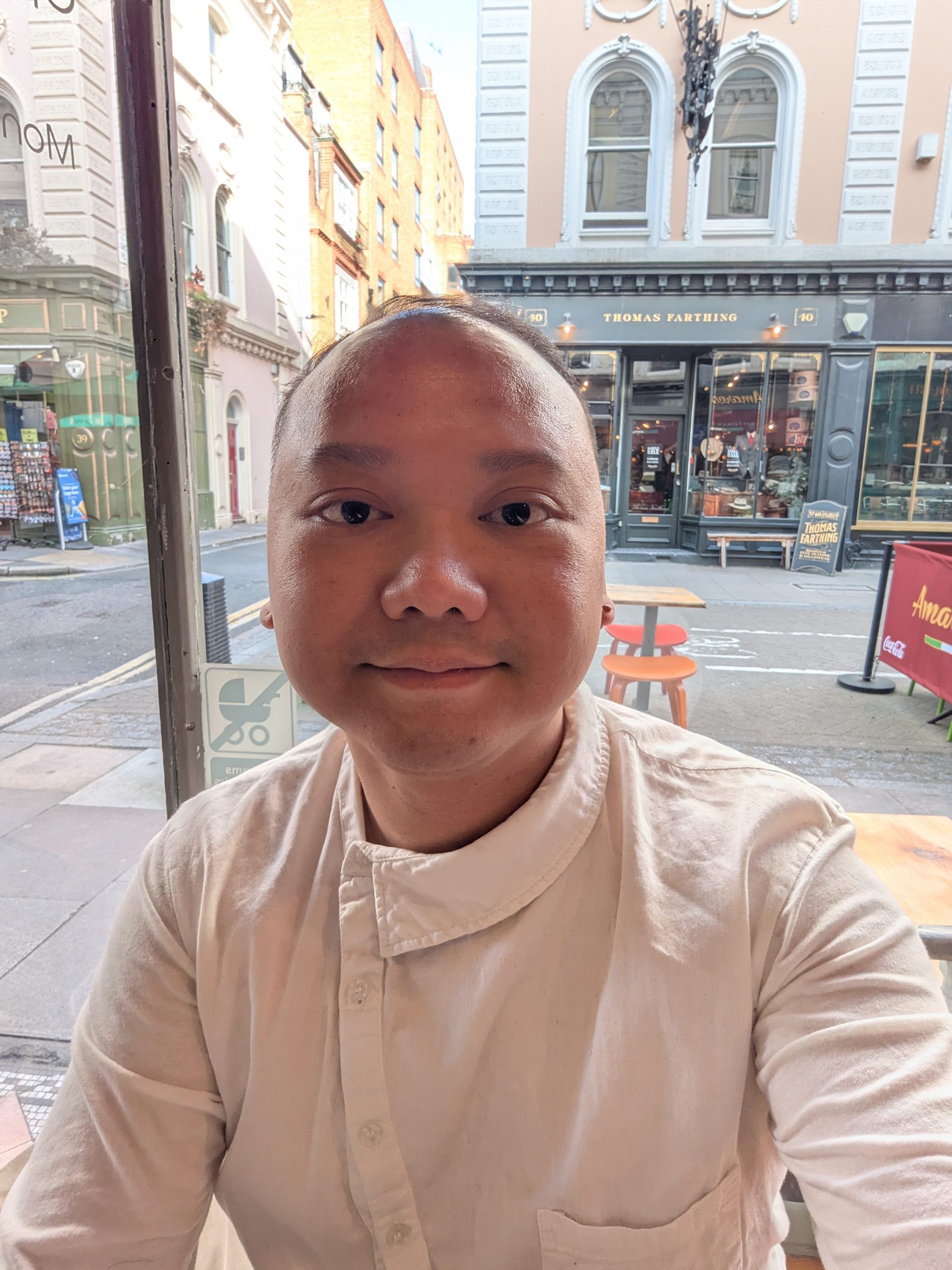 Satrio Nindyo Istiko or Tiko began by reading ‘sociological fiction’ in which the body became the basis for linking . Tiko talked about the bodies as a site of examining migrants’ racialised desire to assimilate and other complex emotions that are produced through the tensions between social structure and individual agency in the context of deep inequalities. Tiko argued that fiction has the potential to make sociological analysis more tangible and precise as decisions related to the aesthetics of a fictional piece are imbued with social theories. Through using fiction in migration-health context in Australia, Tiko puts the emphasis on storytelling as a way to challenge dominant, Western narratives about migrants’ health.
Andrea Souto approaches migration from an intersectional perspective that combines postcolonial approaches with critical race theory. From 2022 to 2024 she was a postdoc researcher at Carewell project, aimed at studying care strategies of transnational families in Europe. She brought her multi-situated research experience of having conducted fieldwork with different migrant communities (Senegalese, Moroccan, Brazilian, Colombian, Bolivian, Chinese in several contexts such as Spain, Portugal, Brazil) to reflect not only on positionality, but also on how racialization processes affect researchers and their work process. She argued that the body was always not just present but also highly relevant throughout her fieldwork, for both her interviewees (Brazilian and Colombian women) as well as for her as a researcher. She argued that through attention to the body it is possible to reverse history and that by bringing the body into the research process can allow us some way of undoing historical wrongs.
Lorena Izaguirre, drew on her position as a Peruvian researcher studying migration to Peru, and as a migrant within European academia, to reflect on how the researcher’s body and life course shape knowledge production. She contrasted two fieldwork experiences. Her doctoral ethnography with Peruvian street vendors in São Paulo, many of whom lived with police and gender-based violence, was emotionally demanding. Yet, she reflected, her own emotional exposure enabled her to connect with participants differently.
In ethnography, she argued, the researcher’s body is exposed and it is a research tool. Her current research with university-educated Venezuelan women in Lima points to another dimension of embodied research. Mothering young children made long-term immersive fieldwork impossible and prompted a shift towards participatory designs. She shared a striking finding from a photovoice workshop with these women, including “citizen-migrants” who hold Peruvian citizenship by descent but are still perceived as foreigners. A prompt inviting participants to photograph spaces where their bodies were judged, inspired by the hypersexualisation Venezuelan women face in Lima, received the fewest visual responses. Yet it generated the richest discussions of discrimination, almost all of them centred on accent, which triggers sexualised and de-professionalising stereotypes that weigh more than credentials and even legal status.
She concluded by arguing that the main constraints on participatory research are structural rather than methodological. Short-term fellowships leave little room for genuinely co-constructing research agendas with participants. This, she suggested, is ultimately a question of the political economy of academia.
Tanja Bastia reflected on her experience of participating in a collective autobiography with three other migration researchers, based on the decolonial collective autobiography approach facilitated by Dr Erin Araujo of El Cambalache collective, Mexico. She talked about the benefits of writing collectively, including how the collective can allow us to write about things, such as mental health difficulties or ethics processes, that individually we would find difficult to write about. The process thus far has been slow, but productive.
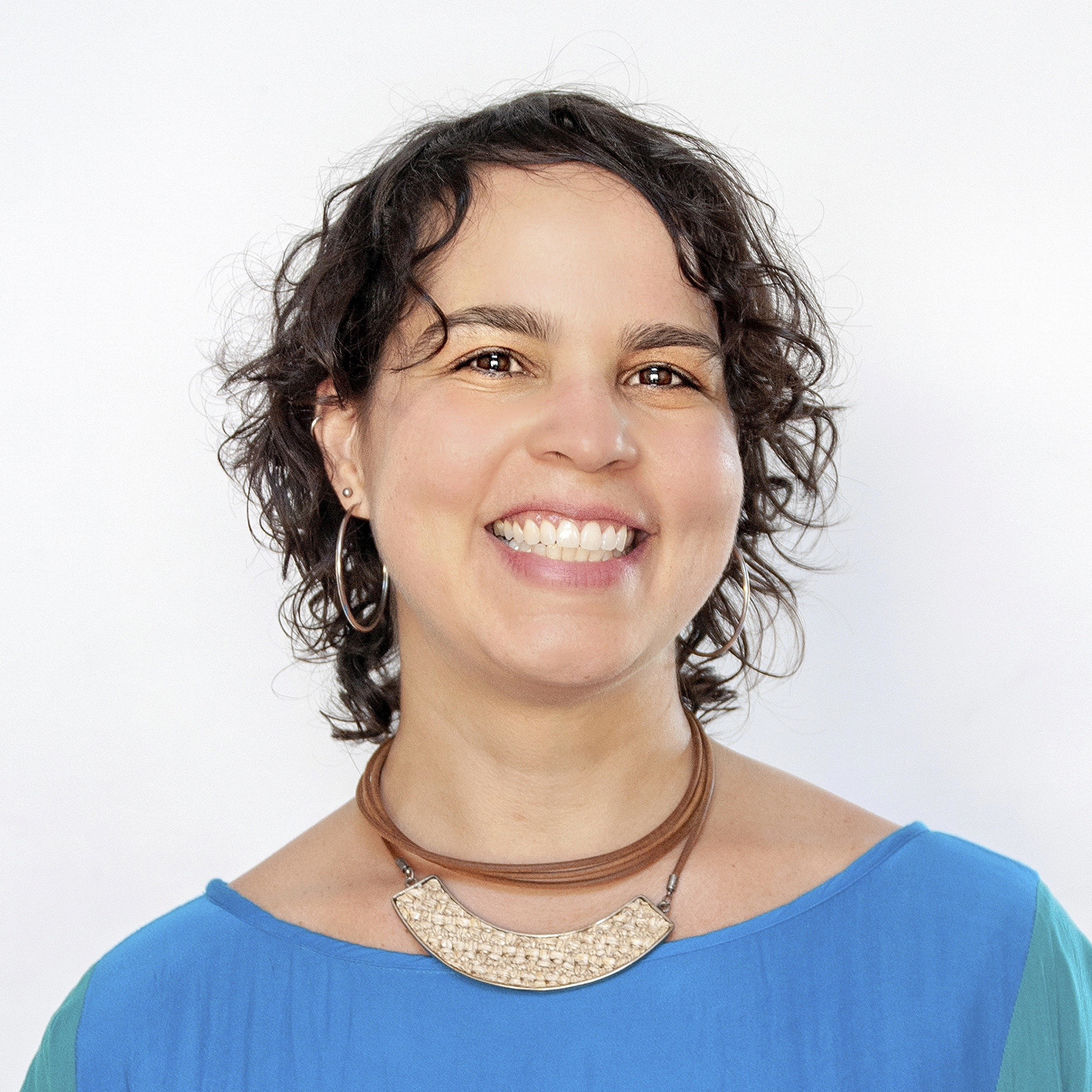 Thais França explored the construction of the Brazilian women as a colonial body in Portuguese society, including academia. She situates her positionality as a skilled migrant woman who also faces racialization, exposing the contradictions of privilege and marginalization. She reflected on the role of academic activism of migrant scholars to disrupt the reproduction of colonial hierarchies in knowledge production. She shared how the statement “I am not supposed to be here but here I am” has guided her in her academic journey and helped her deal with the uncomfortableness of what the body brings in a specific space. Thais critiqued how the colonial gaze frames Brazilian women as sexualised, often denying them political voice. Yet, she also described specific instances where these same women became political agents and by studying together with them, she was able to participate in the taking of public space as well as the turning of a sexualized body into a political body.
The discussion followed with the other participants in the workshop, who contributed their experiences of collaborating with grassroots movements of women against racism and fascism; questions around the experience of secondary trauma when researching difficult topics; how to protect ourselves during fieldwork and how our critical knowledge can inform our practices.
We concluded with brief feedback on the initial body scan, which for participants brought a welcome opportunity to stop and appreciate the importance of just stopping, even if it’s for just ten minutes; questions around Western expectations of knowledge production and the process through which knowledge is produced; acknowledging the full emotional spectrum of our experiences; as well as the possibility of fully acknowledging one another.
The workshop configured itself a space for decolonising how sessions at conferences should be, bringing a new experience where body and intellect were close together, producing critical and embodied knowledge.
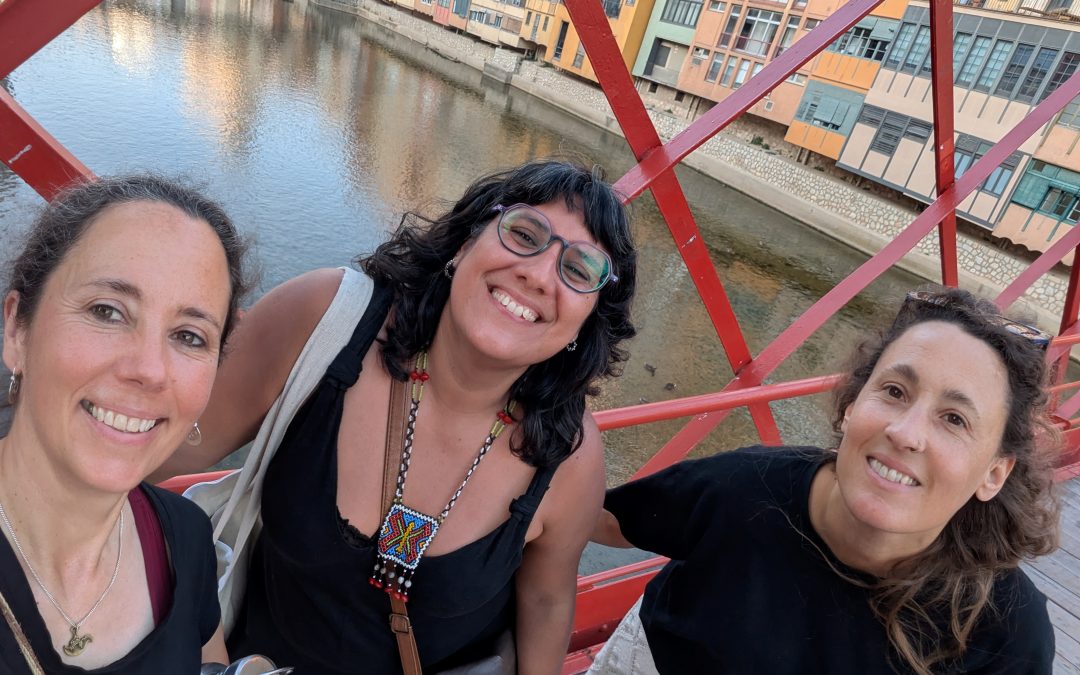
Top image courtesy of Tanja Bastia.
Note: This article gives the views of the author/academic featured and does not necessarily represent the views of the Global Development Institute as a whole.
Please feel free to use this post under the following Creative Commons license: Attribution-NonCommercial-NoDerivatives 4.0 International (CC BY-NC-ND 4.0). Full information is available here.