
by Louisa Hann
To state the obvious, the world is a big place. Most of us rely on mainstream news outlets and other popular media to keep abreast of developments across continents and countries. While there’s an abundance of informative, high-quality information available in today’s digital era, it can be tricky to look beyond common narratives that may not tell the whole story about people or places.
As Uma Kothari notes in a recent mini podcast, while stories can illuminate realities about historical moments and everyday experiences, their shape and trajectory are shaped by political imperatives that may reinforce oppressive systems or norms. The field of Development Studies, for example, has told a variety of stories about its purpose and values since its inception, only recently coming to reckon with some of the colonial precepts from which it emerged.
Relatedly, large swathes of the world are subject to stereotyping or oversimplification by the institutions and authorities that shape public imaginations in the Global North. In response, many GDI scholars are working to undo such stereotypes and enrich public perceptions of different regions. We’ve rounded up just a few examples below.
The development of post-1994 Rwanda
The 1994 genocide in Rwanda saw the systematic slaughter of around 800,000 people – a tragically destructive campaign that understandably remains a prominent aspect of the country’s legacy. To some, the story of Rwanda exemplifies successful late development in Africa, having made substantial socio-economic gains under leader Paul Kagame since 1994. For others, the country remains an oppressive state that contains dissent with a strong military presence, supports violence in the Democratic Republic of Congo, and maintains a poor human rights record.
As Pritish Behuria explains in his new book, The Political Economy of Rwanda’s Rise, such narratives are neither wholly incorrect nor wholly explanatory. While the country has transformed many aspects of its economy and experienced impressive growth, limited financial resources, elite vulnerability, and limited structural transformation continue to generate unique challenges.
Behuria emphasises that the Rwandan government is pursuing a services-based development strategy, polishing its external image to attract tourism and investment. While such efforts have promoted GDP growth in the country – a dynamic recorded in various African states – the services sector has not created the jobs the country needs. Young people still face high unemployment and low wages, while gender-based violence and discriminatory practices continue to contradict the progressive image Rwanda attempts to sell to international partners. Long-term prosperity will hinge on the extent to which Rwanda’s leadership can prioritise social and political development alongside economic growth.
Further resources on the book and Rwanda:
- GDI Podcast: The Political Economy of Rwanda’s Rise: Conversation with Pritish Behuria
- Book review: ‘Can Rwanda sustain its rise in science and technology? Here’s what can help’
- You can read GDI students’ reflections of recent field trips to Rwanda here and here.
Resistance and solidarity in Sudan
Sudan’s years-long civil war is widely acknowledged as causing hundreds of thousands of deaths, generating widespread humanitarian crisis, and heralding repeated reports of war crimes and atrocities. However, global responses to the catastrophe have been muted, fragmentary, and insufficient, with development studies often perpetuating and reinforcing such silences. As Daniela Cocco Beltrame and Teklehaymanot Weldemichel write in a recent blog post, the norms of the discipline and its institutions are ‘structured by geopolitical interest, funding flows, and the prestige economies of knowledge production,’ curtailing examination of the dynamics behind overlooked wars.
Despite such obstacles, various scholars within GDI have focused closely on Sudan, most notably Hamid Khalafallah, an early career scholar who tragically passed away earlier this year. A committed activist and Sudanese national, Khalafallah wrote frequently of developments in the country, exploring the geopolitical and regional dynamics that impede diplomatic efforts, as well as the grassroots groups mobilising against conflict and oppression in the region.
Key pieces cover the targeting of pro-democracy activists by military factions, the adoption of social media by youth-led organisations to advance progressive political imaginaries, and the vital role of aid networks in tackling Sudan’s humanitarian crisis. Against a backdrop of sparse international coverage that often fails to humanise those at the heart of the conflict, these articles reveal a nexus of resistance movements within Sudan, as well as the challenges they face in bringing real change to the region.
GDI’s Cathy Wilcock has also been engaged in scholarship on dissident movements in Sudan, zoning in on the music and art animating protests against Omar al-Bashir in 2019. As she notes in a recent journal article for African Affairs, music helped galvanise anti-government sentiment, providing vital avenues for political communication and identity formation. While music and performance were banned in 1983 by the Islamist government, the proliferation of digital technologies made music distribution virtually impossible to control.
Rather than just an aesthetic accessory, music in Sudan has helped political movements negotiate shared identities and establish transnational resistance networks, with many artists combining traditional Sudanese music with contemporary hip-hop and revolutionary anthems to reflect the broad base of the revolution. While the events of 2019 have been overshadowed by the more recent civil war, Wilcock notes in a recent article for The Conversation that they warrant greater attention, providing valuable lessons about the role of music and arts in rebuilding lives and communities after the war ends.
The new geopolitics of the Arctic
The Arctic – an imprecisely defined region spanning several countries around the North Pole – has historically been subject to much mythical projection and romanticism thanks to its unique ecosystem. In recent years, of course, the Arctic has also hit headlines for its rapid thaw, becoming a kind of barometer for the gravity of the climate crisis. Less well-considered, perhaps, is the region’s geopolitical significance.
Despite a relatively low population density, the Arctic is known for its wealth of critical minerals and rare earths, as well as its strategic defence functions. As glaciers melt, territories disappear, expand, and shift while new opportunities for resource exploitation open up. As explored in a Second Cold War Observatory podcast episode with Mia Bennett, countries such as the US, Russia, and China are making moves to consolidate their resource interests and build alliances in the interest of defence. Perhaps the most widely reported and egregious example is Donald Trump’s pursuit of Greenland, borne of the desire for resource extraction, territorial expansion, and, most likely, an ego boost.
Beyond such headline-grabbing bluster, however, Bennett notes other significant developments, including China’s increased role in the Arctic and its introduction of The Polar Silk Road – an extension of its well-known Belt and Road Initiative designed to offer new trade routes between Asia, Europe, and North America. As Russia attempts to lessen its dependence on the West following the imposition of sanctions, its relationship with China could prove vital.
As international cooperation fractures, shifts, and recalibrates in our volatile decade – a dynamic summed up by SCWO scholars as ‘polyalignment’ – increased competition for resources could also rub up against Indigenous peoples’ growing demands for agency and control over their land and resources. While fights for recognition have been going on for decades, shifting geopolitical dynamics could bring new dangers and opportunities for these often-overlooked populations.
Further SCWO podcasts examining different regions:
- Infrastructure, Nickel, and the Politics of Polyalignment in Indonesia, with Trissia Wijaya
- Seeing China’s Belt and Road, with Edward Schatz and Rachel Silvey
- Technological Competition in Argentina: Nuclear Energy and Smart Cities, with Maximiliano Vila Seoane
The environmental politics of beef in Brazil
Brazil is well-known for its thriving beef industry, representing the world’s leading exporter and second-largest producer. While the industry creates economic benefits, beef production is a significant driver of deforestation in the Amazon. As one of the world’s critical carbon sinks, the degradation of the Amazon rainforest could accelerate ecological problems such as habitat loss, biodiversity decline, and rising greenhouse gas emissions. With demand on the rise among middle-class consumers, however, protecting the environment is no simple task.
A new paper by John James Loomis, Khalid Nadvi, Umesh Mukhi, and José Antonio Puppim de Oliveira argues that current research into the environmental impacts of global value chains (GVCs) like the Brazilian beef industry struggles to explain the environmental dynamics and feedback loops that drive continued environmental degradation.
To address this challenge, the paper’s authors develop an analytical framework that links governance, power, and ecological feedback across scales. Applying this framework to the Brazilian beef value chain, they examine how governance structures, asymmetries of power among actors, and feedback loops interact to reinforce unsustainable practices, or, alternatively, create leverage points for transformation.
For example, cleared land in the Brazilian Amazon is typically valued 58% higher than forested land, incentivising deforestation. Such dynamics are exacerbated by speculative land grabbing, weak enforcement of environmental regulations, and financial systems that reward the clearing of land. Limited access to credit and technical resources further constrains ranchers’ ability to adopt sustainable intensification practices, reinforcing deforestation as a rational, if unsustainable, land-use strategy. Such dynamics aren’t inevitable, however, representing a problem that policymakers will need to solve in coming years.
More on Brazil:
- ‘FGV Researcher Discusses Sustainable Trade and Climate Action at COP30’ – an overview of José Antonio Puppim de Oliveira’s arguments surrounding Brazil’s future at a COP30 panel on green trade and investment.
- Research project: Amazônia+10 – Innovation for Sustainable Value Creation: Understanding Global Value Chains in the Amazon
Keep up with the latest outputs from GDI researchers
If you’re feeling inspired to engage in some summer reading, you’ll find further research outputs on the GDI website or via Research Explorer. You can also keep track of the latest updates from our researchers via Instagram, LinkedIn, and Bluesky. If you haven’t done so already, we recommend signing up to our newsletter to receive monthly updates and commentary.
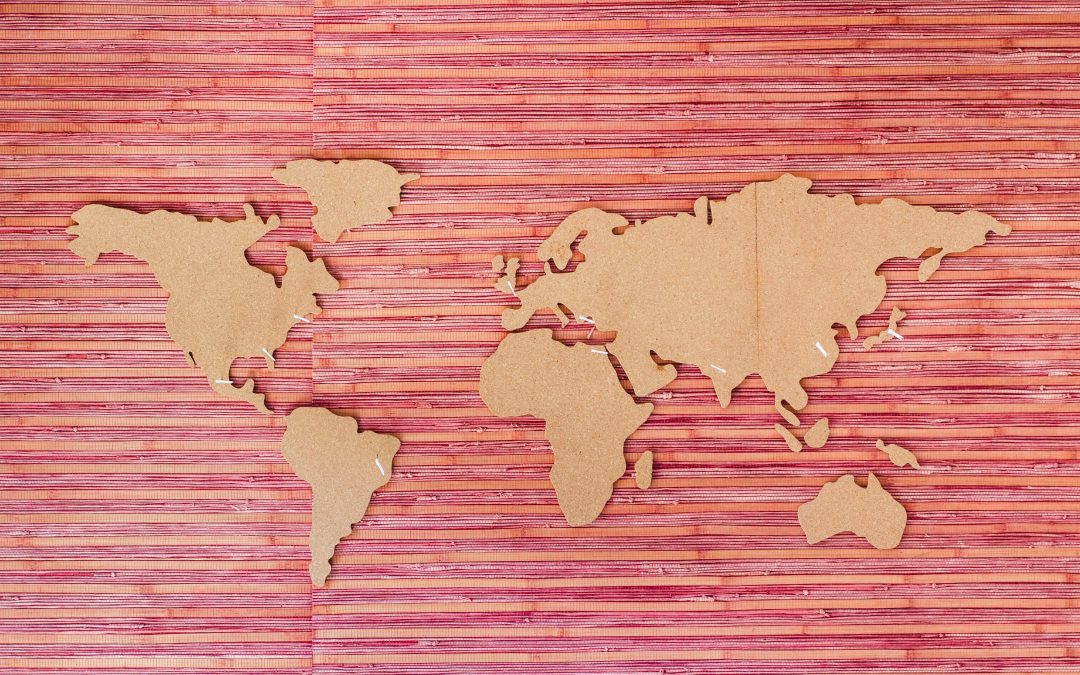
Photo by Louis Hansel on Unsplash.
Note: This article gives the views of the author/academic featured and does not necessarily represent the views of the Global Development Institute as a whole.
Please feel free to use this post under the following Creative Commons license: Attribution-NonCommercial-NoDerivatives 4.0 International (CC BY-NC-ND 4.0). Full information is available here.