

by David Hulme and Saumik Paul
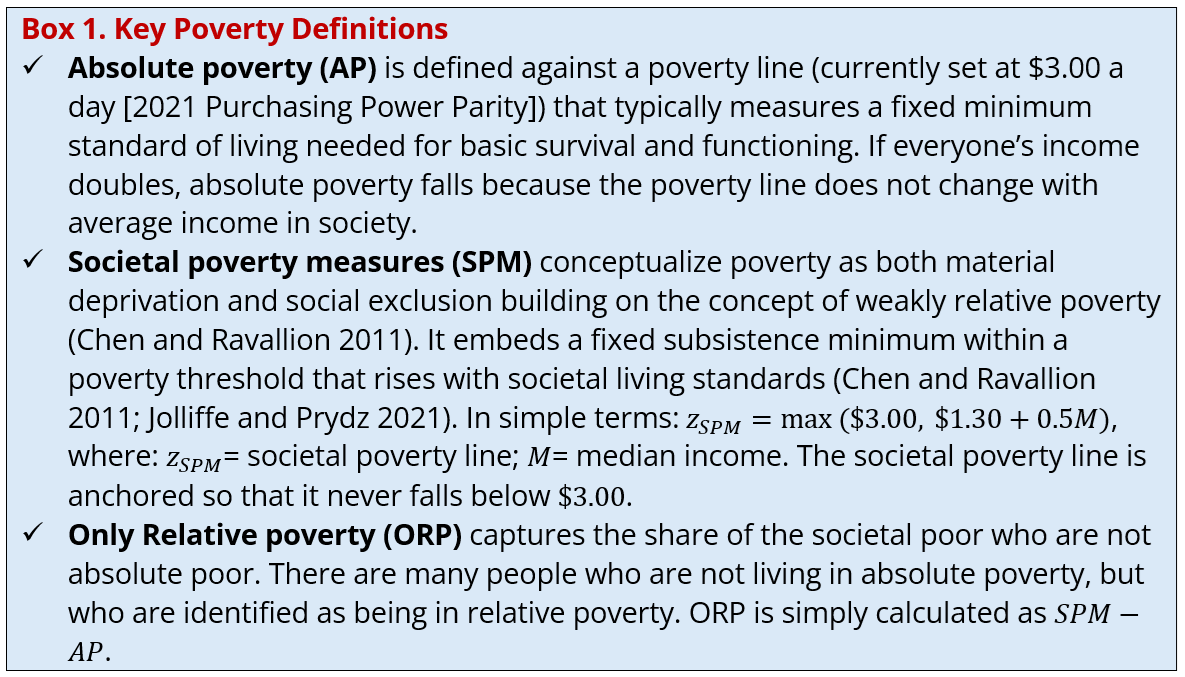
New data and recently developed measures (defined in Box 1) make it possible to reassess what has been happening with global poverty reduction since the end of the Cold War and to consider future prospects. Our analysis confirms one well-known finding (the good news); deepens the understanding of a second trend that was to be expected; and identifies a third trend that is extremely worrying (the bad news).
First, the rapid drop in global levels of absolute poverty reported in relation to the era of the Millennium Development Goals (MDGs) are confirmed for the period 1990-2020 (Figure 1). This is good news given that the earlier post-WW2 ‘development decades’ achieved relatively little in terms of extreme poverty reduction. But disappointingly, absolute poverty reduction has stalled since 2020. Initially this was associated with the Covid-19 pandemic, but this appears to be continuing as the contemporary ‘polycrisis’ of inflationary pressures, food price increases, violent conflict and war, the breakdown of international cooperation, weak productivity growth and climate change unfolds.
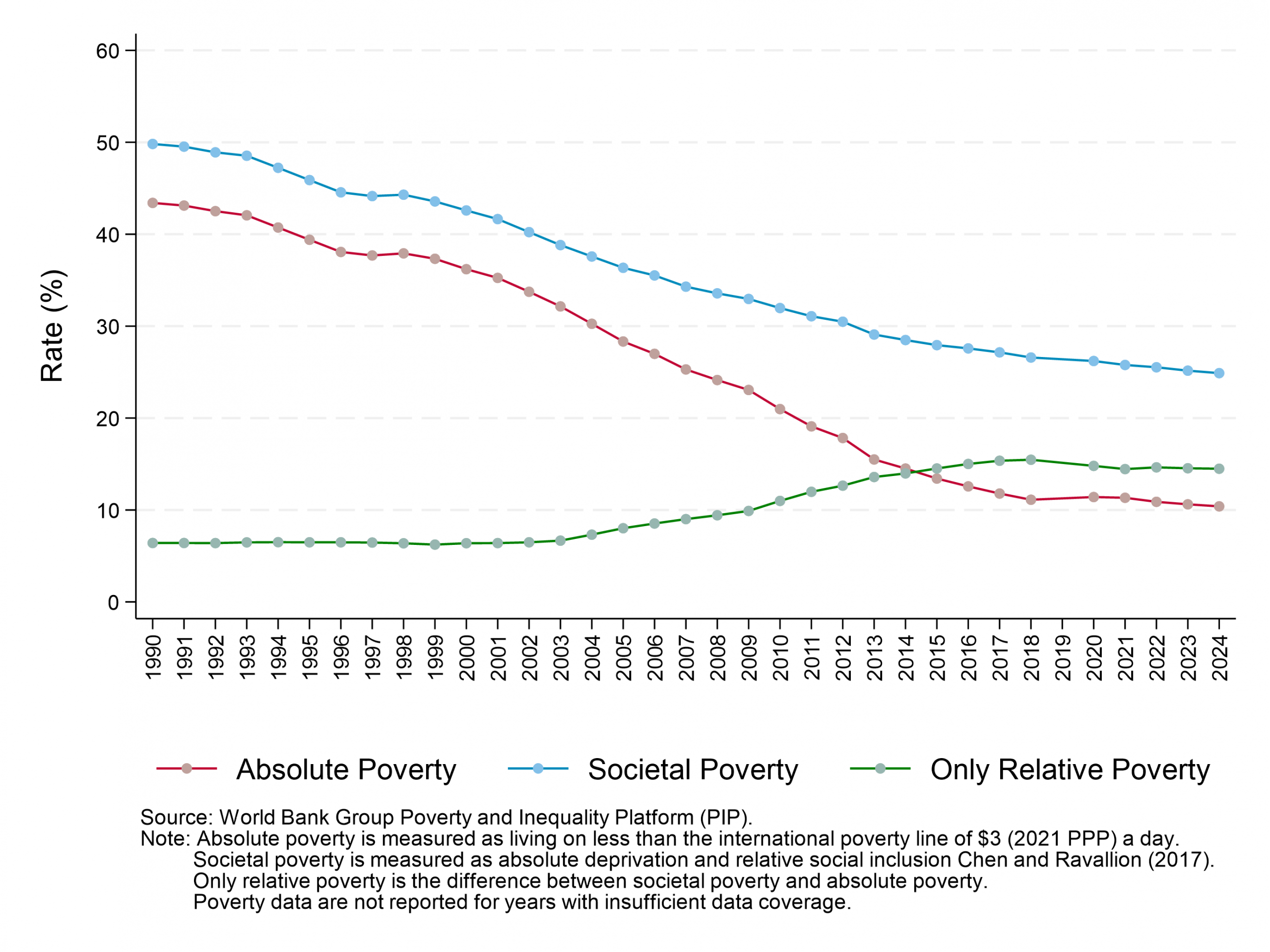
Figure 1. Absolute, Societal and Only Relative poverty: Global Trends
Second, while global societal poverty levels have declined since 1990, they have done so at a slower rate than absolute poverty levels since around 2002 (Figure 1). As a result, the world now has more people in relative poverty (24.9%) than people in absolute poverty (10.4%). This is potentially a problem for national governments as (i) there is a moral argument that they must reduce the suffering and vulnerability that relative poverty creates, and (ii) there is a significant likelihood that the growing numbers of people in relative poverty will feel ‘left behind’ (even if their income and consumption are rising), fostering political instability. Recent revolutions and protests in Nepal, Bangladesh, Sri Lanka and Kenya may illustrate this.
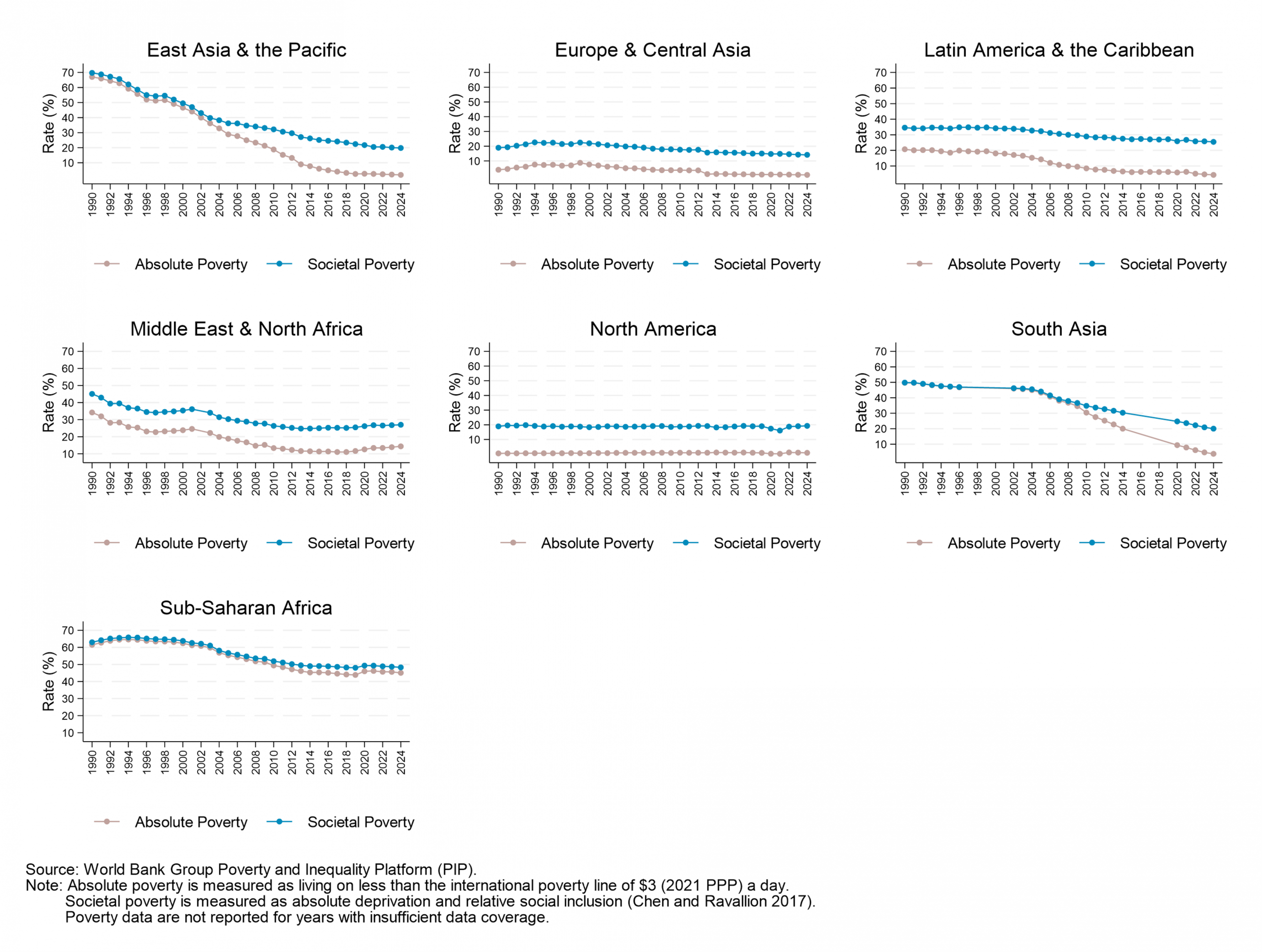
Figure 2. Absolute versus Societal poverty: Regional Trends
Third, while historical differences in regional and national absolute poverty reduction achievements are to be expected given different starting points, economic and political structures, and opportunities, sub-Saharan Africa (SSA) appears to be a total outlier (Figure 2). Compared to East Asia & the Pacific (EAP) and South Asia (SA), where absolute poverty rates were also very high in 1990, there has been very slow progress in reducing absolute poverty in SSA.
While in all other world regions governments seeking to reduce societal poverty need to work out how to tackle relative poverty, in SSA the pressing priority remains tackling absolute poverty (Figure 3). We are concerned that such conditions will foster the return of the Afro-pessimism of the late-twentieth century. Unfortunately, the available evidence on the likely negative impacts of contemporary economic (inflation, costs of accessing finance), political (poor governance, violent conflict, reduced aid) and environmental (climate change) problems suggest that SSA’s polycrisis will be particularly long and severe. There is a strong case that the reduced amounts of development aid now available need to be concentrated on sub-Saharan Africa and that this will need to continue for years to come.
References
- Chen, S., and M. Ravallion. (2011). Weakly Relative Poverty. Review of Economics and Statistics, 93(4), 1251–1261.
- Jolliffe, D. and E. B. Prydz. (2021) “Societal Poverty: A Relative and Relevant Measure,” World Bank Economic Review. 35(1), pp.180 206.
- Ravallion, M. (2020). On Measuring Global Poverty. Annual Review of Economics.
Note: This article gives the views of the author/academic featured and does not necessarily represent the views of the Global Development Institute as a whole.
Please feel free to use this post under the following Creative Commons license: Attribution-NonCommercial-NoDerivatives 4.0 International (CC BY-NC-ND 4.0). Full information is available here.